As the world passes by, on the street of Ikeja, Lagos, 12 year old Paul looks on with hope. He stretches out his hands and heart at every stranger and car that passes by, begging for alms and expecting a miracle. There on the street lays his hope of eating each meal a day.
When National Mirror caught up with him, one afternoon, Paul was already weary and tired from hunger. He had been walking about with outstretched arms in the sun for over four hours without receiving a kobo. If and when he eventually received any, he would walk straight to the Buka around the corner and fill his stomach with big lumps of ‘fufu’ with melon soup. Paul never concerned himself with eating a healthy or balanced meal; he would rather load his stomach with heavy meal that will sustain him for long. From his stunted height and patched skin, it is clear that he is not getting enough nutrition that he needs for his health.
For 15 year-old Elizabeth Oloba, there seems to be “plenty” to eat everyday but what she eats just does not give her enough nutrients for her health needs. Although Elizabeth never lacks any meal, she still slumps with tiredness every day before her classes are over. Unlike Paul, she is lucky she has her parents to take care of her. Her meals on a daily basis are mainly rice, Eba, yam, beans and sometimes, over-cooked vegetables. Like many other adolescent girls, Elizabeth is not eating enough iron-rich food.
 As the world marked the World Food Day on October 16th, the World Health Organisation (WHO), in its report to mark the day, says one out of four children globally do not get the nutrition they need to live healthy lives. “Even amidst plenty, 805 million people, one in nine worldwide, live with chronic hunger. 4 in 10 children in poor countries are malnourished and this is damaging their bodies and brains”, the report says. Speaking on the event, United Nations Secretary-General Ban Ki-moon described hunger as a terrible injustice that is beyond lack for food.
 He stressed that how people choose to grow, process, distribute and consume the food they eat has a profound effect on people, planet, prosperity and peace.
“In a world where nearly a third of all food produced is lost or wasted, and where we produce enough food to feed everyone, almost 800 million people still suffer from hunger”, he said.
More worrying is the issue of iron deficiency in young women and adolescent girls. Recent statistics from the 2014 Global Nutrition Report revealed that almost half (49 per cent) of women of reproductive age in Nigeria have anaemia, 24.3 per cent have low iron stores and 12.7 per cent of them are iron deficient.
These figures indicate that majority of the adolescent girls and women do not meet the iron requirements of 20 milligrams per day as recommended by the Food and Agricultural Organisation (FAO) and, the World Health Organisation (WHO).
An analysis of the effect of iron deficiency anaemia by the United Nations Children’s Fund UNICEF, showed that even mild to moderate cases of iron deficiency anaemia will affect cognitive function and work capacity.
“This is one main reason why young women of reproductive age and teenagers in Nigerian complain of tiredness, explains Folake Samuel, Senior Lecturer, Department of Human Nutrition, University of Ibadan. According to her, “55 per cent of Nigerian women complain of tiredness and fatigue as part of daily life. They also complain of dizziness, pale complexion, which are all symptoms of anaemia.
“One reason why women suffer more from anaemia is due to the chronic blood loss experienced during the monthly menstrual cycles. This blood loss if not corrected by an appropriate diet, always leads to iron deficiency anaemia.
“Also women have hormonal changes in the body during the different stages of life such as adolescence, pregnancy, lactation and menopause. During all these phases, demand for iron and calcium is increased. If this increased demand is not fulfilled, they tend to suffer from chronic iron deficiency anaemia”, she said.
“Teenage girls need 50 per cent more iron, than when they were younger, to cope with their body changes and during pregnancy, the amount of iron needed are tripled because the body needs extra iron for both mother and foetus. This increases the risk of becoming anaemic, with consequences such as low birth weight, premature birth, neonatal and maternal death”, Toyin Saraki, from the Well Being Foundation added.
The reason for this high rate of iron deficiency anaemia is not farfetched. Dr. Samuel, while presenting a report on ‘the prevalence and impact of iron deficiency anaemia in Nigerian women and teenagers’ said Research finding, published in African Journal of Biomedical, found out that Nigerian households consume food groups such as cereals and grains, roots, tubers, legumes, nuts and seeds which are high in phytate, known to inhibit iron absorption. She said, less than half of the households interviewed during the research, consumed iron-rich foods on a daily basis such as vegetables and iron-rich meats.
By: Franka Osakwe
National Mirror News
ABUJA: Training Schedule for Basic Life Support BLS, Pediatric Advanced Life Support (PALS), Advanced Cardiovascular Life Support ACLS, First Aid, CPR, AED
PORTHARCOURT: Training Schedule for Basic Life Support BLS, Pediatric Advanced Life Support (PALS), Advanced Cardiovascular Life Support ACLS, First Aid, CPR, AED
LAGOS: Training Schedule for Basic Life Support BLS, Pediatric Advanced Life Support (PALS), Advanced Cardiovascular Life Support ACLS, First Aid, CPR, AED
STOP paying for airtime and electricity, Let your phone pay its bills with ScreenT
You may also like
Comrade Lemii Christian Emerges Chairman of NANNM Rivers State Branch in Historic Victory
PORT HARCOURT, NIGERIA Following the long awaited National Association of N…

FG Supports Robotic Surgery Expansion to Reduce Medical Tourism
Nigeria is taking another step toward strengthening specialised healthcare …
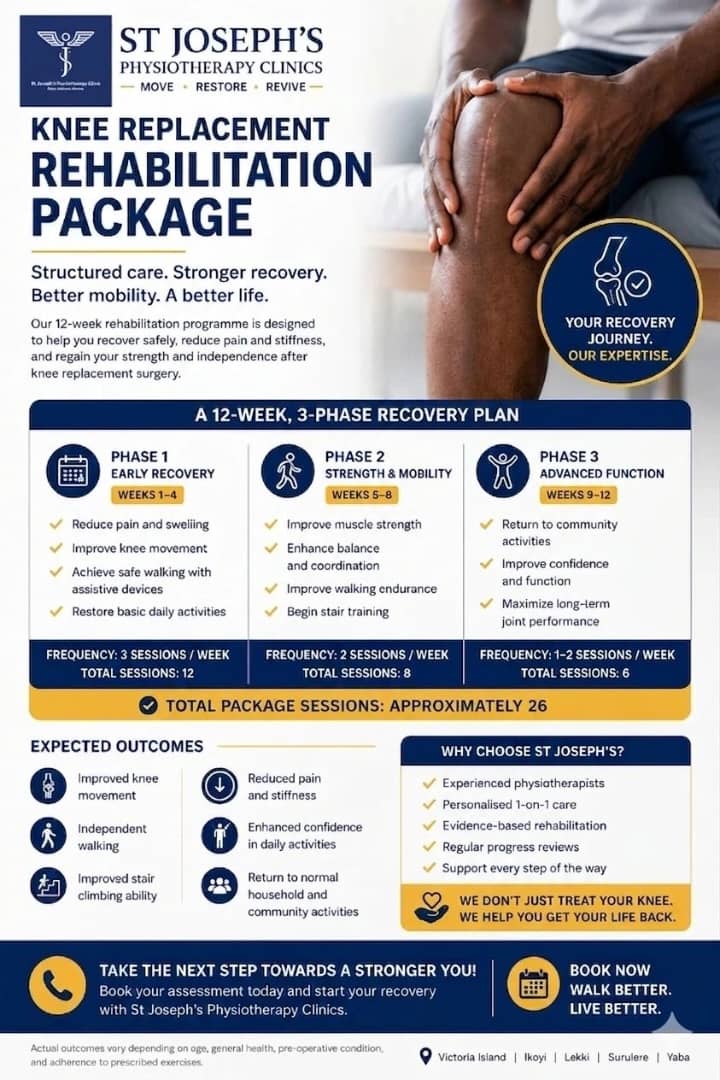
Complete Knee Replacement Rehabilitation Package in Lagos
Knee replacement surgery is a major step toward pain relief and improved mo…

NAMDA threatens strike over unpaid medical lecturers’ allowances
The Nigerian Association of Medical and Dental Academics (NAMDA) has warned…

Resident Doctors Signal End to Strike Threat After High-Level Talks with Gbajabiamila
The threat of a nationwide indefinite strike by the Nigerian Association of…