World Immunization Week (WIW) is marked in the last week of April (24-30) and aims at promoting the use of vaccines in all age groups to prevent diseases. Immunization and the use of vaccines is the most successful public health intervention against disease prevention. According to the United Nations Children's Education Fund (UNICEF), immunization saves up to 3 million children each year. Vaccines against diphtheria, tetanus, polio, measles, pneumonia and rotavirus diarrhea have saved children across the globe especially in developing countries.
 World Immunization Week 2015
 In order to ensure equity in immunization, this year's theme for WIW is "Close the Immunization Gap." The Global Vaccine Action Plan (GVAP) has been endorsed by 194 member states of the World Health Assembly in May 2012. The key objective of GVAP is to prevent deaths due to lack of vaccines by putting in place universal access to vaccines across all communities by 2020.
What is Immunization?
According to the World Health Organization (WHO), immunization is a process where a person acquires immunity or resistance to a particular disease through the administration of a vaccine. Vaccines stimulate the body's immune system to protect the person from a particular infectious disease.
Vaccines are cost-effective public health measures, which can save communities from virulent infectious diseases. Vaccines help protect marginalized and vulnerable communities who may not have adequate access to medical facilities.
History of Immunization
The world's first vaccine was made by Dr Edward Jenner, a country doctor in Gloucestershire in England in 1796. He took pus from a cowpox lesion on a milkmaid's hand and inoculated an eight-year-old boy, James Phipps. Six weeks later, he injected the boy with two more vaccines. The boy was unaffected by these exposures. Jenner's experiment proved that the cowpox prevents humans from being infected by smallpox. He was the first to lay the foundation of the vaccine concept.
The development of vaccines against various infectious agents has saved millions of lives across the world. The development of inactivated, passive tetanus vaccine saved many lives during World War II. Similarly, the advent of the polio vaccine helped prevent children from becoming disabled. Today, we have a range of vaccines for many infectious agents including pneumonia and hepatitis A and B. However, we still await two key vaccines against killer infections like HIV and malaria.
What is World Immunization Week (WIW)?
World Immunization Week (WIW) is marked in the last week of April (24-30) and aims at promoting the use of vaccines in all age groups to prevent diseases. Immunization and the use of vaccines is the most successful public health intervention against disease prevention.
According to the United Nations Children's Education Fund (UNICEF), immunization saves up to 3 million children each year. As per WHO statistics, the global death rate due to measles has dropped by 75%, 84% infants worldwide were vaccinated with 3 doses of diphtheria-tetanus-pertussis (DTP3) vaccine in 2013, and the same year, 129 countries had at least 90% coverage of the DTP3 vaccine (WHO statistics). Vaccines against diphtheria, tetanus, polio, measles, pneumonia and rotavirus diarrhea have saved children across the globe especially in developing countries. Vaccines against meningitis A, cervical cancer, hepatitis A and B are also part of the immunization plan for adults and adolescents.
WIW is an opportunity to raise public awareness on the importance of following immunization schedules for both children and adults against preventable infectious diseases. Immunizations are especially important in developing countries like India, Africa and some parts of Asia, where communities may not have easy access to medical facilities.
World Immunization Week Theme
Despite worldwide efforts to bring more children and adults under vaccine cover, WHO says that one in five children miss out on vaccines and an estimated 21.8 million infants missed out crucial vaccines in 2013. Many factors play a role in not receiving vaccines including insufficient information and education on vaccines, inadequate supply of vaccines and lack of access to public health services.
In order to ensure equity in immunization, this year's theme for WIW is "Close the Immunization Gap". The Global Vaccine Action Plan (GVAP) has been endorsed by 194 member states of the World Health Assembly in May 2012. The key objective of GVAP is to prevent deaths due to lack of vaccines by putting in place universal access to vaccines across all communities by 2020.
The GVAP objectives are:
. To strengthen and enhance routine immunization
. To strengthen vaccine programs against preventable diseases with polio eradication being the first milestone
. To introduce newer, improved vaccines
. To increase research on next generation vaccines and technologies
The GVAP was developed by a number of stakeholders including UN agencies, governments, global agencies, health and development partners, NGOs, scientists and researchers and civil society. WHO aims to support regions that adopt the GVAP as part of their immunization program.
The 2014 World Health Assembly discussed several issues that need to be addressed to achieve the goal of an equitable immunization plan. Some of the points discussed are:
. Affordability of vaccines to all countries
. Technological transfer to manufacture vaccines locally at a lower cost
. Dissemination of information to the public to make informed decisions
Immunisation In Nigeria
Communication interventions in Nigeria have proven to be a vital part of the polio eradication effort. In the past two years, communication activities have adopted new strategies and have contributed greatly to the 80% reduction in the number of WPV cases from the 2006 level. Success of the polio communication efforts can be verified by the reduction in missed children due to non-compliance by 12%, as well as increases in overall coverage through targeted social mobilization.
For example, thousands of children in the highest risk states were reached in Koranic schools, as well as through child-to-child and youth outreach participation programmes. A series of community dialogues, in partnership with the Federation of Muslim Women Association of Nigeria (FOMWAN) mobilized 313 schools, sensitizing 685 teachers and also played a role in 76 ceremonial events that reached 4,831 women. In the ensuing house to house IPD mobilization, over 72% of the non-compliance cases were resolved.
The communication efforts were developed based on the results of the 2006 desert survey, which identified numerous key factors affecting immunization rates:
. the reasons families refused treatment
. the source of the families information
. factors influencing the family
. decision sources likely to influence them
The data provided insight into how to develop and deploy effective communication initiatives that reached specific communities.
Five interpersonal communication modules were developed and deployed beginning in July, 2007. By end November three hundred ward focal persons and over 1500 vaccinators from the 30 highest risk Local Governance Authorities (LGAs) in the six highest risk states had improved inter-personal communication skills to counsel non-compliant families. According to an EU assessment (November 2007) vaccinators explained issues correctly to caregivers, ward leaders were actively participating in polio activities and traditional chiefs and village elders visibly supported the programme.
Community dialogues have become an integral part of the proactive strategy to better engage communities. Dialogues are a form of community meeting, facilitated by local leaders and health workers, in order to create a two-way stream of communication that informs communities and health workers of each other's concerns. These forums provide answers to participant questions, offer facts about campaigns, and record concerns raised which can then be re-programmed into communication messages and strategies.
A community dialogue audit was conducted between June and September 2007 to assess the quality of the process, content of discussions, impact of the dialogues and perception of communities of the approach. The audit showed that community dialogues for polio eradication were facilitated by traditional and religious leaders, including ward heads at least 50% of the time, and Imams facilitated 10% of the observed activities. The provision of interpersonal skills for ward focal persons helped improve their participation in facilitating dialogues as opposed to previous times when their roles were restricted to logistics.
In November 2007 recording and monitoring forms used during polio immunization activities were revised to provide additional communication data. One of the modifications was made to provide information on the reasons for why children were absent from the home, which was the main reason for children being missed during polio campaigns. Human resistance analysis proved to be central to effective deployment of resources.
This information helped guide operational and communication interventions whose goal is to increase overall coverage in the highest risk areas. In the spring of 2008, both national and state-specific social mobilization plans were developed and implemented to increase media coverage and the community leader involvement.
Simultaneously, the documentation and evaluation processes continue to be improved with the goal of ensuring that all communications interventions are based on epidemiological and programme data and that they demonstrate patterns in refusal, source of information about campaigns and other indicators of low coverage that will help pinpoint areas and issues requiring priority attention.
Sources:
Namitha Kumar (mediaindia.net) and
unicef.org
ABUJA: Training Schedule for Basic Life Support BLS, Pediatric Advanced Life Support (PALS), Advanced Cardiovascular Life Support ACLS, First Aid, CPR, AED
PORTHARCOURT: Training Schedule for Basic Life Support BLS, Pediatric Advanced Life Support (PALS), Advanced Cardiovascular Life Support ACLS, First Aid, CPR, AED
LAGOS: Training Schedule for Basic Life Support BLS, Pediatric Advanced Life Support (PALS), Advanced Cardiovascular Life Support ACLS, First Aid, CPR, AED
STOP paying for airtime and electricity, Let your phone pay its bills with ScreenT
You may also like
Comrade Lemii Christian Emerges Chairman of NANNM Rivers State Branch in Historic Victory
PORT HARCOURT, NIGERIA Following the long awaited National Association of N…

FG Supports Robotic Surgery Expansion to Reduce Medical Tourism
Nigeria is taking another step toward strengthening specialised healthcare …
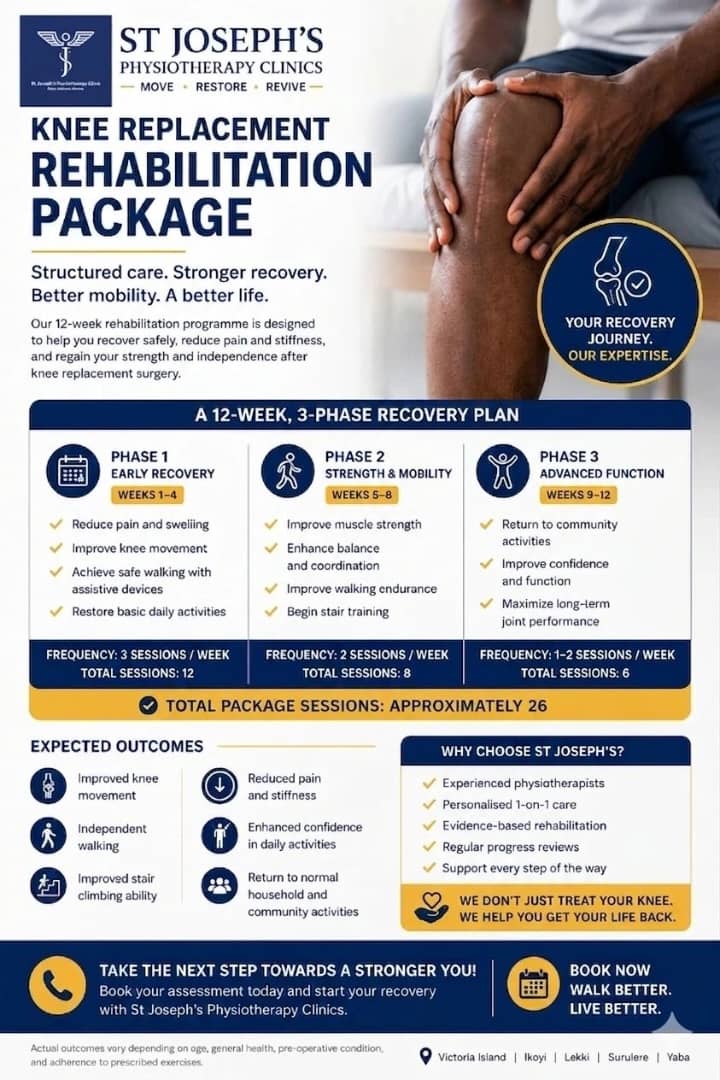
Complete Knee Replacement Rehabilitation Package in Lagos
Knee replacement surgery is a major step toward pain relief and improved mo…

NAMDA threatens strike over unpaid medical lecturers’ allowances
The Nigerian Association of Medical and Dental Academics (NAMDA) has warned…

Resident Doctors Signal End to Strike Threat After High-Level Talks with Gbajabiamila
The threat of a nationwide indefinite strike by the Nigerian Association of…