The World Health Organisation (WHO) a few days ago declared the Zika virus and its suspected link to birth defects an international public health emergency. This move by the world health body has thus acknowledged the seriousness of the outbreak, giving countries new tools to fight it. It has also triggered funding for research to try to establish whether the Zika virus, spread by mosquitoes, is responsible for the large numbers of babies born with abnormally small heads in Brazil. It will also put resources behind a massive effort to prevent pregnant women becoming infected and, through mosquito control, stop the virus spreading.
An outbreak of the Zika virus, which is transmitted by mosquitoes, was detected in Brazil in May last year, and has since moved into more than 20 countries in Latin America. The countries and territories that have been identified as having experienced “local Zika virus transmission” are Barbados, Bolivia, Brazil, Colombia, the Dominican Republic, Ecuador, El Salvador, French Guiana, Guadeloupe, Guatemala, Guyana, Haiti, Honduras, Martinique, Mexico, Panama, Paraguay, Puerto Rico, Saint Martin, Suriname, and Venezuela.
.JPG) Africa has also been put on high alert over the possible spread of the virus within the continent. With unconfirmed reports of the virus in Cape Verde, which has sparked fears of further outbreaks on the continent (which is already battling other mosquito-borne diseases like malaria), the WHO has further warned that the Zika virus could rapidly spread to Africa. While there may not be a rapid spread of the virus in Africa in the short term, African government’s needs to remain aware of the possibility. With the current surge in international travel and international trade, the reality of Zika spreading to Africa is indeed a reality.
Africa has also been put on high alert over the possible spread of the virus within the continent. With unconfirmed reports of the virus in Cape Verde, which has sparked fears of further outbreaks on the continent (which is already battling other mosquito-borne diseases like malaria), the WHO has further warned that the Zika virus could rapidly spread to Africa. While there may not be a rapid spread of the virus in Africa in the short term, African government’s needs to remain aware of the possibility. With the current surge in international travel and international trade, the reality of Zika spreading to Africa is indeed a reality. However, the main worry of the Zika virus is over its possible link to microcephaly, a condition that causes babies to be born with unusually small heads and, in the vast majority of cases, damaged brains. Reported cases of microcephaly are rising sharply in Brazil (ground zero for the disease) though researchers have yet to establish that Zika causes the condition. The most serious issue was not the Zika virus itself, which causes a mild illness, but the microcephaly cases in babies. Zika alone would never be a public health emergency of international concern if not for its effects on pregnant women. While the understanding of the connection between the Zika virus and microcephaly is still “hazy”, the uncertainty has currently placed “a heavy burden” on pregnant women and their families throughout the Americas.
Due to the upsurge of the spread of the virus, some Latin American government has begun advising women to avoid getting pregnant because of the risks posed by the virus. Colombia, which has the second highest Zika infection rate, after Brazil, has called on women to delay pregnancy for six to eight months. El Salvador went further by suggesting that women avoid getting pregnant for at least two years. Panama recommended that members of indigenous communities, hard hit by Zika, avoid getting pregnant, while Jamaica issued a similar call, although no cases have been reported in the country.
Zika virus is transmitted by daytime-active Aedes mosquitoes. Its name comes from the Zika Forest of Uganda, where the virus was first isolated in 1947. The virus causes a mild illness known as Zika fever, Zika, or Zika disease, which since the 1950s has been known to occur within a narrow equatorial belt from Africa to Asia. In 2014, the virus spread eastward across the Pacific Ocean to French Polynesia, then to Easter Island and in 2015 to Mexico, Central America, the Caribbean, and South America, where the Zika outbreak has reached pandemic levels. Zika virus is related to dengue and yellow fever, and the illness it causes is similar to a mild form of dengue fever. Another rare form of Zika transmission occurred in a recorded case in 2009, when a biologist in the US sexually transmitted Zika virus to his wife. The biologist visited Senegal to study mosquitoes and was bitten on a number of occasions. Upon returning to the US, he fell ill with Zika, but not before having had unprotected intercourse with his wife. She subsequently showed symptoms of Zika infection with extreme sensitivity to light.
Common symptoms of infection with the virus include mild headaches, maculopapular rash, fever, malaise, conjunctivitis, and joint pains. The first well-documented case of Zika virus was described in 1964; it began with a mild headache, and progressed to a maculopapular rash, fever, and back pain. Within two days, the rash started fading, and within three days, the fever resolved and only the rash remained. Thus far, Zika fever has been a relatively mild disease of limited scope, with only one in five persons developing symptoms, with no fatalities, but its true potential as a viral agent of disease is unknown. Currently, there are no vaccines or preventative drugs. In terms of treatment, Zika virus disease is usually relatively mild and requires no specific treatment. People sick with Zika virus should get plenty of rest, drink enough fluids, and treat pain and fever with common medicines. If symptoms worsen, they should seek medical care and advice.
The Zika virus can be prevented and controlled by reducing mosquitoes through source reduction (removal and modification of breeding sites) and reducing contact between mosquitoes and people. This can be done by using insect repellent; wearing clothes (preferably light-coloured) that cover as much of the body as possible; using physical barriers such as screens, closed doors and windows; and sleeping under mosquito nets. It is also important to empty, clean or cover containers that can hold water such as buckets, flower pots or tires, so that places where mosquitoes can breed are removed. Also, special attention and help should be given to those who may not be able to protect themselves adequately, such as young children, the sick or elderly. Importantly, travellers should take the basic precautions described above to protect themselves from mosquito bites.
Key facts of the Zika Virus
Zika virus disease is caused by a virus transmitted by Aedes mosquitoes.
People with Zika virus disease usually have a mild fever, skin rash (exanthema) and conjunctivitis. These symptoms normally last for 2-7 days.
There is no specific treatment or vaccine currently available. The best form of prevention is protection against mosquito bites.The virus is known to circulate in Africa, the Americas, Asia and the Pacific
By: Hannatu Musawa
Leadership News
ABUJA: Training Schedule for Basic Life Support BLS, Pediatric Advanced Life Support (PALS), Advanced Cardiovascular Life Support ACLS, First Aid, CPR, AED
PORTHARCOURT: Training Schedule for Basic Life Support BLS, Pediatric Advanced Life Support (PALS), Advanced Cardiovascular Life Support ACLS, First Aid, CPR, AED
LAGOS: Training Schedule for Basic Life Support BLS, Pediatric Advanced Life Support (PALS), Advanced Cardiovascular Life Support ACLS, First Aid, CPR, AED
STOP paying for airtime and electricity, Let your phone pay its bills with ScreenT
You may also like
Comrade Lemii Christian Emerges Chairman of NANNM Rivers State Branch in Historic Victory
PORT HARCOURT, NIGERIA Following the long awaited National Association of N…

FG Supports Robotic Surgery Expansion to Reduce Medical Tourism
Nigeria is taking another step toward strengthening specialised healthcare …
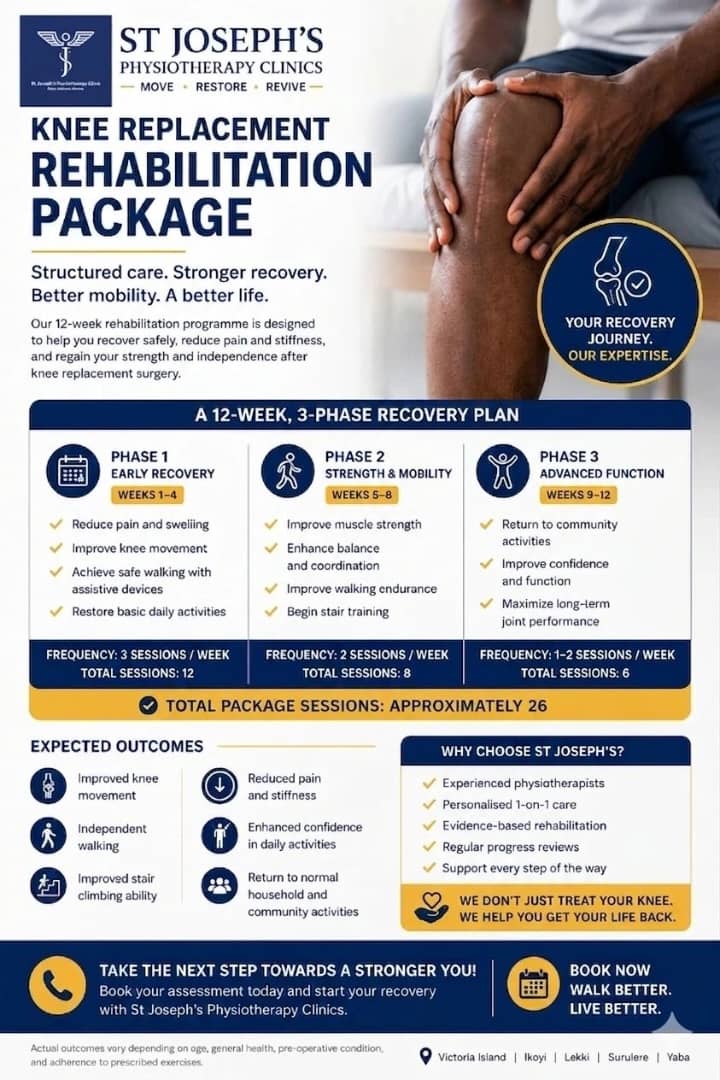
Complete Knee Replacement Rehabilitation Package in Lagos
Knee replacement surgery is a major step toward pain relief and improved mo…

NAMDA threatens strike over unpaid medical lecturers’ allowances
The Nigerian Association of Medical and Dental Academics (NAMDA) has warned…

Resident Doctors Signal End to Strike Threat After High-Level Talks with Gbajabiamila
The threat of a nationwide indefinite strike by the Nigerian Association of…