Delta State House of Assembly has reportedly broker truce between the state commissioner for health, Dr. Ononye Mordi and members of the Delta state chapter of the National Association of Nigerian Nurses and Midwives (NANNM).
For over three months, the commissioner and the nurses and midwives have been at loggerheads over a two-year programme initiated by the National Council of Nurses and Midwives to train local community nurses and midwives in the state.
The programme, though initiated by the national regulatory body of nurses and asked willing states to key in, nurses in Delta state have vehemently kicked against the initiative arguing that if implemented in the state, it would breed quacks which will not speak well of the educational status of Delta as a non-academically disadvantaged state.
The nurses also argued that there are over 1500 nurses who have already been trained through the regular nursing programme and university graduates but are unemployed, hence there is no need going for the training of community nurses, rather the already trained ones should be employed to fill the needed gaps and thereby strengthen the weak health system in Delta state.
They are also insisting that the programme is essentially meant for Northern states which are educationally less developed but not for states like Delta, noting that in all the Southern states, it is only Delta that is keying into the low cadre programme for unknown reasons.
As it is in almost all professions, they are insisting that their interest is to protect the nursing profession so that quacks do not filter in, and thereby endanger the health and lives of the people of Delta state. They see no reason going for a low quality programme when quality graduates are already on ground waiting for employment by government.
Mrs. Alice Jegede, Delta state chairman of NANNM, told the House of Assembly committee members on health that the problem the nurses have is unemployment and not unavailability of nurses for the nursing profession. She advocated for employment of nurses as there is a shortage of manpower in the nursing services.
She argued that after the two-year programme, the local community nurses and midwives cannot transit from one state to the other as the programme only allows them to remain in their local communities, adding that from the nurses point of view, the programme will do more harm than good for the nursing profession.
Mrs. Jegede said a course as anatomy alone takes three years to complete, but now nursing is being put together to be taught for only two years, describing it as a breeding ground for quackery and a bad omen for Delta nurses.
But commissioner for health, Dr. Ononye Mordi, told the House of Assembly committee on health that the major cause of the rift is lack of understanding on the part of the nurses. He said it is the government that formulates policies and it demands implementation from workers.
He appealed to the nurses to cooperate with the policy as it is aimed at complementing the efforts of nurses in Delta state. He said the trainees will be nominated and sponsored by the communities they are coming from.
Dr. Mordi said one trainee will be nominated per one political ward who must meet qualifications prescribed by the council, just as he pleaded for understanding and cooperation from the nurses.
He said the nurses upon graduation from the two-year-programme will be lower cadre but skilled nurses, saying it is the duty of the ministry of health to introduce policies and demand implementation from nurses in Delta state.
On the issue of employment for already trained nurses in Delta, the commissioner said nurses are trained not only for government employment, adding that government cannot employ everybody.
He said these local community nurses have a sense of commitment to the communities where they are coming from. He said they have moral responsibilities to serve in those communities and remain there.
Chairman of the House Committee on Health, Augustine Uroye from Warri South Constituency 1, argued that the nurses would have got their way if the programme were introduced by the state commissioner for health but the nursing council, the umbrella body of nursing in Nigeria, initiated and gave approval for the programme and since it is from the national council, it is compulsory for all states in Nigeria.
Joined by Emeka Nwaobi, from Aniocha North, Uroye told the nurses that being a lower cadre job, the payment will be lower than the salary for higher cadre nurses, hence he asked whether the nurses would accept a lower salary for their qualified nurses as would be paid to the lower cadre community nurses.
Nwaobi argued that since the initiative emanated from the nursing council, it should not be an issue in the state, adding that most nurses do not accept posting to rural communities, hence the need for this programme to help the rural people.
Nwaobi also argued that after graduation from the two-year programme, the community nurses could decide to upgrade themselves by going for further studies.
Pat Ajudua who represents Oshimili North in the state House of Assembly, told the nurses that there is a limit to which one could fight for a cause. She said the health commissioner has power to make decision and demand implementation from the nurses.
She reminded the nurses that Governor Ifeanyi Okowa has given approval to the programme, saying the governor is not careless to approve a programme that he knows will not favour his people. She said the governor has given his signature to the programme and it should be respected.
She added: “I think you should respect the signature of the governor for the programme. Lower cadre nurses are needed whether you like it or not. Fight with caution. Do not fight as blind people.”
Festus Okoh, who represents Ika South, also told the nurses: “You don’t fight a system you belong. The governor has decided to accept a programme, your council approves it and do you mean what the council approved is wrong? You are trying to stop the programme.
“In unionism, you manage and strike a balance. You look for the welfare of members. The governor deems it fit to approve a programme. Please tread with caution. If the programme doesn’t affect you directly, strike a balance and let go.”
The House committee chairman, Uroye, said the programme is to support the healthcare system in the state. He noted: “The local community nurses are not replacing the nurses because they are not nurses. Though NANNM has right to express fears, it is the duty of the commissioner to allay their fears.
“Anywhere these community nurses and midwives will be posted to, there should be nurses and doctors to supervise their work. The council is your umbrella body. As a nurse if the council decides to withdraw your license, can you say no to their decision?
“The commissioner wrote to the governor who also is a doctor, the commissioner himself is a professional. The governor, who gave his approval, is the head of the state. And as a professional, I don’t think he will give wrong advice.”
In an interview with journalists after the debate, Mrs. Jegede said she is satisfied that documents have been shown that the programme was approved by the governor and that qualified nurses will supervise the lower cadre nurses wherever they are posted to in the state.
She added that she would educate her members on the outcome of the hearing from the state house of assembly and that the governor has approved the programme. She said that if the governor said anything he does whatever he said.
She noted her members will no longer have problem with the programme as far as it has been agreed that anywhere the local community nurses are posted to, qualified nurses will be to supervise them.
Source: emeraldng
You may also like

FG Supports Robotic Surgery Expansion to Reduce Medical Tourism
Nigeria is taking another step toward strengthening specialised healthcare …
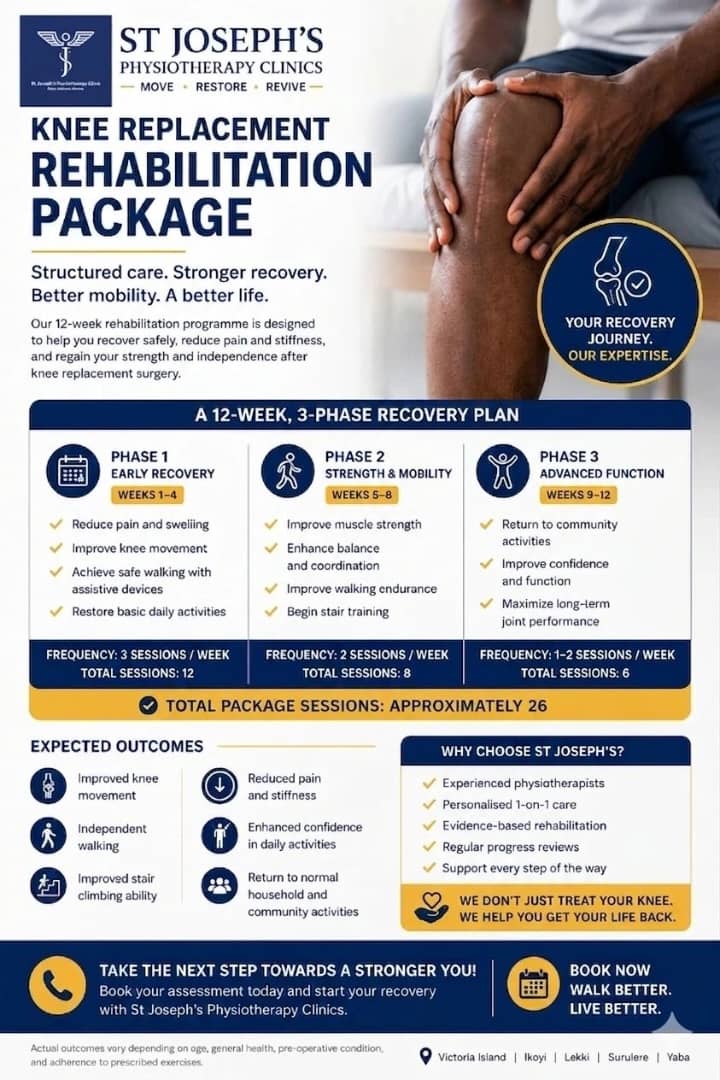
Complete Knee Replacement Rehabilitation Package in Lagos
Knee replacement surgery is a major step toward pain relief and improved mo…

NAMDA threatens strike over unpaid medical lecturers’ allowances
The Nigerian Association of Medical and Dental Academics (NAMDA) has warned…

Resident Doctors Signal End to Strike Threat After High-Level Talks with Gbajabiamila
The threat of a nationwide indefinite strike by the Nigerian Association of…
AMLSN Issues Strong Rejoinder to NAMDA on Public Service Establishment Matters
The Association of Medical Laboratory Scientists of Nigeria (AMLSN) has rel…