The Nigerian Postgraduate College of Optometrists (NPCO) has reaffirmed its commitment to advancing specialist eye care through research, innovation, and collaborative practice following the successful conclusion of its 18th Annual General Meeting and Scientific Conference.
Held under the theme "Redefining Specialist Eye Care Through Research and Innovation," the conference brought together optometrists, researchers, academics, policymakers, and other healthcare professionals from across Nigeria to discuss practical strategies for improving eye care services and reducing the burden of preventable blindness through evidence-based practice.
The event began on July 27 at the Faculty of Architecture Hall, Bingham University, Karu, Nasarawa State, with the induction of 17 new Fellows into seven specialist faculties. The induction marked another milestone in the College's mission to strengthen postgraduate education through its Optometry Residency/Fellowship Programme and to increase the nation's capacity to provide advanced specialist eye care.
In his opening remarks, the President of the NPCO, Professor Franklin Ehigiator Koi, described the Fellowship as a professional distinction that extends beyond academic achievement. According to him, Fellows are expected to uphold the highest standards of clinical practice, ethical leadership, scientific research, and mentorship within the profession.
Professor Koi noted that while the College has made significant progress in specialist training over the years, future priorities will include expanding research activities, enhancing residency programmes, improving specialist competence, and creating additional opportunities for Fellows to contribute to teaching and research within Nigerian universities.
He further announced plans to strengthen the academic quality of future conferences by encouraging residents to present research proposals and ongoing studies for peer evaluation, expert feedback, and professional mentorship.
The keynote lecture was delivered by the Deputy Vice-Chancellor of Bingham University, Professor Musa Dankyau, who challenged healthcare professionals to adopt a more integrated approach to eye care delivery in Nigeria.
Speaking on the topic "A Shared Vision for Transforming Eye Care in Nigeria: Research, Innovation and Collaboration for an Integrated People-Centred Eye Health System," he emphasized that research should not be measured solely by the number of publications produced but by its ability to solve real healthcare problems and improve patient outcomes.
Using a patient's journey through different levels of healthcare as an illustration, Professor Dankyau stressed that meaningful progress in eye care depends on cooperation among healthcare professionals rather than competition between disciplines.
He remarked that the future of eye care in Nigeria would be shaped by a unified healthcare system built on collaboration. To achieve this, he advocated stronger partnerships involving universities, government agencies, professional associations, healthcare providers, industry stakeholders, and local communities. He also encouraged wider adoption of technological innovations, including tele-eye care, artificial intelligence, digital referral systems, integrated diabetic eye clinics, and locally relevant research initiatives.
The scientific sessions continued on July 28 at Presken Hotel and Resorts, Jabi, Abuja, where participants explored emerging research and innovations capable of transforming specialist eye care.
The opening scientific lecture was presented by the Deputy Vice-Chancellor of Arthur Jarvis University, Professor Anne Ebri-Ekong, on "Training the Next Generation of Specialist Optometrists Through Research-Led Education in Nigeria."
She emphasized the importance of embedding research into postgraduate specialist education, explaining that modern optometrists must not only provide quality clinical services but also generate scientific evidence that informs policy decisions and improves patient care.
Highlighting the increasing prevalence of avoidable blindness in Nigeria, Professor Ebri-Ekong called for stronger residency training, structured mentorship programmes, multidisciplinary collaboration, and the establishment of centres of excellence to develop clinician-scientists capable of addressing the country's eye health challenges.
The second scientific presentation was delivered by Dr. Damian C. Echendu, whose lecture, "From Bench to Bedside," focused on translating scientific discoveries into practical clinical applications.
He discussed how implementation science, operational research, quality improvement initiatives, evidence-based innovation, and artificial intelligence can improve specialist eye care services. He encouraged clinicians to embrace their roles as innovators who can enhance patient outcomes through research and the effective application of scientific evidence.
Both lectures generated clinical discussions, with participants engaging speakers during interactive question-and-answer sessions on specialist education, research translation, and expanding access to quality eye care across Nigeria.
The conference concluded with the College's Annual General Meeting, during which members reviewed institutional achievements and reaffirmed their commitment to strengthening specialist optometric education, promoting high-quality research, and advancing patient-centred eye care.
Overall, the conference reinforced the view that the future of specialist eye care in Nigeria depends not only on producing more highly trained optometrists but also on developing professionals who embrace research, foster innovation, and collaborate across the healthcare system to improve eye health outcomes nationwide.
Composed by:
Dr. Chukwunyere Michael Chukwuka
Dip., O.D.
CMC MEDICAL ASSOCIATES
Excellence Health Care
You may also like
Comrade Lemii Christian Emerges Chairman of NANNM Rivers State Branch in Historic Victory
PORT HARCOURT, NIGERIA Following the long awaited National Association of N…

FG Supports Robotic Surgery Expansion to Reduce Medical Tourism
Nigeria is taking another step toward strengthening specialised healthcare …
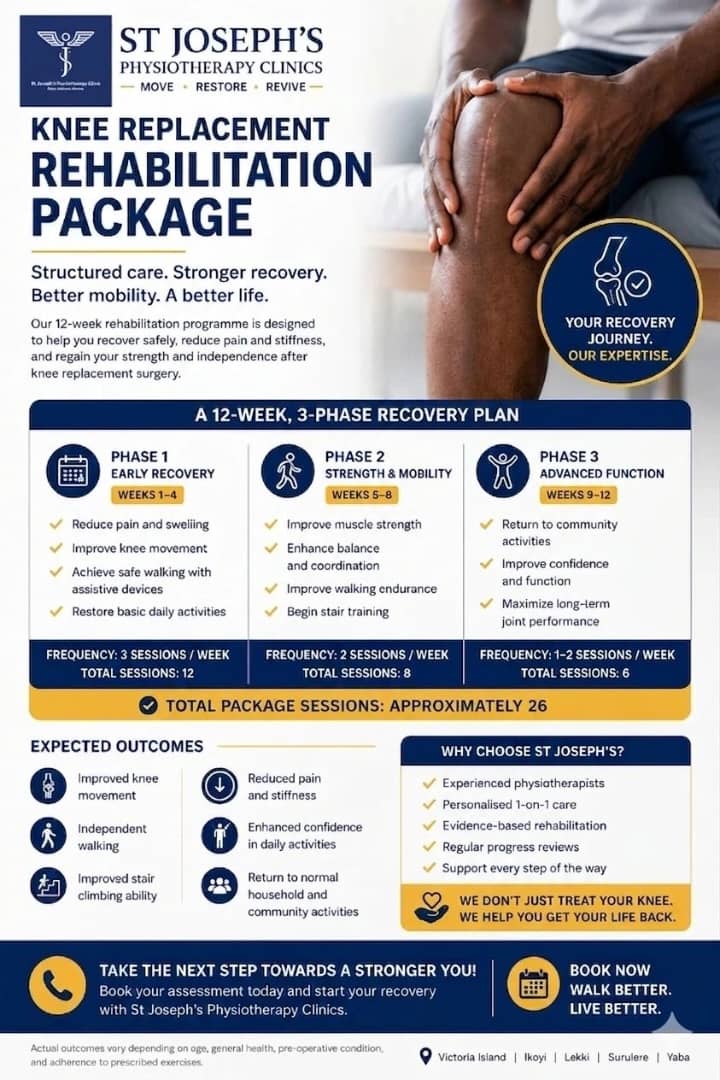
Complete Knee Replacement Rehabilitation Package in Lagos
Knee replacement surgery is a major step toward pain relief and improved mo…

NAMDA threatens strike over unpaid medical lecturers’ allowances
The Nigerian Association of Medical and Dental Academics (NAMDA) has warned…

Resident Doctors Signal End to Strike Threat After High-Level Talks with Gbajabiamila
The threat of a nationwide indefinite strike by the Nigerian Association of…
