A coalition of civil society organisations (CSOs), in collaboration with key health sector stakeholders, has launched the Open Lagos Health Sector Spot-Check, an accountability initiative aimed at strengthening healthcare delivery through evidence-based assessments of public health facilities across Lagos State ahead of the 2030 Sustainable Development Goals (SDGs).
The week-long exercise, scheduled to hold from 3–7 August 2026, will involve rapid assessments of 72 public health facilities across 18 Local Government Areas (LGAs). Trained assessors will evaluate primary healthcare centres, secondary healthcare facilities and general hospitals using key performance indicators, including service delivery, infrastructure, workforce capacity, medical equipment and availability of essential health services.
The initiative is jointly driven by the Lagos State Civil Society Participation for Development (LACSOP), the Lagos State Accountability Mechanism (LASAM), the Public Health Sustainable Advocacy Initiative (PHSAI), the Centre for Communication and Social Impact (CCSI) and other civil society partners. It is being implemented in collaboration with EngenderHealth, the Lagos State Primary Health Care Board, the Lagos State Ministry of Health, and the Ministry of Economic Planning and Budget.
Findings from the assessments will be presented during the Open Lagos Health Sector Dialogue, where government officials, local government chairmen, traditional rulers, development partners, private sector representatives, community leaders and civil society organisations will review a comprehensive health sector scorecard and agree on practical actions to address identified gaps.
Speaking during the training of field assessors, Coordinator of LACSOP, Barrister Ayo Adebusoye, described the initiative as a collaborative, evidence-driven approach to improving healthcare accountability across the state.
"The objective is to conduct rapid assessments of selected health facilities across 18 local governments and generate credible evidence on the current state of healthcare delivery in Lagos," he said.
Adebusoye explained that facilities were selected from both densely populated urban centres and underserved communities to provide a balanced assessment of healthcare services across the state.
He noted that with less than four years remaining before the 2030 SDG deadline and a new political administration expected in 2027, the exercise provides an important opportunity for Lagos State to evaluate its progress towards achieving universal health coverage.
"If institutionalised as an annual exercise, the Open Lagos Health Sector Spot-Check will enable continuous monitoring of healthcare performance and support sustained improvements across the health system," he added.
According to him, the coalition will also review the state's health budget implementation to determine how public expenditure aligns with healthcare priorities.
"The findings will strengthen evidence-based budgeting, guide future health investments and improve resource allocation across the sector."
Adebusoye further emphasised Lagos State's strategic role in Nigeria's healthcare system, noting that reliable health data from the state remains critical for national health planning.
"Without credible Lagos State data, national health statistics remain incomplete. This initiative is about generating reliable primary evidence to support informed decision-making."
Also speaking, Chairman of LASAM's Evidence Subcommittee, Mr Basit Baruwa, described the exercise as a real-time accountability mechanism rather than a conventional survey.
"This is a spot-check designed to assess the actual performance of health facilities and obtain objective evidence on service delivery at the point of care."
Baruwa disclosed that the assessment would be complemented by a review of one year's health facility performance data to ensure the findings accurately reflect long-term performance rather than temporary improvements.
"Comparing field observations with routine data will provide credible evidence for policy decisions and system improvements."
He said the exercise would help identify operational weaknesses, strengthen monitoring systems and improve the quality of primary healthcare services across the state.
"Primary healthcare centres are the first point of contact for most households. When they function effectively, many health conditions can be managed at the community level, reducing pressure on secondary healthcare facilities."
Baruwa added that the assessment would also determine whether identified challenges are attributable to weaknesses within health facilities or poor health-seeking behaviour among community members.
Similarly, State Advocacy Coordinator of the Centre for Communication and Social Impact (CCSI), Mr Abiodun Ajayi, said the exercise would uncover hidden service delivery gaps that routine reporting systems often fail to capture.
"Many health services are being provided, but there are underlying challenges that are not always visible. This assessment is designed to identify those issues before they become more significant problems."
Ajayi stressed that the exercise extends beyond data collection, noting that the results will be publicly presented during the Open Lagos Health Sector Dialogue, where each participating local government will receive its individual performance scorecard.
The dialogue will bring together state officials, local government representatives, Ward Health Committees, Community Development Committees, traditional institutions and civil society organisations to jointly develop practical solutions for improving healthcare delivery.
"Healthcare accountability must become a shared responsibility. Government alone cannot transform the health sector; communities, traditional institutions and development partners all have important roles to play."
The coalition expressed optimism that the Open Lagos Health Sector Spot-Check will become an annual accountability mechanism for monitoring health system performance, promoting transparency, improving public confidence and accelerating Lagos State's progress towards Universal Health Coverage (UHC) and the health-related Sustainable Development Goals (SDGs) by 2030.
You may also like
Comrade Lemii Christian Emerges Chairman of NANNM Rivers State Branch in Historic Victory
PORT HARCOURT, NIGERIA Following the long awaited National Association of N…

FG Supports Robotic Surgery Expansion to Reduce Medical Tourism
Nigeria is taking another step toward strengthening specialised healthcare …
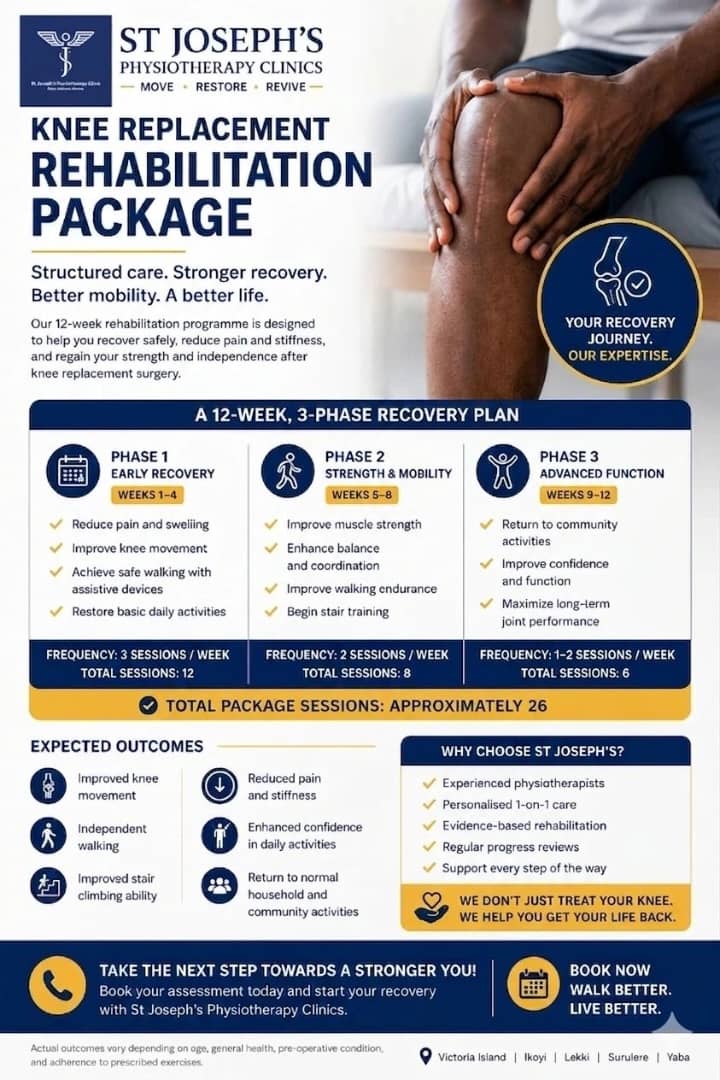
Complete Knee Replacement Rehabilitation Package in Lagos
Knee replacement surgery is a major step toward pain relief and improved mo…

NAMDA threatens strike over unpaid medical lecturers’ allowances
The Nigerian Association of Medical and Dental Academics (NAMDA) has warned…

Resident Doctors Signal End to Strike Threat After High-Level Talks with Gbajabiamila
The threat of a nationwide indefinite strike by the Nigerian Association of…