EFFORTS to improve on the treatment of breast cancer in the country got a boost last week when the 'Lagos University Teaching
Hospital, LUTH, acquired new breast cancer equipment, an automated IHC Stainer. The automated IHC Stainer will help in boosting the capacity research in Nigeria.
With this state of the arts equipment, pathology services will improve greatly as breast cancer will be diagnosed early and patients would have access to medications targeted at their type of breast cancer.
Speaking during the unveiling of the equipment in LUTH, the Chief Medical Director, CMD, Dr. Akin Osibogun noted that the
institution has the burden to continually maintain its leadership position when it comes to treatment of breast cancer, which
prompted the acquiring of the new equipment, as this will continue to serve as the leading centre in oncology and chemotherapy in Nigeria.
According to him, "before now, most treatments are usually manual, but with this machine, everything will be done within a
short period of time, rather than the manual which takes longer time to diagnose.
The manual one takes at least three to four weeks before the result gets to the doctor, this one takes just a
week because it is automated and the processes has been defined. "It does the whole work itself and the result tomes out for the pathologist to look before passing it to the doctor," he noted.
He reiterated that Nigeria really needs this kind of machine that will help researchers to do more, especially on our own kind of cancer here in Africa.
"This is important because we need to re-write our own text book that column cancer is common in elderly, but in Nigeria, the
age difference is less than that, and of course our food now has been compromised, there is no anti oxidants again in most foods we eat, and what we are exposed to here is not healthy
enough."
Research in breast cancer diagnosis and treatment has been very extensive in the last four decades. It has become evident that breast cancer is a heterogeneous disease and not a single disease entity as was earlier perceived.
The capacity to differentiate types of breast tumour biology have an effect on how a tumour progresses and its likely response to different treatment. More than 40 years of breast research has led to the identification of specific factors that can tell doctors much about what type of breast cancer a patient has, how fast-growing it will be and how it can best be treated.
Meanwhile, the Head Of Department, Anatomy and Molecular Pathology, LUTH, Dr. Fatimah Abdukareem, while commending the
CMD for the giant stride in seeking a lasting solution to the menace of breast cancer in the country noted that, "In Nigeria now, we are having an increasing rate of cancer cases which can be in two phases, which narrows down to awareness and a lot of people are now coming in, and it has come to notice that majority of the patience are much more younger and almost a
decade younger to most diseases, which evolve around fourth to fifth decades of the disease live span," she said.
In Nigeria, less than 5 per cent of all new breast cancers are tested for these factors, in about six centres. The implication of these is that the Nigerian breast cancer patient is denied the opportunity to benefit from these targeted therapies, which have been proven to increase breast cancer survivorship at lower toxicity to
the patients.
Abdukareem was of the view that "overtime, all the six pathology labs in Nigeria currently run on a manual platform, hence, diagnostic turnaround time, volume and quality of test are huge challenges. However, with automation, using an automated IHC Stainer, these challenges can be overcome to a great extent."
While the procurement of the automated IHC Stainer will boost the capacity research in Nigeria, it will also improve the quality of treatment success as the life of cancer survivors begin with knowing a patients HER2 status. The availability of the Ventana Benchmark GX will also boost the capacity to research into local data on types of breast cancers in Nigeria that can aid policy making and medical planning.
Among the benefits of the benchmark GX includes, differentiating types of breast cancer, giving oncologist indication
as to the best medication a breast cancer patient will benefit from based on clinical evidence, leading increase survival of breast cancer, improve the quality of test and !HC report by the pathologist, increase the number and capacity of breast tissue that can be tested, and to also enhance local research in cancers, which will ultimately help in gathering local data for clinical and policy decisions.
ABUJA: Training Schedule for Basic Life Support BLS, Pediatric Advanced Life Support (PALS), Advanced Cardiovascular Life Support ACLS, First Aid, CPR, AED
PORTHARCOURT: Training Schedule for Basic Life Support BLS, Pediatric Advanced Life Support (PALS), Advanced Cardiovascular Life Support ACLS, First Aid, CPR, AED
LAGOS: Training Schedule for Basic Life Support BLS, Pediatric Advanced Life Support (PALS), Advanced Cardiovascular Life Support ACLS, First Aid, CPR, AED
STOP paying for airtime and electricity, Let your phone pay its bills with ScreenT
You may also like

FG Supports Robotic Surgery Expansion to Reduce Medical Tourism
Nigeria is taking another step toward strengthening specialised healthcare …
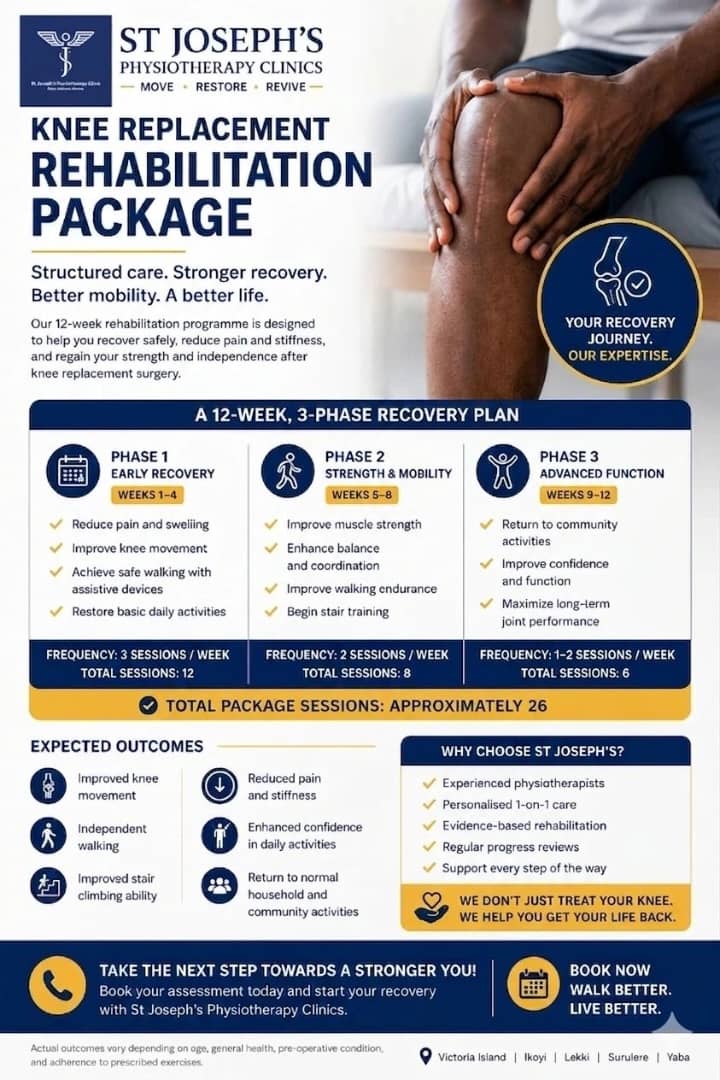
Complete Knee Replacement Rehabilitation Package in Lagos
Knee replacement surgery is a major step toward pain relief and improved mo…

NAMDA threatens strike over unpaid medical lecturers’ allowances
The Nigerian Association of Medical and Dental Academics (NAMDA) has warned…

Resident Doctors Signal End to Strike Threat After High-Level Talks with Gbajabiamila
The threat of a nationwide indefinite strike by the Nigerian Association of…
AMLSN Issues Strong Rejoinder to NAMDA on Public Service Establishment Matters
The Association of Medical Laboratory Scientists of Nigeria (AMLSN) has rel…