Worried about Nigeria’s overdependence on drug importation and donor funds, the Pharmaceutical Manufacturer’s Group of Manufacturers Association of Nigeria, PMG-MAN, says nothing short of national sufficiency and medicine security could take the country out of the woods.
Such measure would not only guarantee an end to the incidence of extreme poverty but ensure healthy living, promote sustained and inclusive economic growth and productivity and sustainable industrialisation, according to the UN Sustainable Development Goals, SDGs 1,3, 8 and 9. The Chairman of the PMG-MAN, Dr Fidelis Ayebae who gave the assertion, said it was unacceptable that Nigeria is dependent on imported and donor aid to satisfy the essential medicines needs of the rapidly growing population, while local facilities are abysmally under-utilised, Ayebae who spoke during the 5th Nigeria Pharma Expo 2019, explained that if nothing is done, Nigeria would be exporting jobs to other countries, and importing poverty, exerting pressure on foreign reserves, and giving window for falsified, substandard and counterfeit medicines among others.
He argued that if Nigeria is to attain self-sufficiency and ensure medicine security, deliberate radical policy must be put in place as well as an enabling business environment created by the government to promote, protect and grow the pharmaceutical industry.
“For us in the industry, our ambitious goal is to develop and grow a viable and globally competitive local pharma manufacturing sector and this is the reason we all have gathered today. Nigeria along with some other African countries signed the African Free Continental Area Agreement, AFCTA, to benefit from the AFCTA, we must do more to position the Pharma Industry such that Nigeria does not end up a dumping ground for pharma manufacturing. We propose that the government should prioritise the local pharmaceutical industry from the perspective of medicine security and national sufficiency.
It will also prepare Nigeria to take advantage of the Trade-related Aspects of International Property Rights, TRIPS, Flexibility window of WTO when domesticated. He urged President Buhari ed government to take full advantage of the Trade-related Aspects of International Property Rights flexibility by setting up Committee on National Medicine security, CONMS, to rejig and re-invigorate the industry with radical policies.
He added that the radical policies should focus on the establishment of pharmaceutical manufacturers expansion and expansion of the intervention fund of N300 billion, increased patronage by government, enforcing executive order 003 faithfully , zero per cent tariff for pharmaceutical raw and packaging materials and retention tariff on imported finished products local pharma has the capacity to produce and increase funding for NAFDAC among others. On his part, High Commissioner of India, Shri Abhay Thakur said Nigeria should learn from India, added that the key to success has been affordable solutions in machinery, health, agriculture among others.
He said the country is set to become the world’s fifth-largest manufacturing economy by the end of 2020. Abhay Thakur said India provides cost-benefit advantages in all area of engineering, from machinery manufacturing and technology services, machine tools, material handling equipment, process plant equipment and electrical machinery among others to enhance self-sufficiency in medicines. He said Nigeria has the wherewithal to become a net supplier of pharmaceutical products for the Central and West African markets if it must support domestic pharmaceutical production.
ABUJA: Training Schedule for Basic Life Support BLS, Pediatric Advanced Life Support (PALS), Advanced Cardiovascular Life Support ACLS, First Aid, CPR, AED
PORTHARCOURT: Training Schedule for Basic Life Support BLS, Pediatric Advanced Life Support (PALS), Advanced Cardiovascular Life Support ACLS, First Aid, CPR, AED
LAGOS: Training Schedule for Basic Life Support BLS, Pediatric Advanced Life Support (PALS), Advanced Cardiovascular Life Support ACLS, First Aid, CPR, AED
STOP paying for airtime and electricity, Let your phone pay its bills with ScreenT
You may also like

Resident Doctors Signal End to Strike Threat After High-Level Talks with Gbajabiamila
The threat of a nationwide indefinite strike by the Nigerian Association of…
AMLSN Issues Strong Rejoinder to NAMDA on Public Service Establishment Matters
The Association of Medical Laboratory Scientists of Nigeria (AMLSN) has rel…
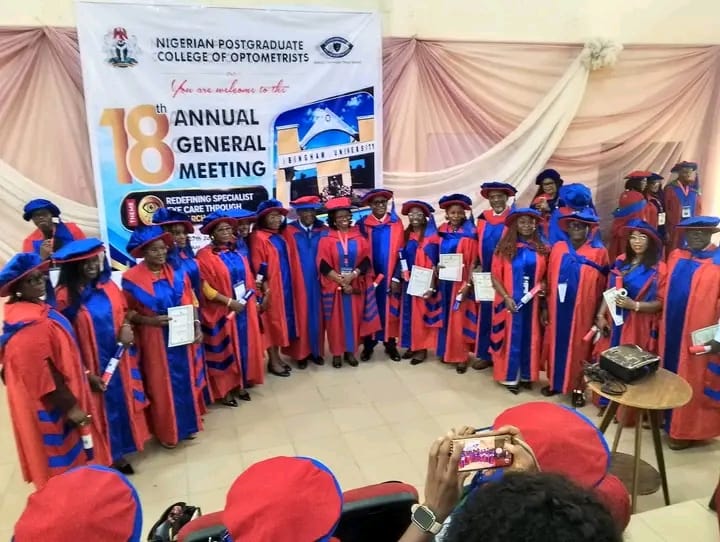
Nigerian Postgraduate College of Optometrists Conference Emphasizes Research, Innovation and Collaboration as Foundatino for Future of Specialist Eye Care and Consultant Cadre
The Nigerian Postgraduate College of Optometrists (NPCO) has reaffirmed its…

Open Lagos Health Sector Spot-Check Begins Ahead of 2030 SDG Deadline
A coalition of civil society organisations (CSOs), in collaboration with ke…

Fake Doctor’s Shocking Job Promise Ends in Arrest After Alleged 500,000 Hospital Recruitment Scam
A man accused of posing as a medical doctor has been arrested in Calabar af…