Nutrition experts and other stakeholders in the campaign to improve breastfeeding in Nigeria have expressed worry that the COVID-19 pandemic is gradually changing the dynamics of nutrition as well as giving an opportunity to producers of breastmilk substitutes to interfere with optimal breastfeeding practice. The experts also expressed concern that the COVID-19 pandemic has constituted a public health emergency around the world with implications on the coverage of nutrition and health interventions.
The experts spoke during a webinar organised by Alive & Thrive, partners and the Federal Ministry of Health on the 2020 World Breastfeeding Week entitled: “Breastfeeding and the Environment: Linkages and Opportunities in Nigeria.” In his submission at the webinar which also highlighted the linkages between breastfeeding and the environment in Nigeria’s context and the Infant and Young Child Feeding (IYCF) policy, Chief of Nutrition at UNICEF, Dr Simeon Nanama, noted that the measures put in place by governments around the world to contain the spread of COVID-19 have led to greater economic devastation on the livelihood of people.
Nanama said many households, especially those with infants and young children worry about the safety of breastfeeding their children at a time like this while others who want to breastfeed do not have the energy due to worsening household food insecurity. “Nigeria has made some progress in increasing the rate of exclusive breastfeeding, going from 17 percent in 2013, to 29 percent in 2018. This is on average, a 1 per cent increase per year. While this is unlikely to make Nigeria meet the World Health Assembly target of 50 per cent by 2025, still, exclusive breastfeeding seems to be one of the rare nutrition indicators on which Nigeria is making slow but steady progress.” Continuing, Nanama stated that the production, distribution, and use of Breastmilk Substitutes, BMS, has negative effects on the environment. He lamented that while experts are working to understand how the pandemic is changing the dynamic of nutrition behaviour in the country, producers and marketers of breast milk substitutes have seen the opportunity for strategic and opportunistic marketing of their products which is likely to interfere with optimal breastfeeding practices.
“Besides the additional financial burden placed on families, as well as its negative consequences on the development of children, breast milk substitutes such as instant formula and other milk products, play a role in environmental degradation and climate change in both development and emergency contexts such as the COVID-19 pandemic. “We need to strengthen the enforcement of reversed regulation of BMS in order to protect breastfeeding and the environment.” Earlier in his presentation, Senior Programme Officer, Nutrition at the Bill & Melinda Gates Foundation, Dr Victor Ajieroh, who spoke on the impact of promoting exclusive breastfeeding from the first hour of birth, said the mechanism for the effect of breastfeeding in fostering a healthier planet only reinforces the necessity and urgency for more concerted actions to better protect, support and promote breastfeeding. Destructive impact He said the COVID-19 pandemic with its associated destruction impact on all the main domain supply was another factor that has further reinforced the foundational priority of supporting mothers with the right information and incentives to breastfeed appropriately.
“We appreciate all the efforts of the government in protecting and supporting each citizen in these challenging times and the leadership of the ministry of health in articulating a very comprehensive national nutrition response plan and integrated within the broader national COVID-19 response. This represents a significant opportunity for advancing optimums breastfeeding behaviours in times like this.” He disclosed that 2018 NDHS shows that the rate of exclusive breastfeeding was gradually increasing and that it gives hope that from the current level of 29 per cent achieving 50 percent by 2025 was possible.
Ajeroh said that counselling of mothers during pregnancy, immediately after childbirth, and during the neonatal period has a significant positive effect on breastfeeding. “Mothers are two and half times more likely to breastfeed when breastfeeding is supported and promoted and protected. Studies have also shown that a one month increase in paid maternal leave was associated with 7.4 per cent increase in the prevalence of early initiation, and a 5.7 percent in the prevalence of exclusive breastfeeding, 2.2-month increase in the period of breastfeeding duration.
“There is also evidence that the marketing of breast milk substitutes discourages mothers from breastfeeding properly. Execution of all key components in the complementary initiative is needed,” he added. On her part, Professor of Public Health Nutrition at Obafemi Awolowo University, Dr Beatrice Ogunba, said breastfeeding leaves zero ecological footprints; it uses none of our scarce natural resources and therefore can be sustained for the health of our planet. It does not use fuel for production, for distribution or for sterilisation. For the first six months of life, a baby can be exclusively breastfed without a single drop of water. Speaking, Associate Director/Team Lead at Alive & Thrive, Dr Uche Ralph-Opara, said Alive & Thrive’s is supporting Lagos, Kaduna, and nine other states to scale up optimal maternal, infant and young child practices through a four-pronged approach: policy advocacy, interpersonal communication, and community mobilisation, mass media, and the strategic use of data. She said the support was made possible courtesy of Bill & Melinda Gates Foundation and UNICEF. An officer at Action Against Hunger, Hajiya Yakaka Mustapha, explained that the organisation is working in more than five states in the area of community empowerment. In Borno state, they work in more than 41 communities. Every year the world celebrates World Breastfeeding Week from August 1-7. The theme of this year’s celebration was “Support breastfeeding for a healthier planet.”
Source: Vanguard
You may also like

FG Supports Robotic Surgery Expansion to Reduce Medical Tourism
Nigeria is taking another step toward strengthening specialised healthcare …
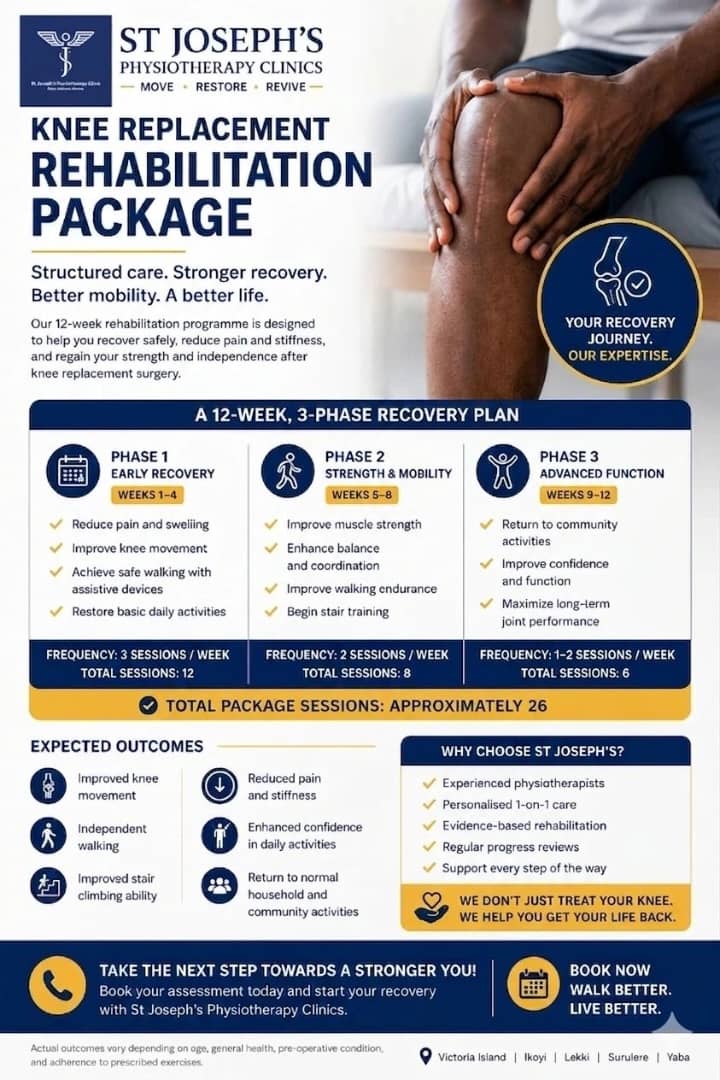
Complete Knee Replacement Rehabilitation Package in Lagos
Knee replacement surgery is a major step toward pain relief and improved mo…

NAMDA threatens strike over unpaid medical lecturers’ allowances
The Nigerian Association of Medical and Dental Academics (NAMDA) has warned…

Resident Doctors Signal End to Strike Threat After High-Level Talks with Gbajabiamila
The threat of a nationwide indefinite strike by the Nigerian Association of…
AMLSN Issues Strong Rejoinder to NAMDA on Public Service Establishment Matters
The Association of Medical Laboratory Scientists of Nigeria (AMLSN) has rel…