Minister of Health, Dr. Osagie Ehanire on Friday rated Nigeria’s maternal mortality, reproductive health mortality and child mortality very poor, saying it was the worst in the world. Speaking at a three day retreat organised by the House Committee on Health Services in Abuja, Ehanire however stated that plans were underway to establish a Public Health Security Fund to finance public health in the country. He said that he had written to the Secretary to the Government of the Federation and the Minister of Finance on the matter Besides that, the Minister also stated that government had plan to establish National Emergency Medical Services to meet up the many demands of the sector.
He said: “Nigeria has one of the worst indices in maternal health, reproductive health, child health. Under 5 mortality, we are one of the worst in the world. There was time we were getting over 900 maternal death per 10,000 live birth. In the last five years, it stagnated because of the investment. “The very concept behind the save 1 million lives was because of the fact that we are having nearly one million needless death in Nigeria that could be avoided if certain things were done and we created some pillars to achieve that. “That investment was 500 million US dollars taken as a loan by the federal government and given to the states as grant.
While technically that was successful, the actual impact of reducing one million death became questionable. Did we really reduced? “In reality, we needed to have addressed the gaps and one of the biggest gap is lack of access to health care. If a woman is in the village and goes into labour at 1.00am, she is on her own because if she has complication, some of them will not have tomorrow. “The same thing applies to children. Add the accident on our roads. Some are taken to the hospital and are asked to make payment before being attended to or nobody will attend to you because you cannot have access to ambulance. There is something mission and that is emergency medical ambulance which many developed country have.
“In the wisdom of those who drafted the National Health Act, they included 5 percent for medical emergencies and I want to believe that what was on their mind was to use that to attend to those who left on their own, those who are unsung, those who die silently and are not reported by the newspapers because they live in the rural areas and are only part of the statistics that we see. “We decided to apply this 5 percent to emergency medical services which the Ministry of health is in the process of setting up and is receiving the support of the House committee. “We have written to the Minister of Finance and the Secretary to the Government of the Federation to make a case for a Public Health Security Fund. I will like to appeal to members to support the establishment of a public health security fund that will take care of public health security. At the time the 2014 National Health Act was being pursued, the first use of the money I described was the intention.
“Public health security is very important and so, a separate fund can be created to take care of it. The NCDC is already well funded because they get money even from donor agencies. But there is no donation for managing our public health or emergency medical service. So we are looking for support in that area”. Speaking on the establishment of the National Emergency Medical Services, the minister said “recently, we got five ambulances which we have branded. Since government will to buy all the ambulances, we decided to involve the private sector to form a public private partnership because section 18 of the Act allows the Minister to work closely with the private sector to address problem. “So, we are pulling together all the ambulances in the country, both private, public and institutional to form the national emergency medical system which will be launched in the FCT within the next one month by the President. The purpose is to use that 5 percent as seed money to look for donations because that money is not enough.
“There is also no payment at the point of therapy and so, nobody is going to say pay for card or pay deposit because that is also guaranteed from the pool of funds contained in the database developed by the NHIS. “We have agreed with the Association of Private Medical Practitioners and Guild of Medical Directors that we shall do this as part of public service. That is to say it is not a profit making venture, but there will be something to cover their expenses. So, for every run you make, you are paid.
“We recognise that the implementation of legislative mandates is an executive responsibility, but we also recognise that the National Assembly has an essential role in overseeing implementation to ensure fidelity to the objectives “Every legislation passed by the National Assembly has one ultimate goal, to improve the circumstances of people’s lives and make our country better as a result. The law-making role of the National Assembly does not end when a Bill becomes law.
“We have an additional responsibility to exercise the constitutional oversight authority to ensure that those responsible for implementing legislative mandates remain faithful to the mandate’s objectives”. The Speaker added that the National Health Act would meet the expectations of the public in healthcare system.
“Over the last eighteen months, the world has experienced a devastating pandemic that has caused loss of life, wreaked economic distress. This would not be the last such pandemic. “Globalisation and the speed and frequency of travel mean that disease can spread from one corner of the world to another with speed, unlike ever before in history. We must ensure that our healthcare system at home is enough to accommodate and respond to this reality because if we have learned anything from recent events. It is that in global crisis, it is every country for itself”.
On his part, the chairman of the House Committee on Health Services, Hon. Tanko Sununu said the essence of the retreat was to rub mind with all the stakeholders in the efforts to amend the National Health Act. “The Act provides for the regulation, development, and management of Nigeria’s Health System.
The amendments is desirous in order to incorporate the new challenges especially on combating pandemic like COVID-19, incorporation of health research, health security and building resiliency in National Health System. “In order to achieve a better outcome of the amendments, the committee ‘ invited major stakeholders in the implementation of the Act ranging from the executives, civil society groups, development partners to media practitioners to rub minds with legislators”, Sununu said
Source: Vanguard
You may also like

FG Supports Robotic Surgery Expansion to Reduce Medical Tourism
Nigeria is taking another step toward strengthening specialised healthcare …
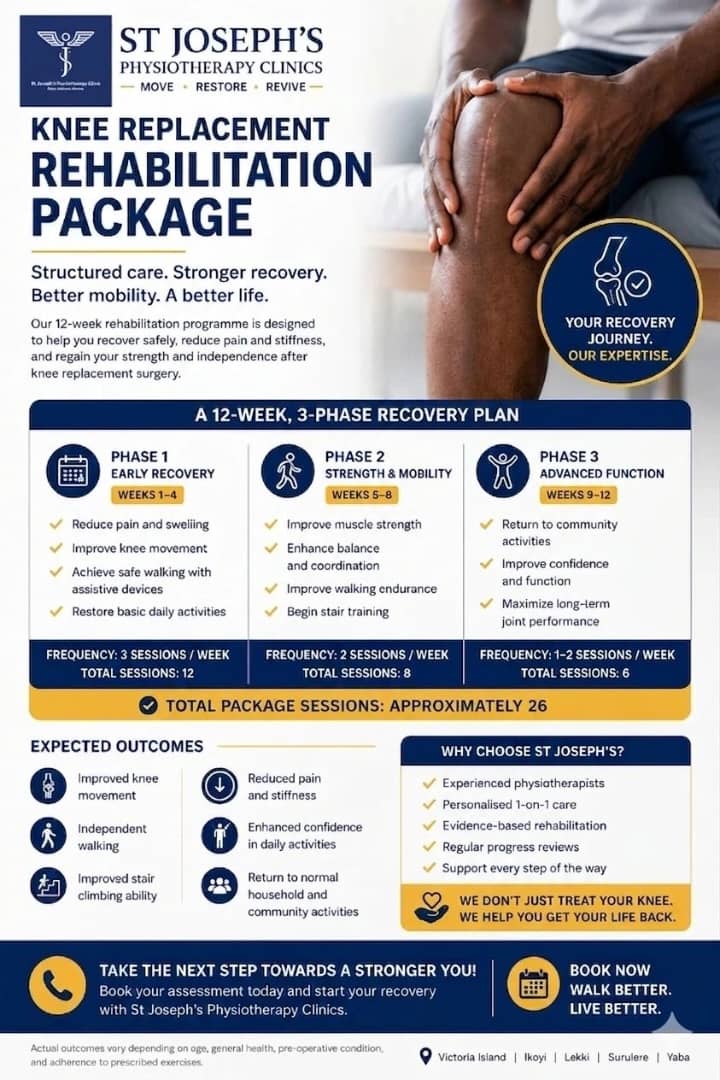
Complete Knee Replacement Rehabilitation Package in Lagos
Knee replacement surgery is a major step toward pain relief and improved mo…

NAMDA threatens strike over unpaid medical lecturers’ allowances
The Nigerian Association of Medical and Dental Academics (NAMDA) has warned…

Resident Doctors Signal End to Strike Threat After High-Level Talks with Gbajabiamila
The threat of a nationwide indefinite strike by the Nigerian Association of…
AMLSN Issues Strong Rejoinder to NAMDA on Public Service Establishment Matters
The Association of Medical Laboratory Scientists of Nigeria (AMLSN) has rel…