History was made on April 1, 2014 at Asokoro District Hospital when a 46-year-old female with large uterine fibroid had her uterus removed by Laparoscopic surgery.
The patient recovered fully and was discharged from the hospital.
Head Public Relations of FCT Health and Human Services Secretariat, Badaru S. Yakasai, said the achievement was made possible by medical practitioners in the hospital because of the improved healthcare provided by the secretariat headed by Dr Ademola Onakomaiya.
He said other functional services in public hospitals in the territory include intensive care, computerised tomography services, digital fluoroscopy, heamo-dialysis, automated laboratory investigations and mammography.
According to him, these services were previously non-existent in FCT owned hospitals, while FCT Administration through the Health and Human Services Secretariat has procured state of the art Endoscopic towers manufactured by Karl Storz, Germany. This endoscopic equipment has since been installed at Asokoro District hospital. "The hospital now has the capacity to carry out minimal access surgery like appendicectomy, cholecystectomy and ovarian cystectomy to mention just a few," he added.
He said with the latest innovation of having an endoscopy, a surgeon can look into a patient's body using an endoscope in which a cutting tool can be attached to it to perform surgery, which will leave a tiny scar externally.
Our reporter learnt that the endoscopic towers also include gastrointestinal or bowel endoscopy, which allows for diagnostic and therapeutic examinations of the esophagus, stomach, duodenum, rectum and sigmoid part of the large bowel, while the urological towers permit examination of the genitourinary tract, allowing for visual examination of the urethra, bladder as well as the removal of the prostate gland by a technique known as transurethral resection of the prostate. The operation was to have been carried out without a scar on the abdomen since the surgery is carried out through the urethra.
By Hussein Yahaya
Daily Trust
ABUJA: Training Schedule for Basic Life Support BLS, Pediatric Advanced Life Support (PALS), Advanced Cardiovascular Life Support ACLS, First Aid, CPR, AED
PORTHARCOURT: Training Schedule for Basic Life Support BLS, Pediatric Advanced Life Support (PALS), Advanced Cardiovascular Life Support ACLS, First Aid, CPR, AED
LAGOS: Training Schedule for Basic Life Support BLS, Pediatric Advanced Life Support (PALS), Advanced Cardiovascular Life Support ACLS, First Aid, CPR, AED
STOP paying for airtime and electricity, Let your phone pay its bills with ScreenT
You may also like

FG Supports Robotic Surgery Expansion to Reduce Medical Tourism
Nigeria is taking another step toward strengthening specialised healthcare …
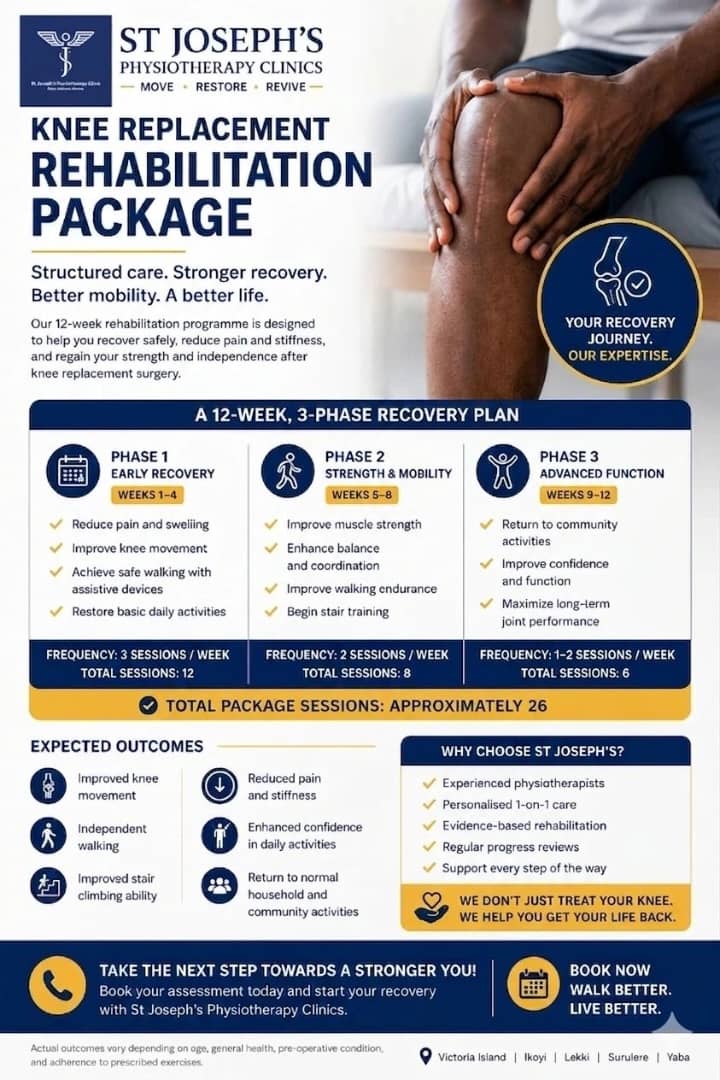
Complete Knee Replacement Rehabilitation Package in Lagos
Knee replacement surgery is a major step toward pain relief and improved mo…

NAMDA threatens strike over unpaid medical lecturers’ allowances
The Nigerian Association of Medical and Dental Academics (NAMDA) has warned…

Resident Doctors Signal End to Strike Threat After High-Level Talks with Gbajabiamila
The threat of a nationwide indefinite strike by the Nigerian Association of…
AMLSN Issues Strong Rejoinder to NAMDA on Public Service Establishment Matters
The Association of Medical Laboratory Scientists of Nigeria (AMLSN) has rel…
