I asked Chief Medical Directors (CMD), ‘Can your hospital save your life?’ Do you have staff trained in the basic life support skills: such that if you are taken to your own hospital, they will give the best and necessary care, to save your life? For many health personnel, your family and friends will more than likely take you to your own hospital: where you work. They will do so convinced that being a member of staff, your colleagues will look after you without immediate requests for money.
What about pharmacists and laboratory people in our hospitals? You ask for a drug or blood and they say the drugs are not available, or they are out of stock. Every single time! And these are common essential drugs and materials. Well, whose job is it to ensure that these are available? The chief Pharmacist, the chief laboratory scientist, of course! Sadly, they believe they are above ill health. They have so evolved that they cannot be brought back to their own hospital with sickness, requiring the same drugs/ blood they refuse to make available.
So, can you trust yourself to be cared for in your own hospital? Would you be happy to be looked after by your staff? Are the processes of admission effortless that your family will not suffer in getting you treatment? Are there drugs and equipment needed to save you? Does someone have to buy essential life saving drugs and materials from the chemist across the road? Will you be alive and well afterwards?
May I ask you a question, my esteemed readers?
Can you save a life? What if it was someone close to you: at home, on the road or at work? Do you have the attitude, presence of mind and the skills to help someone who has collapsed and in imminent danger of death? If not, then let us talk about basic life support when someone has collapsed.
Basic life support
Basic Life Support (BLS) can be performed by laypeople: taxi drivers, the man on the street, students, security people and executives in the office. The first person on the scene of an accident or a collapse due to cardiac arrest, stroke, drowning etc. (first responder) should be able to start the process of BLS. Of course, all medical, paramedical and nursing personnel should be certified as trained in these skills.
Your first response is as follows:
-Check for danger. Make sure you and the victim are safe.
-Check for a response. How bad is the situation? What is the problem?
-Send for help immediately. Shout for help. Send someone else to go get other people if necessary.
-Start basic life support actions to save life.
Cardio pulmonary resuscitation
Assess the victim’s level of consciousness by asking loudly and shaking at the shoulders, “Are you okay?” and scan chest for breathing movement visually. If there is no response, call for help by shouting out loudly. If the patient is unresponsive and not breathing, you should begin saving life with chest compressions. Just performing chest compression is better than making no attempt. This helps to push the blood to the brain and other vital organs. The process of performing chest compressions is as follows.
Circulation
If the patient is not breathing, assess pulse at the carotid in the neck in about five seconds; begin immediately with chest compressions at a rate of 30 chest compressions in 18 seconds or 100 compressions in a minute. For adults, push up to five centimetres and for child up to four centimetres. Press hard and fast, maintaining the rate of at about 100/minute. Allow recoil of chest fully between each compression. Keep counting aloud. After every 30 chest compressions give two rescue breaths in adult and child victim. See below.
Airway
Patients who are in coma sometimes cannot protect their airway. This means unlike you and I, who can keep the throat open for air to go in and out, these patients cannot and so have obstruction of the airway. The first and crucial thing to do is to maintain the air passage and clear it of obstruction. In some situations, the obstruction is due to the tongue, blood and or vomit. These need to be removed and the passage kept clear for air to move in and out.
The tongue can be moved out of the way simply by moving the jaw up (chin lift and jaw thrust). It’s a simple skill to learn but needs to be taught. Secondly, use a hand or clean cloth to remove blood, vomit, or debris from the mouth, clearing it and preventing the patient from choking. Do not do this blindly. You must see what you are trying to remove first and avoid pushing things deeper into the throat.
Breathing
Expose the chest to see if the person is breathing or not. If breathing, is it normal or noisy breathing, like someone snoring really badly? Or is not breathing at all: the chest is not moving up and down as usual? In this case you need to breath for person. There are two ways: mouth to mouth respiration and mouth to nose respiration. Mouth to mouth respiration is mostly for adults. In very small children with small faces, mouth to mouth and nose together can be performed.
Learn CPR and BLS
The life saving skills need to be taught to every adult and child in Nigeria. All medical personnel and people in the service industry: airports, hotels, public places etc, need to have the skills.
Finally, all hospitals should ensure the drugs and materials such as ‘common oxygen’ are available for resuscitation. Don’t go home without making sure: in case, it may be you or your relatives that need care.
BY DR. BIODUN OGUNGBO
ABUJA: Training Schedule for Basic Life Support BLS, Pediatric Advanced Life Support (PALS), Advanced Cardiovascular Life Support ACLS, First Aid, CPR, AED
PORTHARCOURT: Training Schedule for Basic Life Support BLS, Pediatric Advanced Life Support (PALS), Advanced Cardiovascular Life Support ACLS, First Aid, CPR, AED
LAGOS: Training Schedule for Basic Life Support BLS, Pediatric Advanced Life Support (PALS), Advanced Cardiovascular Life Support ACLS, First Aid, CPR, AED
STOP paying for airtime and electricity, Let your phone pay its bills with ScreenT
You may also like

FG Supports Robotic Surgery Expansion to Reduce Medical Tourism
Nigeria is taking another step toward strengthening specialised healthcare …
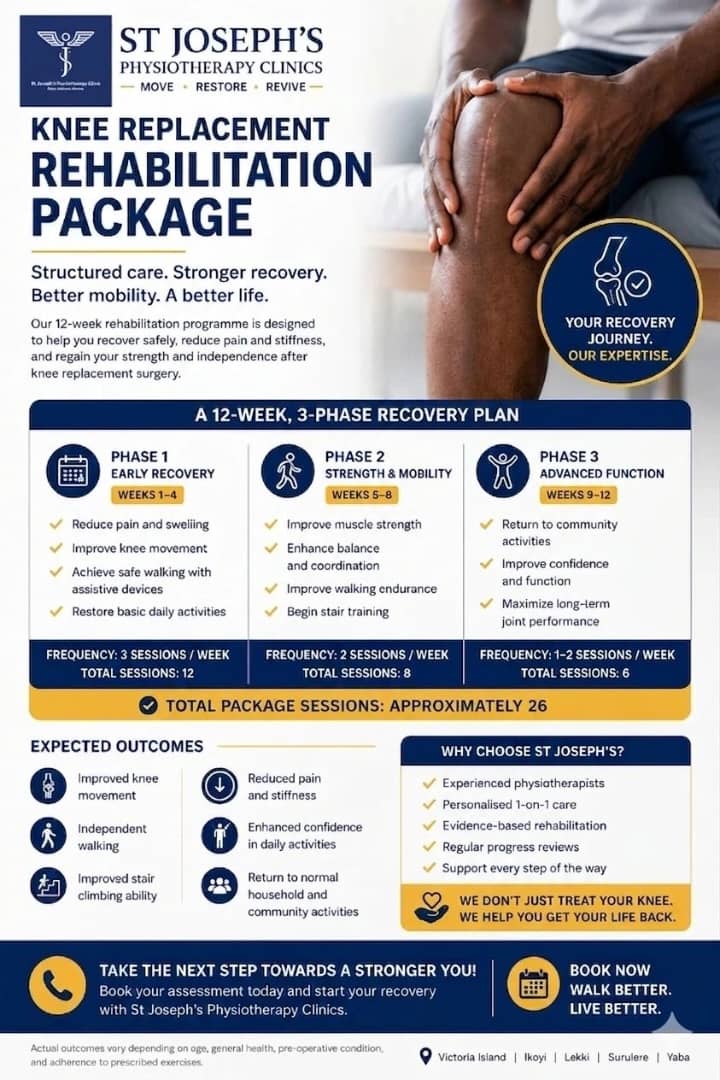
Complete Knee Replacement Rehabilitation Package in Lagos
Knee replacement surgery is a major step toward pain relief and improved mo…
NAMDA threatens strike over unpaid medical lecturers’ allowances
The Nigerian Association of Medical and Dental Academics (NAMDA) has warned…
Resident Doctors Signal End to Strike Threat After High-Level Talks with Gbajabiamila
The threat of a nationwide indefinite strike by the Nigerian Association of…
AMLSN Issues Strong Rejoinder to NAMDA on Public Service Establishment Matters
The Association of Medical Laboratory Scientists of Nigeria (AMLSN) has rel…