Again, the outbreak of cholera epidemic has been reported in at least four states in Nigeria and it has so far claimed scores of lives. In the last couple of days, some states in Nigeria have come under the spell of cholera epidemic. And aside those still anguishing in hospitals from the attack, the incredible death toll also give cause for concern. Weekly Trust investigations show that Plateau, Sokoto, Zamfara and Lagos States have been hit by cholera epidemic.
Zamfara recorded 1,117 cases with official confirmation of 72 deaths in two weeks. Unofficial sources said the casualty figure is higher as the official statistics did not reflect those that died either at home or before reaching the hospitals. According to the Medical teams managing the cholera outbreak in the state, Gusau recorded the highest number of cholera cases followed by, Zurmi, Maradun and Bakura local government areas.
At the Shagari Primary Health Care Center and other affected places ninety fresh cases were recorded in a day, official said. In Namu, a small village in Quan'Pan Local Government Area of Plateau State, with just one Primary Healthcare Clinic (PHC) and no decent source of drinking water had to suddenly cater for an additional 6,490 displaced people from Nasarawa State.
Over 6,000 internally displaced persons from the violence in Obi Local Government Area of Nasarawa State have relocated to Namu for refuge and are presently housed in a camp. Reports say the cholera outbreak started in the camp of the displaced persons, who eat, sleep and use the same latrines with the indigenes of Namu. It was observed in the Anguwan Yashi community, which hosts most of the displaced persons that over 50 people squeeze themselves in small compounds. Also, in some houses, about 20 people squat, sharing sleeping space every night in tiny rooms. Also, only wells serve as sources of drinking water, usually open and unhygienic. Based on the set up, cholera epidemic struck the displaced and indigenes, the young and the old, men and women in the community.
Plateau State government which admits the outbreak of cholera in the state claimed that only nine people have been killed. But the community claims 30 people have so far died from the cholera outbreak. None could however dispute that over 100 people have been infected and treated from the disease.
Sadam Abubakar said his mother Hauwa Kulu died three days after visiting her sister who was also killed by the disease. Abubakar explained that "I am from Namu. My mother went to visit her sister who was suffering from cholera, but the sister died that day. The next day my mother complained of diarrhoea and we bought her some drugs, but when it didn't stop we rushed her to Taimako private hospital. She died despite consuming 17 Intravenous (IV) fluids".
Health workers claimed that cholera was reported in the village on October 5th, 2013, but knowledge of the epidemic became public after the State Emergency Management Agency (SEMA) team from Nasarawa and Plateau States visited Namu last week. The District Head of the village, Alhaji Abubakar Sadiq claimed that mortality numbers have been down-played, adding that most of those killed by the scourge were women nursing their children. Sadiq said "both indigenes of the village and the displaced have been affected because we now live together. And I can count over ten of the indigenes who have died from this disease, including my brother's wife, my neighbour and her daughter."
The Plateau State epidemiologist Dr. Raymond Yuryit who first disclosed the outbreak of the disease, said poor management by health workers was the reason for the loss of lives. He said "overcrowding, dirty environment and drinking unhygienic water and food were the causes of the plague." Yuryit lamented that "most of the boreholes in the community are not functional and the wells are left uncovered. However, we have sensitized the community and health workers had been trained to manage the disease better."
Damar Wapnan, the Disease, Surveillance and Notification Officer of Quan'Pan who is presently overseeing Namu said Plateau and Nasarawa SEMA have donated drugs to the PHC. He said patients are treated free, while the Red Cross has donated chlorine to help disinfect the various wells. Wapnan, however, said the severity of the disease was declining and those treated have been discharged.
Malama Zilai who is nursing her 11 years old daughter Khadija said she heaved a sigh a relief when asked to pay N800 at the PHC, but almost free as it appears, the capacity of the PHC makes it impossible for everyone to enjoy its benefits. "If not for the few private clinics in Namu, the calamity would have been worst, because the PHC is headed by one nurse, two community health workers and has only three beds," says Alhaji Ali Maianguwa who is part of the village health sensitization team.
The striking case of a teenager, Khadija aged 11, suffered from cholera is still on admission in the hospital. She said in a barely audible voice "my brother started it, but he is better now. We don't have a toilet in our house, because it got filled up and broke. So we either use our neighbour's toilet or go into the bush."
Malam Bashari Abdullahi whose 14-year old daughter, Hauwa was admitted beside Khadija at the PHC also said, over seven children have suffered from the disease in his compound. He said "there are presently 52 occupants in our compound and most of whom are displaced persons from Nasarawa. Before then we were over 100, but some of the displaced have returned to their villages." With better awareness, antibiotics and IV fluids, it seems the disease is on a decline. Dr. Maji Joseph, a general medical practitioner with Our Lady of Apostles (OLA) Clinic in Namu said "patients usually appear in the hospital severely dehydrated and very weak, but after the IV infusion and some antibiotics, they usually pick up."
Having treated over 20 patients with the disease, Dr. Joseph said some four cartons of ringer lactate have been donated to the hospital by the state government to be used on patients, adding that "there is a water and better convenience for them to use in the hospital. So, we are able to deposit the bacteria here and don't spread it out. There is also awareness because we give them health talks before they are discharged." But despite claims by the community and officials in Plateau, the Nasarawa State government is denying that its population which is displaced in the neighbouring Plateau State, is hit by cholera outbreak
Dr. Abdullahi Idris, Executive Secretary of Nasarawa State Emergency Management Agency (NASEMA), told Weekly Trust that the state Ministry of Health sent a consignment of medicals to Namu to treat the displaced persons there, but insisted that they are merely suffering from vomiting and diarrhea. He said the result of a detailed laboratory test is still being expected to confirm the disease, and added that the state government is not taking chances, and has taken far reaching steps to control vomiting and diarrhea, while also stepping up prevention of possible cholera outbreak.
Similarly, cholera outbreak hit Tambuwal and Kebbe Local Government Areas in Sokoto State. Scores of people were killed and the community blamed poor source of water for the outbreak. The state government official statement on the matter, pegged the death toll at 13 by last Thursday, October 24 and total number of victims in the two local government areas put at 152.
In Barkeji alone, a village located along Sokoto-Jega road in Tambuwal Local Government Area where the disease was said to have first surfaced, 31 cases were recorded between October 10 and 21. And five persons were confirmed dead, 21 discharged and two were still on admission and positively responding to treatment.
In Kebbe Local Government Area which is less than 20 kilometers from Tambuwal, the disease resurfaced in Bakin Dutse, Tuna, 'Yar-Romo, Nabasa, Fakku and Bashi all in riverine area. At least, out of 121 cases, eight deaths were recorded.
The Acting Director of Health in Tambuwal Local Government, Alhaji Bala Oroji said ignorance among the local dwellers was responsible for the outbreak. According to him, the old tradition of fetching water from the river as maintained by the people contributed to the emergence of the disease in Barkeji. "We have boreholes but because of the ignorance of our people, they keep fetching water from wells. They maintain that old tradition of going to the stream to fetch water for their domestic use," he said
His point was however, collaborated by one of the victims, Malama Hauwa'u Abubakar, who said she was brought to Barkeji Community Basic Health Centre on Monday. She testified to the availability of clean water in the area just as she attributed her predicament to the will of God. Dr. Halliru Alhassan, Director, Public Health and Medical Services, Sokoto State Ministry of Health said the samples of water and stool of the victims had been taken and were being analysed at the public health laboratory to ascertain the actual causes of the epidemic.
However, Permanent Secretary, Ministry of Health, Dr. Buhari Kware attributed the outbreak to contaminated water, but added that the situation is now under control. "The problem in Barkeji was suspected to be caused by contamination of the water of an uncovered, shallow hand-dug well. But the epidemic in Kebbe Local Government Area was attributed to the contamination of a river in the area," he said. "All these communities are riverine and we are suspecting that the river water was contaminated," he added.
The Village Head of Barkeji, Malam Abubakar Galadima told Weekly Trust that the situation has since been brought under control with the combined efforts of state and local governments with community leaders who were working tirelessly on sensitizing people on the importance of personal and environmental hygiene. "We engaged town criers and health workers who were going places, especially mosques and markets, sensitizing people on the need to boil their drinking water and keeping their environment clean," he said.
The Chairman of Kebbe Local Government, Alhaji Bala Kokani, told Weekly Trust that the Local Government has mobilized adequate drugs and medicaments just as it embarked on massive enlightenment campaigns to sensitize the people to keep clean environment and drink only boiled water. Tambuwal council boss, Alhaji Sambo Bello Modo commended the state government for deploying health officers and drugs to the area, adding that his council has spent over N500,000 in providing medicines to the centre.
Also in Lagos State cholera outbreak, which hit five local government areas has so far claimed the lives of at least three persons, while few others were said to have been reportedly discharged after treatment. Lagos State Commissioner for Health, Dr. Jide Idris, who made the disclosure in Alausa, Ikeja, pleaded with residents to report any case of cholera to the nearest health facility as well as maintain high level of hygiene. Idris said "although, many of the cases had been treated and discharged in several health facilities, three had been confirmed dead. Most of the suspected cases were from Ajeromi, Apapa, Lagos Island, Oshodi_Isolo and Surulere Local Government Areas."
BY LAMI SADIQ, JOS ; ABUBAKAR AUWAL, SOKOTO & HIR JOSEPH
Dailytrust
ABUJA: Training Schedule for Basic Life Support BLS, Pediatric Advanced Life Support (PALS), Advanced Cardiovascular Life Support ACLS, First Aid, CPR, AED
PORTHARCOURT: Training Schedule for Basic Life Support BLS, Pediatric Advanced Life Support (PALS), Advanced Cardiovascular Life Support ACLS, First Aid, CPR, AED
LAGOS: Training Schedule for Basic Life Support BLS, Pediatric Advanced Life Support (PALS), Advanced Cardiovascular Life Support ACLS, First Aid, CPR, AED
STOP paying for airtime and electricity, Let your phone pay its bills with ScreenT
You may also like

FG Supports Robotic Surgery Expansion to Reduce Medical Tourism
Nigeria is taking another step toward strengthening specialised healthcare …
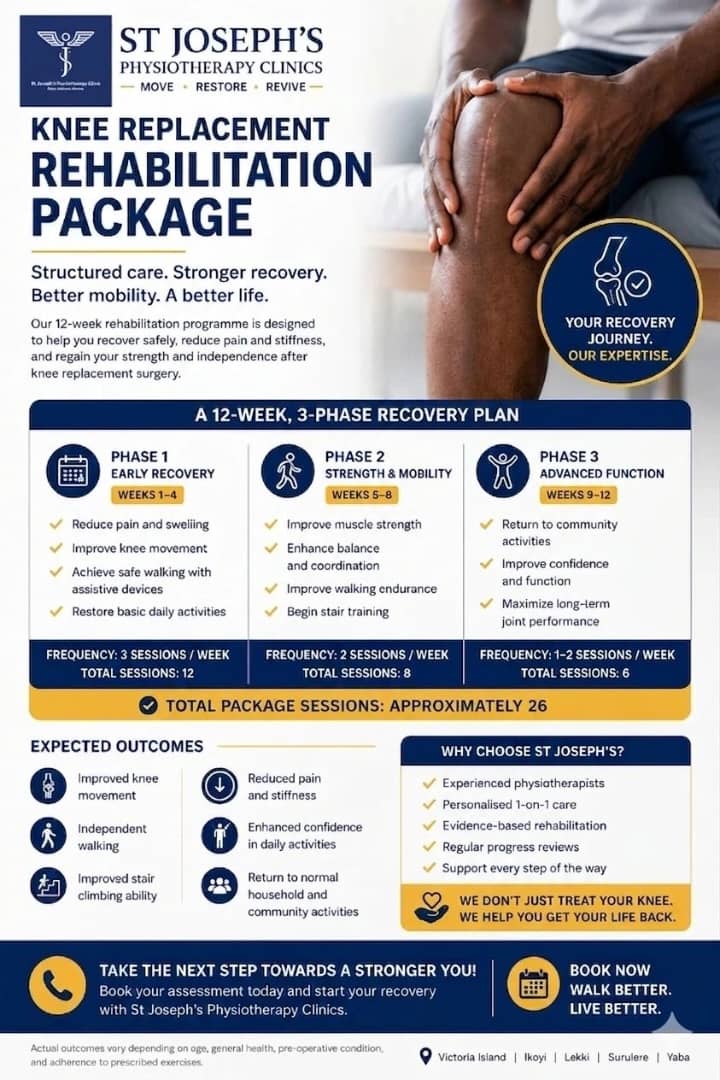
Complete Knee Replacement Rehabilitation Package in Lagos
Knee replacement surgery is a major step toward pain relief and improved mo…

NAMDA threatens strike over unpaid medical lecturers’ allowances
The Nigerian Association of Medical and Dental Academics (NAMDA) has warned…

Resident Doctors Signal End to Strike Threat After High-Level Talks with Gbajabiamila
The threat of a nationwide indefinite strike by the Nigerian Association of…
AMLSN Issues Strong Rejoinder to NAMDA on Public Service Establishment Matters
The Association of Medical Laboratory Scientists of Nigeria (AMLSN) has rel…
