In Nigeria, malaria accounts for 60 per cent of outpatient visits and 30 per cent of hospitalisation among children under-five. The available Demographic and Health Survey (DHS) of 2008 reported an infant mortality of 75 per 1000 live births and an under-five mortality of 157 per 1000. Despite the scary incidence of malaria in the country, some public health care providers are non-challant in its treatment. Godwin Haruna writes
Dateline: Isolo General Hospital, Sunday March 16, 2014. As the Christian faithful were rushing to worship at the early morning services some parents were rushing to the hospital with their children. With some children maintaining constant high body temperatures in the course of the night and amid the fuel scarcity common sense dictated rushing to the nearest medical facility.
This was why Mr. and Mrs. Michael Sani rushed their two-year-old child to the appropriately christened Mother and Child Centre located within the precincts of the Isolo General Hospital. The hospital is about 300 metres from where they live in Oke-Afa, Isolo. According to them, the records department did not waste time in issuing them with the hospital card and thereupon directed them to the consulting room, a few metres away on the ground floor. Sani told THISDAY that on arrival, to their utter shock and disbelief, they met some parents begging the doctor profusely to attend to their wailing children, but she refused, saying: "Go back to the nearest primary health centre in your area. I cannot attend to you here because I have much work on my hands already. Go back there, you will see a doctor and a nurse."
At this point, he said when he saw that the female doctor was resolute in her decision not to see about five children being carried by their parents, he moved forward and engaged her and pleaded for a change of heart. Still adamant and shoving people to make her way out, Sani said he blocked her way and said he does not know of any primary health care where he lives. She called the nurse on duty and asked her to direct me to the nearest PHC, but the parents, who have increased by one now said they couldn't go back. She retorted: "If you don't leave, be rest assured that even if you wait here until 1 pm in the afternoon I will not listen to you. We're only here for emergencies and I am going for ward round, I've told you I am the only one on duty. We can only see children with high body temperatures and why are you coming here on a Sunday anyway?"
Sani stated that after this, the parents including himself responded by saying, "Doctor, mine developed high body temperature in the night, look at him for me." According to him, but she pushed her way through to the door from where she gave instructions to the nurse and asked one parent, perhaps, known to her to come with her as she walked away.
"We went back to the nurse who was more considerate, but helpless in the face of the stern instructions from the doctor to go look after the patients on admission. She advised us to go to the PHC nearest to us. I told her where I live and she looked at me and said, 'well I don't know whether there is a PHC there, why don't you go to Ejigbo.' I replied her that this centre is closer to me than Ejigbo you are referring me to and moreover, this is a Children and Mothers' hospital. Without any audible response from her, we went to Ejigbo PHC, a distance of about four kilometres where a dutiful God-sent doctor attended to my child. Very professional and compassionate, she was quite pleased doing her job and making parents happy. You could never know if you were in a public hospital, may God bless the Ejigbo doctor," Sani said amid smiles knowing that his son had gotten better and resumed school. The behaviour of the Isolo MCH brings to the fore the factor of delay in the high mortality related to malaria in the country. This real life story of Sani also brings home the truth about the non-challant attitude of public health workers in the management of diseases in the country.
According to Sani, the Ejigbo doctor, who would not want her name mentioned in the media because she is a civil servant, said the first symptoms of malaria include fever, chills, sweats, headaches, muscle pains, nausea and vomiting. She added that some of these are often not specific and are also found in other diseases (such as influenza and other common viral infections).
Asked why Sani's son did not get better after the first dose of ACT procured from a pharmacy, she said the child probably developed drug resistant malaria and that was why she changed the prescription during the second treatment after running the necessary blood laboratory tests. She advised parents to always consult a medical practitioner when malaria strikes rather than resort to self-medication.
According to her, "the physical findings are often not specific (elevated temperature, perspiration, tiredness). In severe malaria clinical findings
(confusion, coma, neurologic focal signs, severe anemia, respiratory difficulties) are more striking and may increase the suspicion index for malaria." Speaking at an event in Lagos Tuesday, Country Director, Malaria No More, Mrs. Dayo Oluwole told the stunned audience that malaria kills a child every 60 seconds across the globe. Oluwole stated that malaria is curable and that it had long been eliminated in some countries of the world. She enjoined the media to raise the awareness level in order to reduce the mortality in the country.
According to Oluwole, malaria is a mosquito-borne disease caused by a blood parasite called Plasmodium. She said patients with malaria typically are very sick with high fevers, shaking chills and flu-like illness. "Although malaria can be a fatal disease, illness and death from malaria are largely preventable. It has been eliminated in the advanced countries and I believe it can be done here with everybody working to achieve that goal," she said.
Also speaking, Health Editor of the Vanguard Newspapers, Mr. sola Ogundipe said with good sensitization programme driven by the media, the country would drastically reduce deaths from malaria, especially among children. He quoted the World Health Organization estimates which said malaria caused 219 million clinical episodes in 2012 and 660,000 deaths to buttress his point on the seriousness of the disease.
Oluwole added that malaria is spread by the bite of an infected Anopheles mosquito adding that they prefer to feed at night. She said malaria is diagnosed based on symptoms, followed by laboratory confirmation. "The test that is used most widely is microscopic examination of the patient's blood for the presence of the malaria parasite and then treatment commences immediately," she stated. Oluwole stressed that the vision of her organisation like its name implies, is to make malaria history. She added that community sensitization on the use of insecticide treated nets and environmental cleanliness are strategies being reinforced to drive down the incidence of the disease in the country.
ABUJA: Training Schedule for Basic Life Support BLS, Pediatric Advanced Life Support (PALS), Advanced Cardiovascular Life Support ACLS, First Aid, CPR, AED
PORTHARCOURT: Training Schedule for Basic Life Support BLS, Pediatric Advanced Life Support (PALS), Advanced Cardiovascular Life Support ACLS, First Aid, CPR, AED
LAGOS: Training Schedule for Basic Life Support BLS, Pediatric Advanced Life Support (PALS), Advanced Cardiovascular Life Support ACLS, First Aid, CPR, AED
STOP paying for airtime and electricity, Let your phone pay its bills with ScreenT
You may also like

FG Supports Robotic Surgery Expansion to Reduce Medical Tourism
Nigeria is taking another step toward strengthening specialised healthcare …
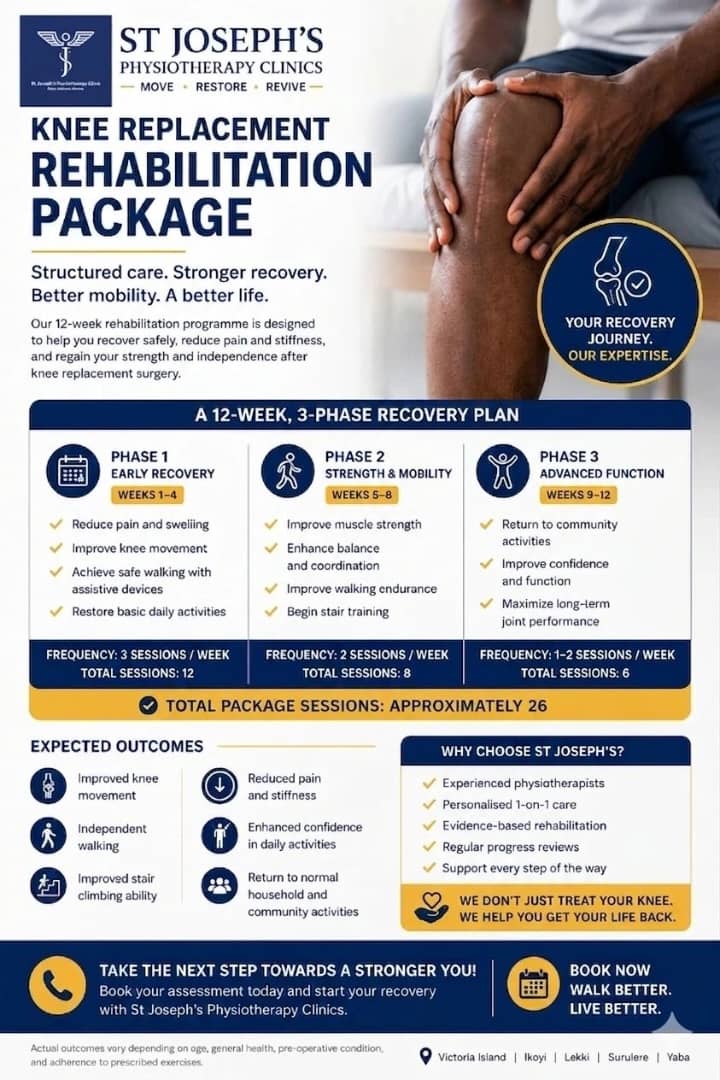
Complete Knee Replacement Rehabilitation Package in Lagos
Knee replacement surgery is a major step toward pain relief and improved mo…

NAMDA threatens strike over unpaid medical lecturers’ allowances
The Nigerian Association of Medical and Dental Academics (NAMDA) has warned…

Resident Doctors Signal End to Strike Threat After High-Level Talks with Gbajabiamila
The threat of a nationwide indefinite strike by the Nigerian Association of…
AMLSN Issues Strong Rejoinder to NAMDA on Public Service Establishment Matters
The Association of Medical Laboratory Scientists of Nigeria (AMLSN) has rel…