ANALYSIS
Health care delivery across the length and breadth of the country is presently nothing to write home about, investigations have revealed. Patients seeking medical attention at public health facilities groan day in day out as in most cases they wait for too long to see a doctor. Because of poor funding, lack of training/motivation and insufficient number of doctors, it takes a minimum of four to five hours for a patient to see a doctor in most of the public hospitals, depending on the time the patient gets to the health facility.
A cross section of patients at the Federal Medical Centre, Keffi in Nasarawa State - some 30 minutes drive from the Federal Capita Territory (FCT) - on Friday expressed their frustration at what they were going through. Some of them told Daily Independent in an interviewed at about 2.00 p.m. that they have been in the hospital since morning but were yet to be attended to.
A patient who gave his name as Haruna said: "I have been here since morning but I have not been able to see the doctor and this is time for mosque". On whether it is the usual practice for patients to wait for long before seeing a doctor in the hospital, he said: "Today is even better, if you come here on Mondays, you will not like to come here again. I don't know whether they don't have enough doctors".
Also, a patient at Maitama Hospital in Abuja told Daily Independent on Saturday that under normal situation, she prefers to visit the hospital on Saturdays because, "If you come here on working days, it will take you the whole day to see a doctor".
However, some doctors also complain of being overworked, as they have to see close to 50 patients in a day. This, according to them, has contributed in reducing the quality of attention given to patients.
Chairman of the Nigerian Medical Association (NMA), Abuja chapter, Titus Ibekwe, confirmed this in Abuja on Saturday. He said there was the need for more investment into the health sector. "I am not talking of money here but I am talking of health sector policy. This includes funding both training and resources." According to Osakwe, "Ideally, apart from the burden in the country, the normal doctor-patient ratio is supposed to be 1 doctor to 60 patients (I am not talking of the number of patients a doctor should see in a day), but what we have now is 1 to 6,000 patients. "So that will give you an idea of what the magnitude of the problem is. We have tripled the number of patients to a doctor to what is supposed to be ideal.
"So, this is why there is the need for more training, more doctors and also encouraging the ones that are here so that they will not be migrating to other countries. "The reason for the insufficient doctors in the hospitals is a multi-factoral thing. One of the factors is that when the ones you have are not being treated well, they tend to leave for other countries seeking for greener pastures and there is the need to train others also. "Again, if for instance our condition of service is fantastic, people from outside might want to come and work here just the way our own doctors migrate to other countries."
On his part, Minister of State for Health, Khaliru Alhassan, in an exclusive interview with Daily Independent after visiting the May Day Nyanya bomb blast victims in Gwarinpa Hospital on Saturday, assured that government will soon improve the manpower requirement in the hospitals. He, however, said, "The stay of patients in the hospital for a long time before they are being attended to cannot be said to be lack of enough doctors.
"You know sometimes you cannot predict the turn out of the patients. You cannot predict when the patient will be sick and when he will come to the hospital. Yes, the doctors may have challenges in addressing them at once and has to be given more attention. "Like this one we have seen in this hospital now, you can see that there are some patients but the doctor on call has to leave to attend to some emergency situations. "So the doctors are doing their best, it cannot be said that the system is in dire need of more doctors as you put it," Alhassan said.
On some doctors complaining of being overstretched with too much workload, the minister said: "Yes, we understand that we need to improve the manpower situation across the nation. "You are aware of the President's transformation agenda and the launch of the Universal Health Coverage. We have identified this issue of manpower which is one of the challenges we are facing. A lot of things are being done to address the issue." On his part, Head of Department of Management Information Services of the National Hospital, Tayo Haastrup, said government hospitals in the country are doing well and that the health sector is moving forward. "The health sector is moving forward. I have been here for the past 15 years, I can say with all authority that the health sector in Nigeria is moving forward in so many diverse areas. "So many people are coming from other parts of the Africa for one treatment or the other. The rate at which people are going outside the country for medical attention is reduced. So Nigeria's health sector has improved and is moving forward."
In Oyo State, reports said the health sector is not receiving well deserved attention in terms of patronage due to lack of adequate personnel, drugs and other essentials. This is in spite of the state government's policy of free medical services for children from age 0-5 years. Investigation revealed that only consultation and registration are free in government hospitals for all ages in the state. After registration and consultation the patient has to visit the pharmacy to buy his or her prescribed drugs. In some instances, the patient may have to go outside of the hospital to buy unavailable drugs which are costlier than the ones in the hospital.
An official of the state Ministry of Health told Daily Independent on condition of anonymity that there are inadequate health personnel in the state hospitals, despite about 1,000 employed by the present administration at its inception in various categories. "We need to salute the current administration, at least for making efforts to greatly improve on what it meant on ground in terms of personnel. "You recall that the issue of inadequate personnel, especially, medical doctors, was part of the agitation of the Association of Medical Doctors of Oyo State (AMDO) over which they went on strike severally in the past. "The free health mission of the present government also at inception which was taken round all the 33 local government council areas of the state was admittance of identified inadequacies of the previous governments," the official said.
A patient at the General Hospital, Adeoyo, Ibadan, Olufunke Ayanwole, who said she brought her 10-year-old child to the hospital complained of lack of adequate doctors that kept late in the hospital. She said her intention was to hurriedly bring the child to the hospital, return him to his school while she went back to her own office in a private company on Iwo Road in the state capital, but that she couldn't leave on time.
In Uyo, Akwa Ibom State Commissioner for Health, Ememabasi Bassey said the state government, in addition to the eight General Hospitals recently reconstructed and equipped with state-of-the-art facilities, is presently constructing a "21st century hospital of international standard" to improve healthcare delivery in the state.
The hospital would be managed by "world best" international hospital groups in India, America, Canada and Europe. It was conceptualised to meet international standard and is expected to be ready before the end of the present administration. "In terms of management of the hospital, we are also looking for quality managers. "We accept that we could have some manpower gaps and that if we decide to run it ourselves, we probably would not be able to offer the kind of services we are looking for. "We want to ensure that we are able to provide quality medical care that are obtainable in hospitals in Europe and India. Once we can achieve this, we can boldly say that we have solved the problem of medical tourism in the country," the commissioner said.
Bassey reiterated the state government's resolve to make healthcare delivery available, affordable and accessible, adding that healthcare remains free for pregnant women, children under five and the aged.
On the tertiary health institution in the state, Chief Medical Director of the University of Uyo Teaching Hospital, Etete Peters, said despite the daily influx of about 3,000 outpatients, the institution has repositioned itself to cope. "We are trying to ensure that our patients are satisfied and that has really called for need to increase our capacity, that is why we have increased our bed capacity from 250 to over 500. "Even at that 500 we still have 100 per cent bed occupancy and people still queue up to be attended to; this has been as a result of our own effort to provide healthcare to people within the state and beyond." At the Model Health Centre, Uyo, and General Hospital, Ikono, some of the patients thanked the state government for the free medical services they enjoy.
In Adamawa State, the Specialists Hospital, Yola, in the state capital has become a mere consulting clinic despite the available facilities. This is because only 15 medical doctors are on the payroll of the state government. Investigations revealed that poor numeration, motivation and the rejection of none indigenes as medical personnel by government contributed to inadequacy of doctors in the state service. Medical Director of Specialists Hospital, Bala Saidu, when contacted refused comment saying, "you can see the large number of patients I am attending to, I am too busy as I attend to over 200 patients everyday".
At the Health Services Management Board, no senior official of the board was available for comment, but the staff officer, Albert Juddi, who was said to have travelled to his village for a burial ceremony later said on phone: "I can't comment on such sensitive issue on phone, you either wait till next week".
Meanwhile, a patient interviewed at the Specialists Hospital, Yola, Amina Abdullahi, looked dejected and told Daily Independent that she has been in the hospital since Wednesday and was able to see a doctor only on Friday. She described the condition as pathetic since she had to travel from Gombi Local Government area to Yola. Another patient, Juliet Musa, a pregnant woman, lamented that she deserves to see a doctor whenever she visited the hospital for medical check-up, but that only nursing sisters attended to her. According to her, she spent over six hours to see a doctor, stressing that the few doctors available are not adequate to cater to the patients.
At the Nigerian Medical Association (NMA), Adamawa State chapter, an official blamed the three tiers of government for playing politics with the health of Nigerians as they lack the political will to improve on the sector. NMA also expressed displeasure over the non-challant attitude of government and the elite who only remember the importance of health when they fall sick. Efforts to speak to Adamawa State Commissioner of Health, Lilian Stephen, were unsuccessful.
In Anambra State, although immediate past state Governor, Peter Obi, worked hard to build Primary Health Centres in all the communities in the state, he efforts were inadequate. He also erected at least two buildings in each of the General Hospitals in the state, but these have not improved the standard of health care in the state. A tour of hospitals in the state showed that save for the Anambra State University Teaching Hospital, Amaku Awka, hospital attendance has not been encouraging. Wards are empty and in place of patients, disused materials of the hospitals were packed in available spaces in the wards. Investigations revealed that lack of sufficient manpower greatly hampers the health care delivery in the state.
At Ekwulobia General Specialist Hospital, Ekwulobia, for instance, only one patient was seen in the ward as at the time of the visit. At the outpatient department, few patients sat on the wooden bench waiting to see the doctor. The nurse on duty told Daily Independent that it does not take long before the patients see the doctor. It did not take long before the patients actually saw the doctor, but only a few patients still patronise the public health institutions due to the bad conditions of the health facilities. The doctor who spoke to Daily Independent on condition of anonymity said he was not happy to speak on the condition of the General Hospital. He said he does not know where to begin, whether from dedication to duty, or care for the facilities by the government. The doctor lamented that enough qualified hands were not employed in the hospital, saying that was the reason why virtually patients with serious ailments are flown to India for treatment. However, patients receive quality services at the Nnamdi Azikiwe University Teaching Hospital (NAUTH), Nnewi, according to Daily Independent investigations.
It was gathered that the hospital started as a community one and later became a government General Hospital in 1990. The General Hospital was upgraded to a teaching hospital for Anambra State University of Science and Technology (ASUTECH) before it was taken over by the Federal Government in 1992 and named Nnamdi Azikiwe University Teaching Hospital (NAUTH). Some patients at the hospital who spoke to Daily Independent expressed satisfaction with the attention given to them, describing the quality of services as "quite encouraging". Director of Public Relations, NAUTH, Nnewi, Chris A. Ngige, who spoke with our correspondent, confirmed that patients receive quality medical services at the hospital.
In Bayelsa State, investigation showed that but for the Federal Medical Centre (FMC), Yenagoa, where infrastructure was upgraded recently, access to health care would have been very difficult for residents in the state capital.
Two other hospitals - the Niger Delta University Teaching Hospital (NDUTH), Okolobiri, and the Diete-Koki Memorial Hospital, Opolo- Yenagoa - owned by the state government, it was learnt, are not as functional as the FMC. An uncompleted 500-bed hospital in Yenagoa started by the erstwhile administration of Governor Diepreye Alamieyeseigha had been a subject of political statements and promises by successive governments 12 years after.
The present administration of Governor Seriake Dickson claimed it was building at least one general hospital in each of the eight local government areas of the state while the dilapidated health centres in Nembe, Brass and Ekeremor will be rehabilitated and upgraded. However, some patients and residents who spoke to our correspondent at the weekend complained of poor services, and unprofessional conduct by medical personnel in the public hospitals. "One of the things I have observed is that the medical history file of patients usually get missing in these government hospitals", said Justina Uchenna, a mother of two children. "You know, after I gave birth to my first baby and went back for my second in the same hospital, that is Diete-Koki Memorial Hospital, they told me they could not find my file. And I'm not the only person who had this kind of missing problem," she added.
Another resident who pleaded for anonymity said he had stopped seeking medication in public hospitals due to what he termed as "negligence on the part of doctors and nurses". "Most doctors and nurses in these government health facilities, especially the FMC and Diete-Koki Hospital, are very harsh. That is when you see them on duty because sometimes, patients will wait for a long time without any doctor in sight," he said.
Chairman of National Association of Resident Doctors (NARD), Bayelsa State, Ugoeze Asinobi, explained that patients wait for long hours before seeing a doctor or specialist because of the working environment in which they operate. "You have to consider the number of people doctors are attending to. People are too many compared to the number of professionals there are. This is what contributes to long waiting," he said. On the state of health facilities in the state, Asinobi noted that "some hospitals are doing well but they need to be improved on in terms of infrastructure and manpower".
Delta State House of Assembly recently lambasted the state Ministry of Health over daily management of some hospitals in the state, especially the Central Hospital, Oleh, Isoko South Local Government area.
Chairman, House Committee on Health, Onyemachi Marakpor, expressed the displeasure of the committee members when they visited hospitals in the state, as they particularly frowned at the paediatric ward built and donated to the hospital by the community. The ward was discovered locked up and turned into a storehouse rather than being used for the purpose it was meant. The lawmakers also expressed worry at the delay by the management of the hospital in liaising with appropriate authorities with regard to the completion and handover of the accident and emergency wards at the hospital.
Zonal Medical Director of the hospital, Chris Ughaja, corroborated this position, disclosing that the hospital had limited a number of hands to man its morning wards.
He said the staff in the hospital were often exposed to harassment by relatives of patients in the hospital. "A doctor was once manhandled by a male relative of a patient on January 4 2014. The matter was reported to the police and traditional ruler of the community,' he lamented.
At the General Hospital, Bomadi, Zonal Medical Director, Josiah Etukpere, disclosed that the hospital has only two wards while the children were being admitted at the female wards. He added that the two heavy-duty generators there are not working, resulting to the use of smaller ones. While expressing concern over the developments, especially the state of facilities in the hospital, Marakpor added that the facilities were poorly kept as she ordered for the replacement of the mattresses.
State Commissioner for Health, Joseph Otumara, however, disclosed that the ministry has given directive that the paediatric ward be opened to patients, arguing that there are only four paediatricians in the state to attend to patients.
Delta State University Teaching Hospital (DELSUTH), Oghara, is not left out in the threat to health services delivery. Resident doctors across Delta State some weeks ago protested the kidnap of their colleague for almost a week, Urenma Okeaba, without traces. Okeaba, a female resident doctor in family medicine in DELSUTH, Oghara, was kidnapped by some gunmen. In a letter of protest signed by President of the association, Ovwasa Henry, and Secretary General, Okoacha Innocent, the doctors lamented that kidnapping of their colleagues in the state is now a recurrent problems in Oghara.
The University of Ilorin Teaching Hospital (UITH) few years back relocated to its permanent site along Oke-Oyi in the outskirt of Ilorin where it now enjoys better facilities to attend to patients. The university's hospital, at present, attends to patients for various kinds of tests, x-rays, and diagnoses unlike some years back when patients had to be referred to Obafemi Awolowo University Teaching Hospital, Ile-Ife, or University College Hospital (UCH), Ibadan, for the diagnoses. Facilities for these are now available at UITH.
Various sections of the hospital such as haematology, maternity wing, accident and emergency, orthopaedic, paediatric, behavioural science, surgical, and renal section are all equipped with standard facilities. There is also a trauma centre donated by a Senior Advocate of Nigeria (SAN), Yusuf Alli, to the hospital which takes care of people with serious accidental injuries. These enable many patients from within and outside the state to enjoy standard tertiary medical treatment at the hospital.
However, it is not yet every case that the hospital can handle, as some patients are referred to hospitals abroad while some other seek to be discharged to go abroad for treatment. There have been instances of children with hole in the heart that were referred to a hospital in India, while some patients who claimed not to be properly diagnosed of their ailment eventually opted for treatment abroad. Although consultant doctors and other workers seem to be available in large number at the hospital, patients normally complain of rigorous processes they undergo before they were attended to.
The Kwara State Specialists Hospital in Ilorin has also been improved to some extent in term of facilities while medical doctors of the state origin from North America occasionally come there to offer patients treatment.
The administration of Bukola Saraki, the immediate past Governor of the state focused a lot on primary health care which is now accessible in most parts of the state with ease. But General Hospitals in the sate lack facilities. However, the situation is on the verge of witnessing an improvement, as the present administration of Abdulfatah Ahmed has embarked on rehabilitation of the General Hospitals.
By Yinka Shokunbi (Lagos), Hassan Zaggi (Abuja), Idongesit Ashameri (Uyo), Oladele Ogunsola (Ibadan), Clement Ekong (Yola), Chukwukjekwu Ilozue (Onitsha), Emmanuel Nzomiwu (Awka), Felix Igbekoyi (Asaba), Igoniko Oduma (Yenagoa) and Dele Moses (Ilorin)
Daily Independent
ABUJA: Training Schedule for Basic Life Support BLS, Pediatric Advanced Life Support (PALS), Advanced Cardiovascular Life Support ACLS, First Aid, CPR, AED
PORTHARCOURT: Training Schedule for Basic Life Support BLS, Pediatric Advanced Life Support (PALS), Advanced Cardiovascular Life Support ACLS, First Aid, CPR, AED
LAGOS: Training Schedule for Basic Life Support BLS, Pediatric Advanced Life Support (PALS), Advanced Cardiovascular Life Support ACLS, First Aid, CPR, AED
STOP paying for airtime and electricity, Let your phone pay its bills with ScreenT
You may also like

FG Supports Robotic Surgery Expansion to Reduce Medical Tourism
Nigeria is taking another step toward strengthening specialised healthcare …
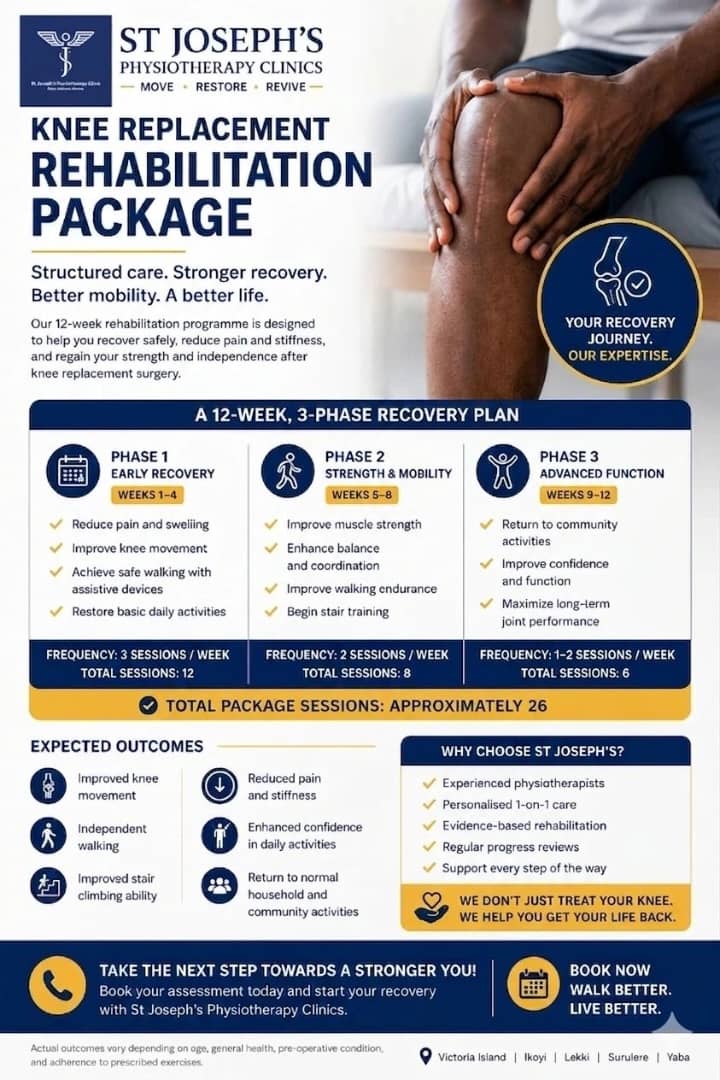
Complete Knee Replacement Rehabilitation Package in Lagos
Knee replacement surgery is a major step toward pain relief and improved mo…

NAMDA threatens strike over unpaid medical lecturers’ allowances
The Nigerian Association of Medical and Dental Academics (NAMDA) has warned…

Resident Doctors Signal End to Strike Threat After High-Level Talks with Gbajabiamila
The threat of a nationwide indefinite strike by the Nigerian Association of…
AMLSN Issues Strong Rejoinder to NAMDA on Public Service Establishment Matters
The Association of Medical Laboratory Scientists of Nigeria (AMLSN) has rel…
