The American Heart Association recommends that people with type 2 diabetes get two-and-a-half hours of moderate-intensity exercise each week. You’ll get more benefit if you spread your exercise hours out over the week — say, 30 minutes a day, five days a week. You can even break up your 30 minutes a day into shorter intervals, such as a brisk 10-minute walk after each meal.
A good exercise program for people with diabetes should include:
• Stretching. Ask your doctor about stretching exercises that will help you stay flexible and prevent soreness. Do them before and after other exercise.
• Aerobics. These activities get your heart rate up, such as walking briskly, mowing the lawn, hiking, dancing, cross-country skiing, or playing volleyball, tennis, or basketball. If problems with your feet are an issue, try exercises such as swimming or biking to put less stress on feet. www.medicalworldnigeria.com
• Strength training. Working out with hand weights, elastic bands, or weight machines three times a week will help you build muscle strength and improve bone health. Unless your doctor advises against it, this type of strength training is recommended three times a week.
Be realistic at the start. If it’s been a while since you exercised, plan to start with five or 10 minutes of exercise each day. Then you can gradually add a few more minutes at a time until you build up to 150 minutes a week.
ABUJA: Training Schedule for Basic Life Support BLS, Pediatric Advanced Life Support (PALS), Advanced Cardiovascular Life Support ACLS, First Aid, CPR, AED
PORTHARCOURT: Training Schedule for Basic Life Support BLS, Pediatric Advanced Life Support (PALS), Advanced Cardiovascular Life Support ACLS, First Aid, CPR, AED
LAGOS: Training Schedule for Basic Life Support BLS, Pediatric Advanced Life Support (PALS), Advanced Cardiovascular Life Support ACLS, First Aid, CPR, AED
STOP paying for airtime and electricity, Let your phone pay its bills with ScreenT
You may also like

FG Supports Robotic Surgery Expansion to Reduce Medical Tourism
Nigeria is taking another step toward strengthening specialised healthcare …
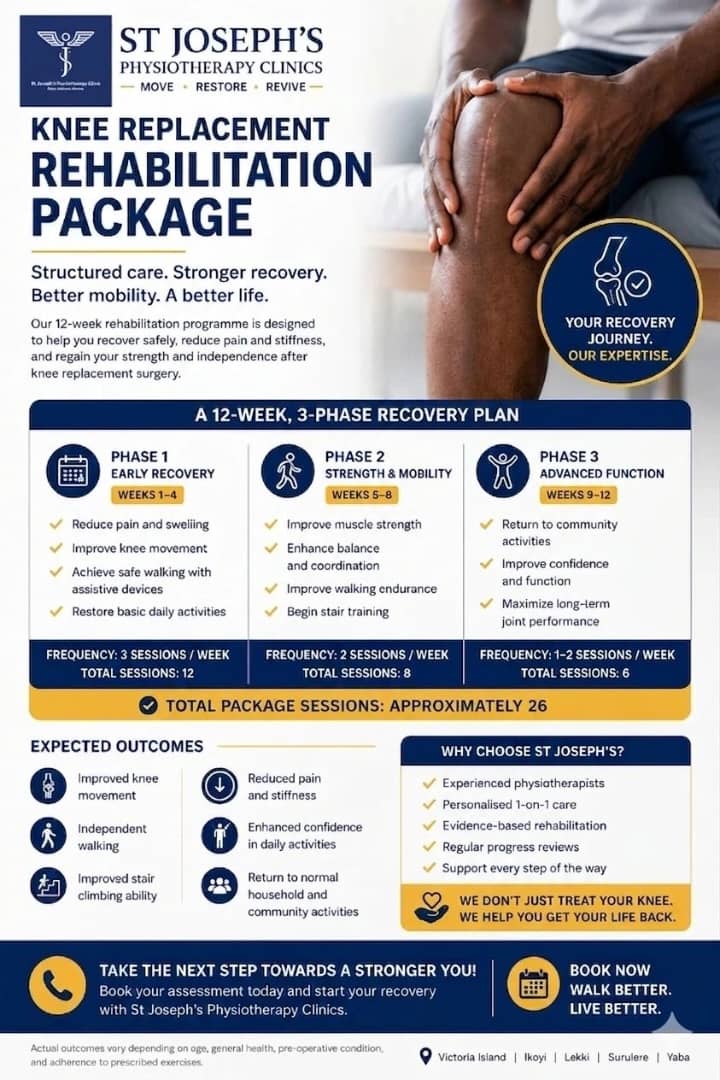
Complete Knee Replacement Rehabilitation Package in Lagos
Knee replacement surgery is a major step toward pain relief and improved mo…

NAMDA threatens strike over unpaid medical lecturers’ allowances
The Nigerian Association of Medical and Dental Academics (NAMDA) has warned…

Resident Doctors Signal End to Strike Threat After High-Level Talks with Gbajabiamila
The threat of a nationwide indefinite strike by the Nigerian Association of…
AMLSN Issues Strong Rejoinder to NAMDA on Public Service Establishment Matters
The Association of Medical Laboratory Scientists of Nigeria (AMLSN) has rel…