Medical and Dental Consultants Association of Nigeria, MDCAN, has blamed incessant strikes in public hospitals in Nigeria on government policies.
President of the group, Steve Oluwole, stated this in an interview with journalists recently on the causes and effects of the just concluded 3-day warning strike embarked upon by National Association of Resident Doctors, NARD, in Nigerian public hospitals.
Oluwole said: “Strike actions by the resident doctors often provoke emotions and spontaneous reactions, which prevent in-depth analysis of the underlying problems and issues. Most resident doctors are individuals in their late twenties and early thirties, who are entitled to show sensitivities to monetary issues. They work very loaded schedules, undergo strenuous training, and prepare for rigorous postgraduate examinations in hospital environments where non-clinical staff also work.
“It is difficult to argue that resident doctors should look away from the remunerations of support staff, when and if such staff have better deal than them. While issues of relativity of remunerations provoke negative emotions outside of the hospital, it is central to equity and justice to ensure that those who discharge the primary functions of the hospital are not paid less than support staff. The Federal Ministry of Health, and the Ministry of Labour and Productivity should avoid political decisions, agreements, or memoranda that are designed just to make a striking group suspend its strike, when it is obvious such agreements are not implementable, or will conflict with previous agreement with other groups. The two Ministries should harmonize to put an end to the cycles of strikes over the same issues,” he added.
Asked if consultant doctors who are left to attend to patients while a strike lasts could cope, Oluwole said: “The Teaching Hospitals and many tertiary medical centers are designed to function with resident doctors working with their consultants. Any expectation that it will be business as usual without them attending to their duties is deceptive. This is not to glamorize the roles of resident doctors, but simply to acknowledge that they must be around; they are expected to be available.”
He pledged MDCAN’s commitment to uninterrupted services in the hospitals, stressing that the confidence of patients in health care delivery could not be sustained by industrial actions.
ABUJA: Training Schedule for Basic Life Support BLS, Pediatric Advanced Life Support (PALS), Advanced Cardiovascular Life Support ACLS, First Aid, CPR, AED
PORTHARCOURT: Training Schedule for Basic Life Support BLS, Pediatric Advanced Life Support (PALS), Advanced Cardiovascular Life Support ACLS, First Aid, CPR, AED
LAGOS: Training Schedule for Basic Life Support BLS, Pediatric Advanced Life Support (PALS), Advanced Cardiovascular Life Support ACLS, First Aid, CPR, AED
STOP paying for airtime and electricity, Let your phone pay its bills with ScreenT
You may also like

FG Supports Robotic Surgery Expansion to Reduce Medical Tourism
Nigeria is taking another step toward strengthening specialised healthcare …
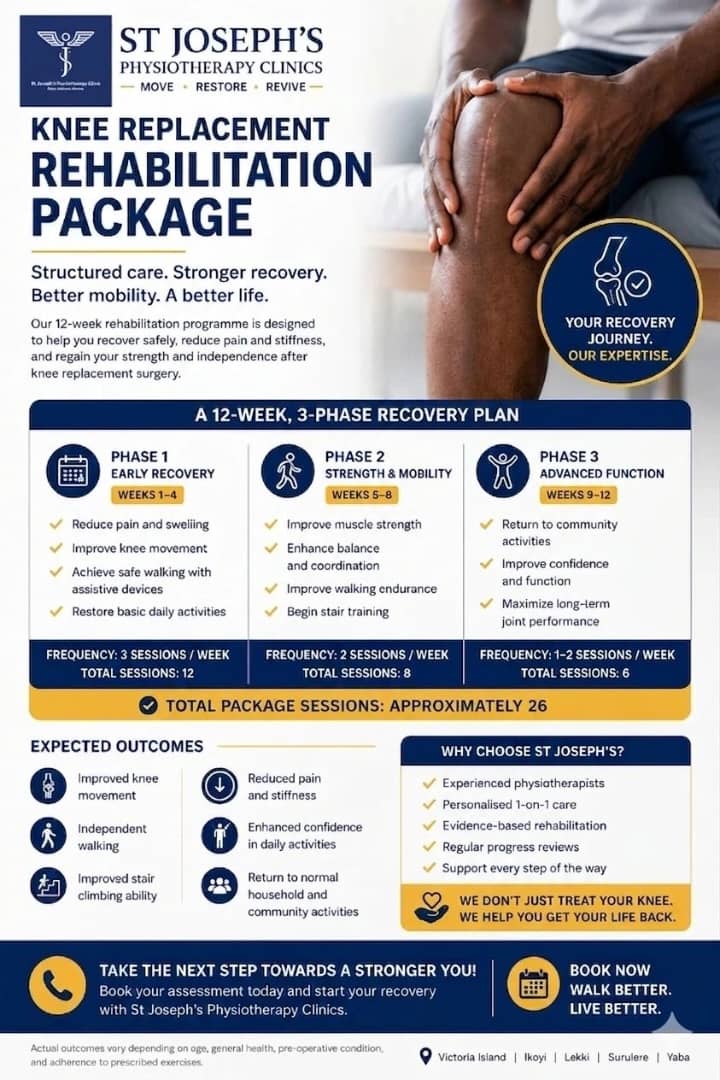
Complete Knee Replacement Rehabilitation Package in Lagos
Knee replacement surgery is a major step toward pain relief and improved mo…

NAMDA threatens strike over unpaid medical lecturers’ allowances
The Nigerian Association of Medical and Dental Academics (NAMDA) has warned…

Resident Doctors Signal End to Strike Threat After High-Level Talks with Gbajabiamila
The threat of a nationwide indefinite strike by the Nigerian Association of…
AMLSN Issues Strong Rejoinder to NAMDA on Public Service Establishment Matters
The Association of Medical Laboratory Scientists of Nigeria (AMLSN) has rel…