The reigning word in medical circles today in Africa is Ebola. But Ebola is a deadly virus currently ravaging some African countries such as Senegal, Sierra Leone and Guinea. Nigeria, in fright of the virus, has been on the alert over the deadly disease.
Reports say at least 83 patients out of a total 127 diagnosed with the disease in Guinea have died, and the World Health Organisation (WHO) says it is taking the current outbreak of the Ebola virus "very seriously".
The virus, which experts say is more virulent than previous outbreaks, has spread to neigh- bouring Sierra Leone and Liberia. Both countries are scrambling to bring the outbreak under control by imposing health and travel restrictions.
Senegal has shut her border with Guinea, where the outbreak is believed to have originated, in the hope of curtailing the disease. The variant responsible for the current outbreak is the Zaire strain - the most aggressive form of Ebola that kills nine out of 10 people who contract it.
Doctors Without Borders describes the out- break as "unprecedented". The medical charity's Project Coordinator, Mariano Lugli, said:
"We are facing an epidemic of a magnitude never before seen in terms of the distribution of cases in the country". Some countries are already thinking of issuing travel bans and closing their borders against affected countries.
Liberia's Senate called on the country's government earlier this week to declare a state of emergency that would lead to the closure of the country's borders against affected countries, though WHO has not yet requested any travel or trade ban on the affected countries.
Saudi Arabia's Health Ministry says it has recommended that the Saudi government cease issuing visas to pilgrims from Guinea and Liberia as a precautionary measure.
Ebola virus causes Ebola virus disease (EVD), formerly known as Ebola haemorrhagic fever in humans. EVD outbreaks have a case fatality rate of up to 9Q per cent. No wonder it has been compared in some quarters to the dreaded human immunodeficiency syndrome (HIV) in terms of aggressive fatality.
Ebola first appeared in 1976 in two simultaneous outbreaks in Nzara, Sudan, and in Yambuku, Democratic Republic of Congo. The
latter was in a village situated near the Ebola River, from which the disease takes its name. WHO says the virus is transmitted to people by wild animals and spreads in the human population through human-to-human transmission, pinpointing close contact with the blood, secretions, organs or other bodily fluids, of infected animals as easy means of contracting the virus.
Bats are considered to be the natural hosts of Ebola virus. No specific treatment or vaccine is available for use in people or animals.
Africa, infection has been documented through the handling of infected chimpanzees, gorillas, bats, monkeys, forest antelope and porcupines found ill or dead or in the rainforest.
Ebola then spreads in the community (through human-to-human transmission, with infection resulting from direct contact (through broken skin or mucous membranes) with the blood, secretions, organs or other bodily fluids of infected people, and indirect contact with environments contaminated with such fluids.
Burial ceremonies during which mourners have direct contact with the body of the deceased person, can also playa role in the transmission of Ebola. Men who have recovered from the disease can still transmit the virus through their semen for up to seven "weeks after recovery from illness, according to WHO. Three of the five Ebola strains have been associated with Ebola hemorrhagic fever (EHF), which is characterized by internal and external bleeding. The virus's incubation period lasts about a week, and early symptoms can include chills, low-back pain, fatigue, diarrhea and headaches.
Ebola virus disease is often characterised by the sudden onset of fever, intense weakness, muscle pain, headache and sore throat. This is followed by vomiting, diarrhoea, rash, impaired kidney and liver function. Laboratory findings include low white blood cell and platelet counts and elevated liver enzymes.
As the infection intensifies, individuals can experience bleeding from the eyes, ears and nose, as well as the mouth and rectum.
"What happens, in any hemorrhagic fever, is your blood vessels start to leak, and so that's why you get bruises in the skin," Dr. Jay Keystone, a renowned travel physician and professor in the Department of Medicine at the University ofToronto, said.
"If your blood vessels are leaking out of the gut, you're bleeding (out of the) rectum, and if your bleeding is in the stomach, you're vomiting up blood," he added. Ebola patients get.a viremia, a medical condition where viruses enter the bloodstream and hence have access to the rest of the body.
"You start to get a breakdown of body function," Keystone said. "The kidneys fail, you may get secondary pneumonia. But in this case, it is an overwhelming infection which causes a breakdown of tissue, release of what we call antigens, and then essentially you get a total body failure."
Treatment for Ebola is mostly supportive in nature - rehydration, balancing of electrolytes, supportive antibiotics. Experts say once internal bleeding has progressed to the point where blood transfusions could be considered, there would be almost no chance that the patient will survive.
"If the doctors can't get the bleeding under control through normal means, then it does not matter if the patient is on constant blood transfusion; they would soon die from multiple organ failure," Ian Gard, a medical expert, said. There were speculations during the week that the virus has visited Nigeria. But Nigeria's Health Minister, Prof Chukwu Onyebuchi, was quick to debunk the rumour, adding that the country has only experienced Dengue Fever - an equally incurable but less deadly disease that is transmitted by mosquitoes. In a statement, the minister affirmed that
Nigeria has sufficient expertise to track the spread of the viral disease, but warned mem- bers of the public to avoid destinations where the diseases are prone. The statement reads: "The Federal Ministry of Health urges the general public to take measures to avert the outbreak or spread of the disease (Ebola). Persons with high fever, headache,
severe abdominal pain, diarrhea and bleeding and especially with a history of travel to Guinea, Sierra Leone or Liberia, are urged to report to the health authorities.
"Nigeria has the capacity to diagnose the disease if it appears in our country. The Nigeria Centre for Disease Control (NCDC) is currently studying the outbreak trends and has mobilised its rapid response teams and developed a detailed response plan that includes a comprehensive health education/health promotion to sensitise Nigerians; enhanced surveillance to detect and treat the disease, while mobilising its treatment/isolation centres. An alert has been issued to all state commissioners of health to mobilise against the disease." The statement continued: "The Federal Ministry of Health is working closely with
West African Health Organization (WAHO) and the World Health Organization (WHO) and is ready to deploy experts to Guinea on request by the affected country to strengthen its response capacity.
''Though the health institutions have been put on red alert for Ebola here in Nigeria, the WHO does not recommend any travel or trade restrictions to Guinea in respect of this outbreak.
"All our Port Health posts and border medical centres have been put on high alert to screen travelers from countries with confirmed Ebola Heamorrhagic Fever occurrences. Nigerian citizens travelling to these countries are advised to be careful and should report any illnesses with the above stated symptoms to the nearest health facility." Health-care workers have frequently been infected while treating patients with suspected or confirmed Ebola disease virus. This has occurred through close contact with patients when infection control precautions are not strictly practiced.
As Africa battles with the virus, experts recommend educational public health messages for risk reduction that should focus on several factors, including reducing the risk of wildlife-to- human transmission from contact with infected fruit bats or monkeys/apes and the consumption of their raw meat.
People are advised to handle animals with gloves and other appropriate protective clothing and cook animal products (blood and meat) thoroughly before consumption until Ebola virus brought to its knees.
ABUJA: Training Schedule for Basic Life Support BLS, Pediatric Advanced Life Support (PALS), Advanced Cardiovascular Life Support ACLS, First Aid, CPR, AED
PORTHARCOURT: Training Schedule for Basic Life Support BLS, Pediatric Advanced Life Support (PALS), Advanced Cardiovascular Life Support ACLS, First Aid, CPR, AED
LAGOS: Training Schedule for Basic Life Support BLS, Pediatric Advanced Life Support (PALS), Advanced Cardiovascular Life Support ACLS, First Aid, CPR, AED
STOP paying for airtime and electricity, Let your phone pay its bills with ScreenT
You may also like

FG Supports Robotic Surgery Expansion to Reduce Medical Tourism
Nigeria is taking another step toward strengthening specialised healthcare …
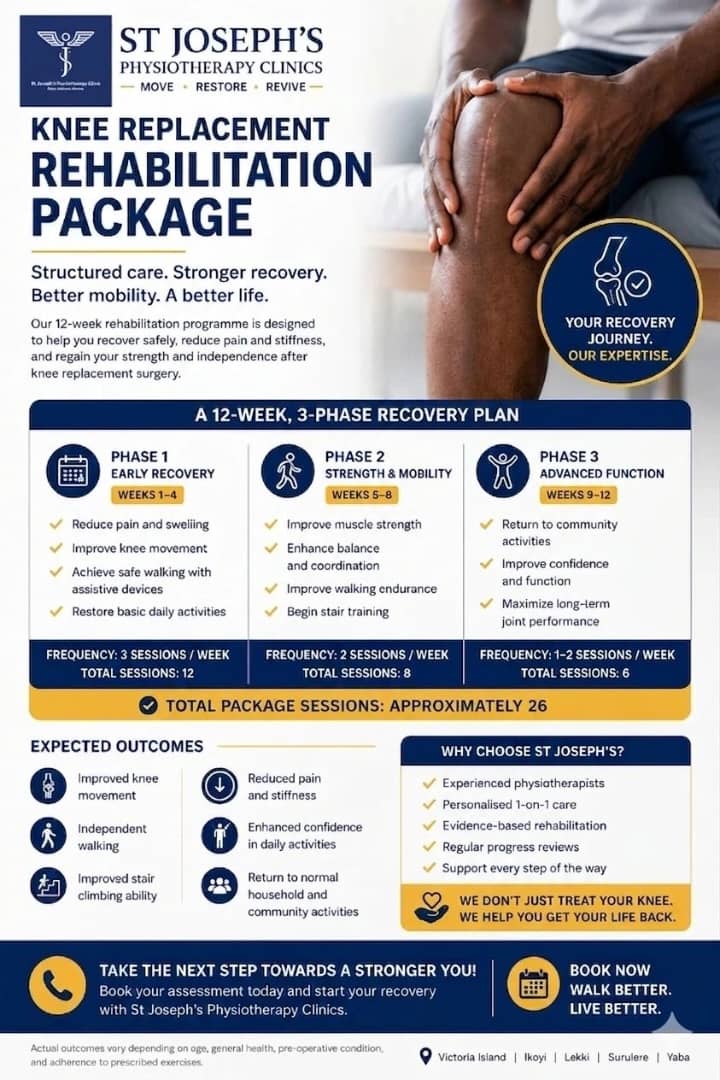
Complete Knee Replacement Rehabilitation Package in Lagos
Knee replacement surgery is a major step toward pain relief and improved mo…

NAMDA threatens strike over unpaid medical lecturers’ allowances
The Nigerian Association of Medical and Dental Academics (NAMDA) has warned…

Resident Doctors Signal End to Strike Threat After High-Level Talks with Gbajabiamila
The threat of a nationwide indefinite strike by the Nigerian Association of…
AMLSN Issues Strong Rejoinder to NAMDA on Public Service Establishment Matters
The Association of Medical Laboratory Scientists of Nigeria (AMLSN) has rel…