The Federal Government has declared free treatment for dog bite victims in all tertiary health facilities spread across the country. Minister of Health, Prof.C.O.Onyebuchi Chukwu announced this in Abuja Thursday at a Ministerial Press Briefing to mark the 2013 World Rabies Day Celebration.
He also stressed the need for all dog owners and the general public to get their dogs vaccinated against rabies disallow stray dogs in the public as well as seek professional medical help immediately bitten by dogs.
The Minister who was represented by the Permanent Secretary, Ambassador Sani S. Bala also advised the public to get adequate post exposure treatment whenever they contact with rabies infected dogs.
He explained that rabies is a highly fatal viral zoonotic disease that often spread to humans through the bites, broken skin of scratches from infected wild and domestic animals, most commonly dogs. It is caused by rabies virus. The average incubation period, that is, time between infection and first symptom is about 2-6 weeks.
He said that each year, more than 55,000 people die globally from the disease adding that Africa and Asia account for 44% of these deaths. He also pointed out that there is no effective treatment for rabies; though it is a vaccine-preventable disease stressing that the most cost-effective strategy for prevention is by elimination of rabies in dogs through vaccination.
He said that in Nigeria, studies including the surveys carried out by the Federal ministry of health showed that rabies is endemic among dogs adding that there are few cases of cats and bats. He added that this is compounded by the fact that Nigeria has a large population of dogs.
Prof. Chukwu noted that the challenges of rabies prevention and control in Nigeria are largely unknown pointing out that burden of rabies in humans is largely unknown and human cases are often under-diagnosed and under reported due to lack of diagnostic facilities and trained personnel.He said that recent reports indicated that 8 deaths occurred from suspected rabies from stray dogs in four LGAs of Cross River State.
He announced that the Federal Ministry of Health has established “Rabies in West Africa Project”(RIWA) with a goal to reduce the incidence of rabies drastically in Nigeria and in the West African Region within 5 years and has also established a National Steering Committee on RIWA, having the Minister of Health as Chairman and permanent Secretary as Co-Chairman.
In his good will message, the WHO Country representative to Nigeria, Dr.Rui Vaz who was represented by Dr..Cephas Ityonzughul said that rabies in humans can be prevented by eliminating exposure to rabid dogs by vaccination of all dogs and removal of any stray dogs.
While assuring of WHO continuing collaboration and support for rabies control in Nigeria, he called for mobilisation of resources from the international community for the control of the disease in the country.
You may also like

FG Supports Robotic Surgery Expansion to Reduce Medical Tourism
Nigeria is taking another step toward strengthening specialised healthcare …
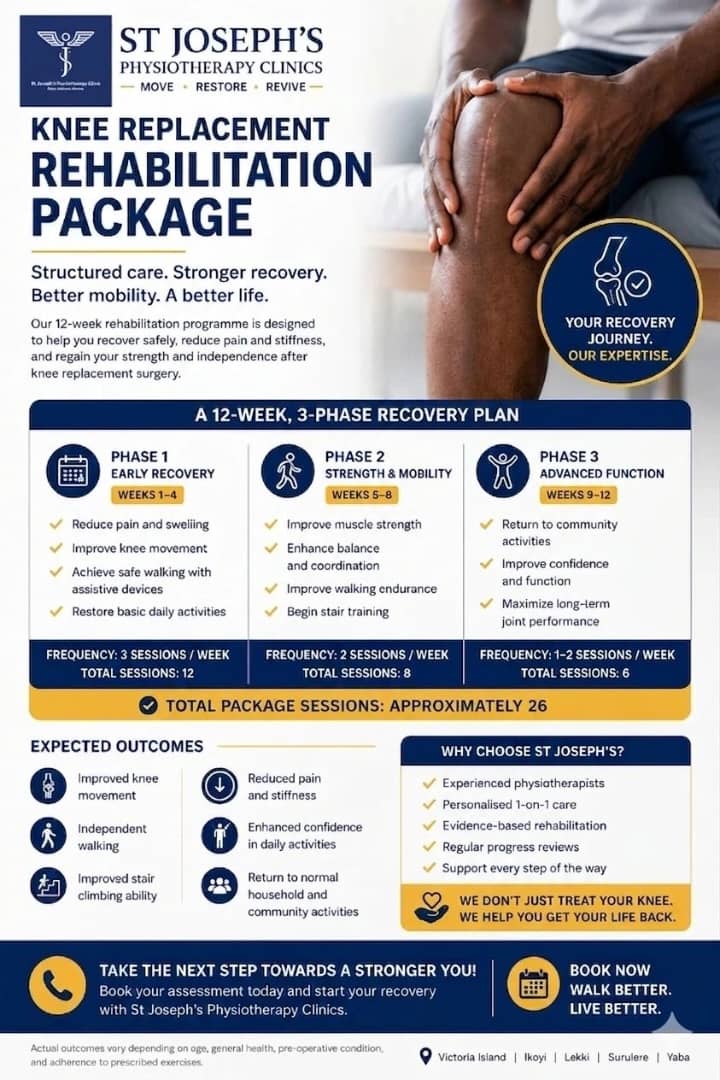
Complete Knee Replacement Rehabilitation Package in Lagos
Knee replacement surgery is a major step toward pain relief and improved mo…

NAMDA threatens strike over unpaid medical lecturers’ allowances
The Nigerian Association of Medical and Dental Academics (NAMDA) has warned…

Resident Doctors Signal End to Strike Threat After High-Level Talks with Gbajabiamila
The threat of a nationwide indefinite strike by the Nigerian Association of…
AMLSN Issues Strong Rejoinder to NAMDA on Public Service Establishment Matters
The Association of Medical Laboratory Scientists of Nigeria (AMLSN) has rel…