The Minister disclosed this in Abuja at the National Oral Health Conference in commemoration of the 2014 World Oral Health Day.
He said that this intervention would be achieved by increasing the number of accredited service providers at primary, secondary and tertiary levels of oral health care in order to ensure that at least 50% of National Health Insurance Scheme (NHIS) enrolees have access to primary oral health care by 2015 as prescribed by the National Oral Health Policy.
He said that the Federal Ministry of Health is collaborating with State Governments and the NHIS to ensure integration of oral health into the community Based Social Health Insurance Scheme (CBSHIS) by 2015which is also in line with the National Oral Health Policy.
Continuing, he said that the frontiers of forensic dentistry are expanding due to its immense benefits in determining the cause of death, in the identification of victims in mass disaster and solving high profile criminal cases.
To this end, he said that the National Council on Health has approved the inclusion of dental records in medical checkups to enhance effective and efficient management of personal data and records for the development of forensic investigations in the country.
He added that experts in forensic science (Oriontology)) have already been engaged to commence due process.
Prof.Chukwu said that Government has made concerted efforts to address the gaps in the areas of inadequate workforce and inefficient service delivery to include capacity building of federal tertiary hospitals through establishment of more oral health institutions (dental schools in Kano and Jos).
He said that since 2012, the Federal Ministry of Health has been equipping the tertiary, secondary and primary Healthcare facilities with modern dental equipment adding that plans to scale up on this activity are already ongoing.
He also said that his Ministry has taken steps to rapidly improve the oral health of Nigerians by devising tools for inter-sectoral collaboration, community participation, supportive policy decisions and community-based strategies for oral disease control and oral health promotion.
He called on States and Local Governments to collaborate with the Ministry of Health to improve access to oral health care at the grass root level.
In his keynote address, the National Oral Health Champion, Senator David Mark who was represented by the Deputy Chairman, Senate Committee on Health, Senator Gyang Pwajok said that there is a huge oral health need among the Nigerian populace noting that there is relatively low dental awareness in the country.
He said that research has shown that a large number of people visit the dental clinic because of pain describing it as unacceptable because the onset of pain is an indication that the disease can no longer be remedied with simple therapy.
He said that treatment often required in these circumstances would be too expensive for a low to middle income patient stressing that sustainable oral health campaign among Nigerians has therefore become imperative to create awareness on the prevention, early detection, treatment and management of common oral conditions.
He said that the Federal Ministry of Health has adopted a community participation approach which involves primary oral health care education through promotion of oral health care in schools, market places and worship places.
To this end, he said that the Federal Ministry of Health has resuscitated its School Oral Health Programme which is an oral promotion programme targeted at school children and their teachers.
He however solicited the commitment and support of all and sundry towards a paradigm shift from limiting dentistry in Nigeria to only the treatment of diseased teeth to the care of the mouth.
Earlier, in his welcome address, the Minister of State for Health, Dr.Khaliru Alhassan said that hitherto the country’s oral health care delivery system was haphazard in terms of organisation and management adding that only minimal attention was given to oral health. He said that this was due to the erroneous perception that oral problems are not life threatening.
He enumerated some of the significant impact of oral diseases have on the health and well being of affected individuals to include increase morbidity and mortality which results in loss of school hours and reduced socio-economic activities.
He said that the Federal Ministry of Health recognises that Oral Health Promotion in Nigeria is a national task adding that all stakeholders must collaborate to meet the targets in the National Oral Health Policy, which includes raising the level of awareness of the importance of Oral Health among at the least 70% of Nigerians by the year 2015.
ABUJA: Training Schedule for Basic Life Support BLS, Pediatric Advanced Life Support (PALS), Advanced Cardiovascular Life Support ACLS, First Aid, CPR, AED
PORTHARCOURT: Training Schedule for Basic Life Support BLS, Pediatric Advanced Life Support (PALS), Advanced Cardiovascular Life Support ACLS, First Aid, CPR, AED
LAGOS: Training Schedule for Basic Life Support BLS, Pediatric Advanced Life Support (PALS), Advanced Cardiovascular Life Support ACLS, First Aid, CPR, AED
STOP paying for airtime and electricity, Let your phone pay its bills with ScreenT
You may also like

FG Supports Robotic Surgery Expansion to Reduce Medical Tourism
Nigeria is taking another step toward strengthening specialised healthcare …
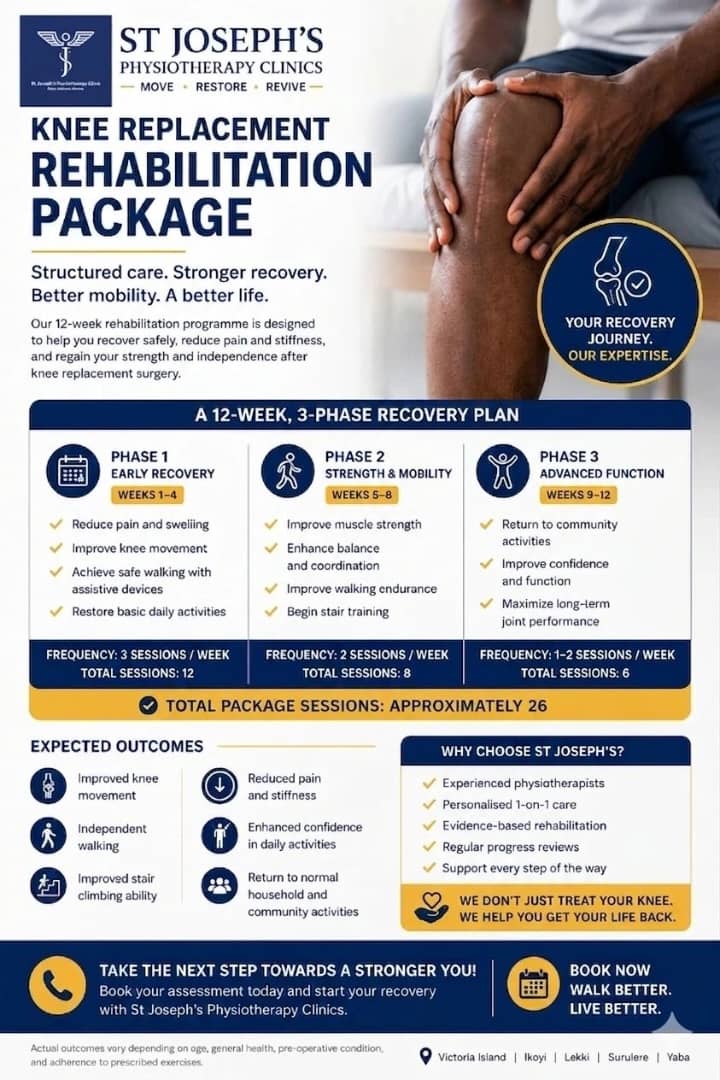
Complete Knee Replacement Rehabilitation Package in Lagos
Knee replacement surgery is a major step toward pain relief and improved mo…

NAMDA threatens strike over unpaid medical lecturers’ allowances
The Nigerian Association of Medical and Dental Academics (NAMDA) has warned…

Resident Doctors Signal End to Strike Threat After High-Level Talks with Gbajabiamila
The threat of a nationwide indefinite strike by the Nigerian Association of…
AMLSN Issues Strong Rejoinder to NAMDA on Public Service Establishment Matters
The Association of Medical Laboratory Scientists of Nigeria (AMLSN) has rel…