How much fibre do you take daily? Regular consumption of foods high in fibre ensures healthy living and longevity. In contrast, diet that contains little or no fibre induces ill-health in different shades. Fibre is only found in plant materials and act like a sponge sweeping metabolic wastes out of the digestive tract. There are two types of fibre- soluble and insoluble – each having different positive effects on the body system.
High intake of soluble fibre helps keep off excess pounds by making you feel full. It also binds to excess cholesterol in the digestive tract helping to usher it out of the body via elimination. A study published in Nature’s journal obesity showed that increased soluble fibre reduce the amount of deep belly fat associated with hypertension, insulin resistance fatty liver disease, and type 2 diabetes. Soluble fibre is also what is responsible for heart disease protection. It forms gelatinous goo in the gastrointestinal tract, which slows the absorption of glucose and fatty acids in the blood. A study conducted by the Centers for Disease Control and Prevention found that people who ate 10-25 grams of soluble fibre daily had low blood levels of C-reative protein, an indicator of how much inflammation is in the body. Inflammation is a top risk factor for developing cardiovascular disease because it triggers the production of immune cells, which can create plaque that blocks the arteries and reduces blood flow to the heart.
In contrast, insoluble fibre protects the stomach and colon by stimulating the gastrointestinal tract and speeding the elimination of wastes through bowel movement.
Another study published in the Journal of the American Medical found that fibre-rich foods can be as effective as cholesterol – lowering drugs without the side effects associated with statins.
Adequate intake of fibre daily is critical to prevention and healing of many disease conditions. The health benefits of fibre validated by many studies further underscore superiority of nutrition in promoting health and healing. Let me share some of these studies with you.
High-fibre diet can help keep cancer at bay. How? Fibre adds bulk to stool and hurries it through the large intestine, which limits the time cancer –causing agents stay in the body. Fibre works with the components of the large bowel to form protective compounds that can stop cancer from taking root.
Diet that is rich in both soluble and insoluble fibre lowers blood sugar by slowing down the conversion of carbohydrates to glucose. Dr. James Anderson of Kentucky University has proved through experiments that when diabetics are given high-fibre diet, their drugs or insulin requirement is reduced by 50 per cent.
Studies also showed that men who eat the most fibre generally have 55 per cent less risk of a fatal heart attack than men with low-fibre diets. In fact, 21,000 men in Finland ate about 35 grams of fibre a day and watched incidence of heart attack in their group drop by 25 per cent compared to those who averaged only 16 grams a day.
Fibre-rich diet also cut the risk of stroke by half. For instance, in the famous Nurses Health Study in Boston, USA researchers found that those who ate lots of whole grains cut their chances of having an ischemic stroke by 50 per cent. In another study, men who ate 29 grams of fibre a day were 43 per cent less likely to have stroke compared to those that ate only half that much. Fibre is noted for lowering both blood pressure and cholesterol, hence its ability to ward-off the risks of stroke and heart attack.
Another study of almost 400,000 people age 50-71 has also found a strong link between a high-fibre diet and a longer healthier life. The study showed that those in the high-fibre group were less likely to die of cardiovascular disease, infectious disease and respiratory disease. High-fibre was also associated with fewer cancer deaths in men. The study also noted that people who ate more fibre were generally healthier, more educated and more physically active.
Adding fibre –rich foods to children diet surpassed conventional remedies for constipation, according to a study at Emma Children Hospital in Amsterdam, The Netherlands. A review of nine studies with 640 children up to age 18 with functional constipation found that fibre-rich foods were better than placebos at reducing kids’ abdominal pain and improving frequency and consistency of stools.
Fibre-rich diets also stimulate excretion of heavy toxic metals such as mercury, lead and bromide. How? A high-fibre diet reduces the amount of time that foods and liquids containing heavy metals remain in the colon.
Dr. Peter G. Hanson, MD noted that if fibre is taken in adequate amounts, it will carry out four times the average amount of stool each day. Dr. Hanson added that if people eat more fibre-rich foods, and quadruples the stool, the blood levels of cholesterol are bound to decline. High level of fibre is also effective in eliminating excess protein, which is the culprit behind many degenerative diseases.
ABUJA: Training Schedule for Basic Life Support BLS, Pediatric Advanced Life Support (PALS), Advanced Cardiovascular Life Support ACLS, First Aid, CPR, AED
PORTHARCOURT: Training Schedule for Basic Life Support BLS, Pediatric Advanced Life Support (PALS), Advanced Cardiovascular Life Support ACLS, First Aid, CPR, AED
LAGOS: Training Schedule for Basic Life Support BLS, Pediatric Advanced Life Support (PALS), Advanced Cardiovascular Life Support ACLS, First Aid, CPR, AED
STOP paying for airtime and electricity, Let your phone pay its bills with ScreenT
You may also like

FG Supports Robotic Surgery Expansion to Reduce Medical Tourism
Nigeria is taking another step toward strengthening specialised healthcare …
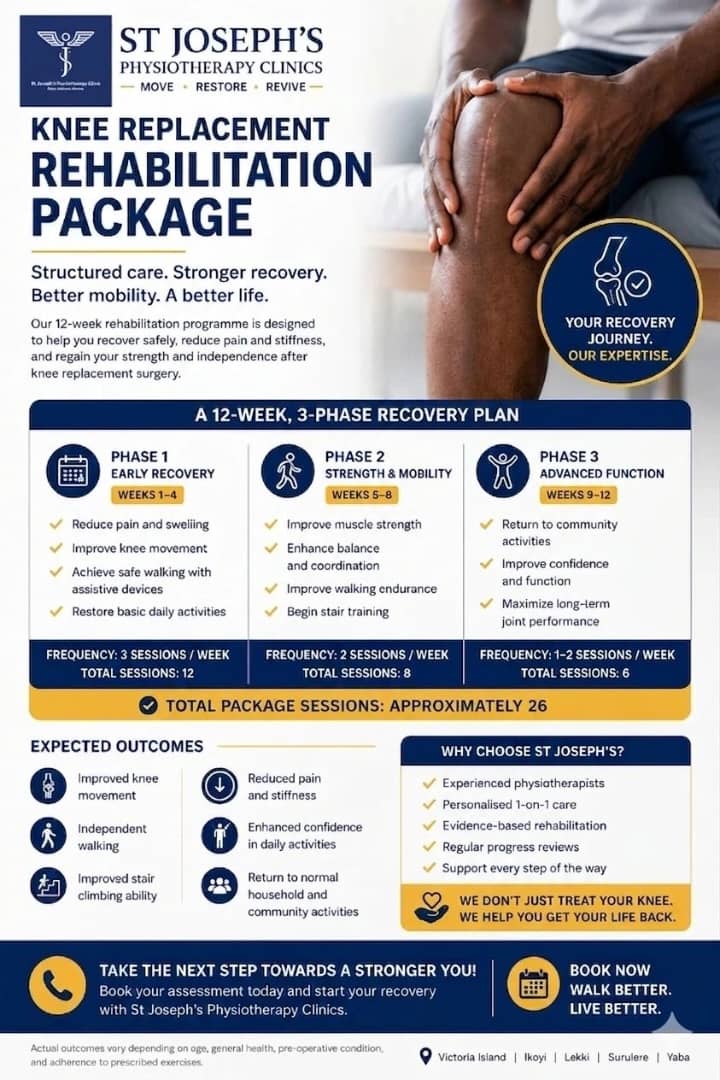
Complete Knee Replacement Rehabilitation Package in Lagos
Knee replacement surgery is a major step toward pain relief and improved mo…

NAMDA threatens strike over unpaid medical lecturers’ allowances
The Nigerian Association of Medical and Dental Academics (NAMDA) has warned…

Resident Doctors Signal End to Strike Threat After High-Level Talks with Gbajabiamila
The threat of a nationwide indefinite strike by the Nigerian Association of…

AMLSN Issues Strong Rejoinder to NAMDA on Public Service Establishment Matters
The Association of Medical Laboratory Scientists of Nigeria (AMLSN) has rel…