*Plans to introduce pneumonia shot next year, save 180,000 lives from disease
"To reach 13.9 million children with measles Jab In November
As part of efforts to prevent epidemic of child hood killer diseases such as meningitis, measles, pneumonia, diphtheria, tetanus, whooping cough, hepatitis band haemophilus influenza type b, the federal government through the National Primary Health Care Development Agency (NPHCDA) plans to reach all eligible Nigerians in all the states of the federation with the vaccines by December 2013. The Nigerian government in 2012 introduced pentavalent vaccine into her routine immunization schedule. Pentavalent vaccine is a combination of five vaccines-in-one that prevents diphtheria, tetanus, whooping cough, hepatitis b and haemophilus influenza type b, all through a single dose. With this introduction, nearly 400,000 cases of haemophilus influenza type B would be prevented with about 27,000 lives saved annually in Nigeria. Executive Director NPHCDA, Dr. Ado Gana Muhammad, told The Guardian: "For the new vaccines, you know that in addition to pentavalent vaccines, the last states that will receive the new pentavalent vaccines will come on board in December this year. So what it means is that by December we would have covered the whole country with pentavalent vaccine.
"Eight states in the northern parts of the country are to be benefit. So we would have covered the whole country with pentavalent vaccine." Muhammad said the Agency is looking at the possibility of introducing the Pneumococcal Conjugate Vaccine (PCV). He said there is a lot of mortality and morbidity arising from pneumonia in this country and introducing PCV will save about 180,000 lives annually.
Muhammad explained: "So it will avert 180,000 deaths annually. So we are introducing PCV by next year. Thirdly, we are also working at Introducing rotavirus vaccine, which will also address the issue of diarhoea. You know in country we have about 45 million episodes of diarhoea disease every year, some live, some die. So it is also contributing about 50 per cent underlying cause of under-five mortality within the country. So we also introduce the PCV to address that." On the new meningitis vaccine to forestall possible epidemic, Muhammad said: "Now coming to epidemics, meningitis vaccine, in December 2011 when I came on board Introduced Menin A. Menin A is a vaccine that has several advantages. First it confers 10 years to life long immunity
'Secondly, it also addresses serotype. A of Meningitis, Which IS the major cause of outbreak in this part of the world. What we have done is that we introduced it in December 2011 and we are able to vaccinate about 7.4 million Nigerians age one to 29 years in the first phase. In December 2012 we also went to the phase 2 states and also vaccinated about 7.5 million Nigerians.
"The last few states, 15 states, that fall within the meningitis belt will be immunised November this year. We are also targeting about 7.8 million Nigerians in the age range. one to 29 years. So what we have seen from December 2011 when we introduced it till now is that for those states we have vaccinated in phase 1 and phase 2, we did not have any outbreak of meningitis. "It is also documented that even in Cameroon and Chad that used the same vaccine did not have any outbreak. So what it means that is that Nigerians are beginning to sleep well when it comes to season of meningitis. Before now, a lot of people will be panicking but that is no longer there." On plans to prevent measles epidemic as the country approaches the peak infection season, the NPHCDA boss said: "For measles we are doing catch up 2. You know it started in 2005 when we had the first measles catch up campaign. Then 2008 we had the first follow up campaign, and then in 2008 we had the second follow campaign. Then in 2013 now we are having the third follow up campaign. In 2011, I think in January when we had our second follow up campaign, we had sub optimal performance in a number of Local Government Areas (LGAs). Then in 2012 we had an outbreak and which is not unconnected with the suboptimal performance.
"So what we have done is in 2013 we have taken our time to prepare adequately and between October 2 and 8 we had the phase one of the third follow up campaign in the 19 northern states and we targeted about 18 million children aged nine months to 59 months, less than five years. We are taking the second phase between November 2 and 7, and that will cover the whole southern states all over the federation.
"We are also targeting about 13.9 million children in the whole of southern states. What it means is that first there children that were born after the first campaign in 2011, those that were not able to get vaccinated through routine immunization Will get them through the campaign.
"Secondly, there are children that were not vaccinated through routine immunization of health facilities, we will also get them. Then, thirdly, there are some that might have had poor uptake of the vaccine in 2011, we will also gets them. So the advantage is that the gap that would have risen from any of these three will be bridged by any of these campaigns. So it means is that it is not likely that we will encounter major epidemic even with measles.
"Measles vaccine is one that by the time a child gets vaccinated it immediately confers about 85 per cent conversion. So what it means it that it protects about 85 per cent just leaving 15 per cent, which we can cover with routine immunization. This means the child have very low chance of getting measles. The chance is further lowered with good nutrition and vitamin A supplementation."
ABUJA: Training Schedule for Basic Life Support BLS, Pediatric Advanced Life Support (PALS), Advanced Cardiovascular Life Support ACLS, First Aid, CPR, AED
PORTHARCOURT: Training Schedule for Basic Life Support BLS, Pediatric Advanced Life Support (PALS), Advanced Cardiovascular Life Support ACLS, First Aid, CPR, AED
LAGOS: Training Schedule for Basic Life Support BLS, Pediatric Advanced Life Support (PALS), Advanced Cardiovascular Life Support ACLS, First Aid, CPR, AED
STOP paying for airtime and electricity, Let your phone pay its bills with ScreenT
You may also like

FG Supports Robotic Surgery Expansion to Reduce Medical Tourism
Nigeria is taking another step toward strengthening specialised healthcare …
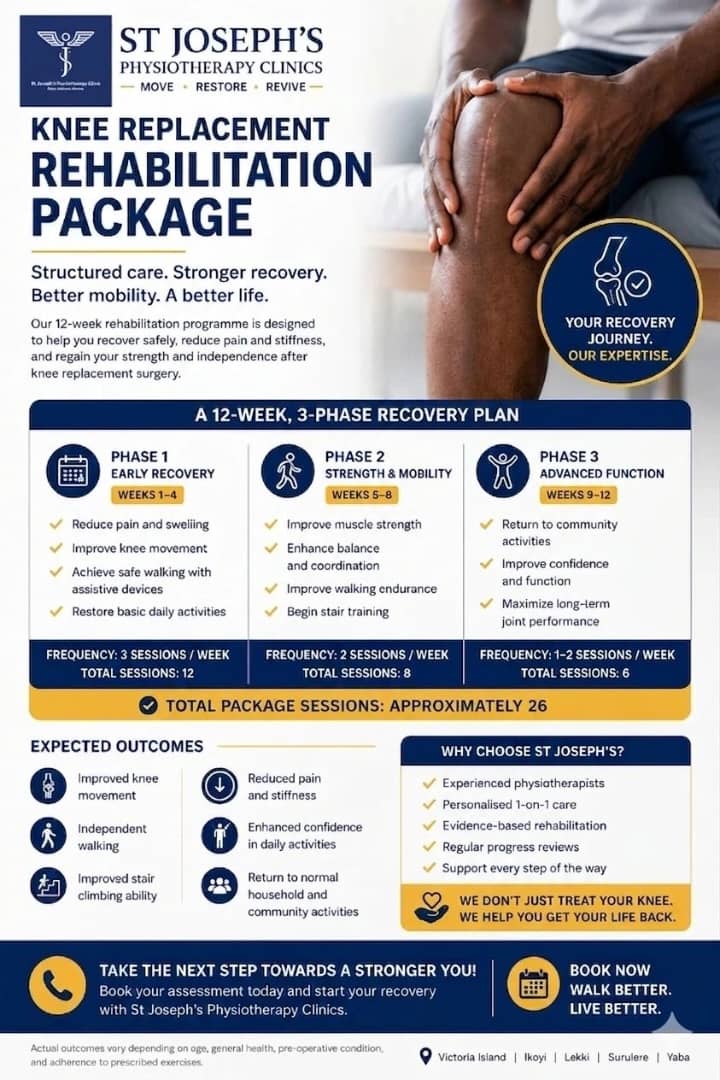
Complete Knee Replacement Rehabilitation Package in Lagos
Knee replacement surgery is a major step toward pain relief and improved mo…

NAMDA threatens strike over unpaid medical lecturers’ allowances
The Nigerian Association of Medical and Dental Academics (NAMDA) has warned…

Resident Doctors Signal End to Strike Threat After High-Level Talks with Gbajabiamila
The threat of a nationwide indefinite strike by the Nigerian Association of…
AMLSN Issues Strong Rejoinder to NAMDA on Public Service Establishment Matters
The Association of Medical Laboratory Scientists of Nigeria (AMLSN) has rel…