• Nigeria, others seek post-2015 health framework
• Jonathan inaugurates Presidential Task Team Tuesday
THE unending bad blood between the Nigerian Medical Association (NMA) and health workers under the aegis of the Joint Health Sector Union (JOHESU) is back in the front burner, as the later has threatened an industrial action beginning from tomorrow if President Goodluck Jonathan appoints a medical doctor as Minister of State for Health.
JOHESU comprises pharmacists, nurses, medical lab scientists and others excluding medical doctors. The Guardian learnt that the health workers would make their position known today during a media briefing.
The Minister of Health, Prof. Onyebuchi Chukwu, said Sunday at a national stakeholders’ meeting on Universal Health Coverage in Abuja that he was expecting the workers to go on strike because a medical doctor is appointed a minister of state for health.
Meanwhile, ahead of the Presidential Summit on Universal Health Coverage (UHC) holding today at the State House, Abuja, Nigeria and other international stakeholders have intensified call for the inclusion of UHC in the post-2015 sustainable health and development framework.
Chukwu said Sunday that UHC remained an essential feature of the post-2015 health development agenda. The minister, who was chairman of the occasion, said the country, through the National Health Insurance Scheme (NHIS) and supervised by the Ministry of Health, has the presidential mandate to reach at least 30 per cent (70 million Nigerians) with health insurance cover by 2015.
The meeting was organized by NHIS in conjunction with the Health For All Project, being implemented by Management Sciences for Health (MSH), the International Finance Corporation (IFC) and PharmaAccess Foundation.
The theme of the meeting is “Creating an enabling environment for the sustainability of the pro-poor healthcare financing models in Nigeria – with emphasis on community health frameworks.”
According to Chukwu, the national stakeholders’ meeting was to enable participants understand what UHC entails and the role of key players, especially state governments, in improving access to healthcare for all, particularly the poor, through various pro-poor healthcare financing models, essentially community-based health insurance (CBHI).
He also facilitated the formation of a task team for UHC in Nigeria, which would be inaugurated by President Goodluck Jonathan today. The rationale for UHC, when financial and physical barriers to healthcare are eliminated, include reduction in out-of-pocket expenditure on health, he said.
Also, people do not become poorer because of the catastrophic cost of healthcare, they can easily access the essential health services, maternal and child health improves in the country, overall population health indices improve while demand for health services increases, as does the demand for quality, among others.
MSH President, Dr. Jonathan Quick, said: “Our vision is a world where everyone has the opportunity for a healthy life and we are guiding our efforts everyday to save lives and improve health among the poorest and most vulnerable population. In 2014, UHC will play a pivotal role in helping us attain this vision.”
ABUJA: Training Schedule for Basic Life Support BLS, Pediatric Advanced Life Support (PALS), Advanced Cardiovascular Life Support ACLS, First Aid, CPR, AED
PORTHARCOURT: Training Schedule for Basic Life Support BLS, Pediatric Advanced Life Support (PALS), Advanced Cardiovascular Life Support ACLS, First Aid, CPR, AED
LAGOS: Training Schedule for Basic Life Support BLS, Pediatric Advanced Life Support (PALS), Advanced Cardiovascular Life Support ACLS, First Aid, CPR, AED
STOP paying for airtime and electricity, Let your phone pay its bills with ScreenT
You may also like

FG Supports Robotic Surgery Expansion to Reduce Medical Tourism
Nigeria is taking another step toward strengthening specialised healthcare …
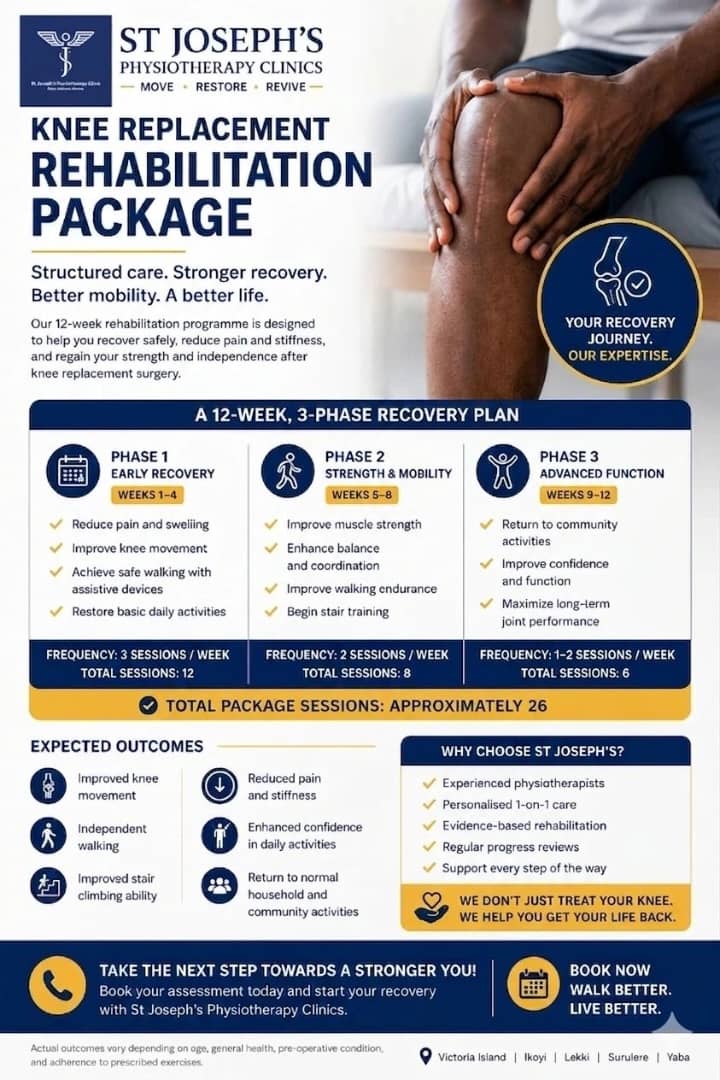
Complete Knee Replacement Rehabilitation Package in Lagos
Knee replacement surgery is a major step toward pain relief and improved mo…

NAMDA threatens strike over unpaid medical lecturers’ allowances
The Nigerian Association of Medical and Dental Academics (NAMDA) has warned…

Resident Doctors Signal End to Strike Threat After High-Level Talks with Gbajabiamila
The threat of a nationwide indefinite strike by the Nigerian Association of…
AMLSN Issues Strong Rejoinder to NAMDA on Public Service Establishment Matters
The Association of Medical Laboratory Scientists of Nigeria (AMLSN) has rel…