This is a serious article and should command your undivided attention. Stroke is serious business in Nigeria and it is nothing to joke about. So, please, try and understand the medical jargon and the points. The full article was published in the latest edition of the Nigerian Journal of General Practice.
The patient
A 67-year-old man woke up from sleep to find he could not get up from the bed. The right arm and leg felt cold and dead. The right side of his body had stopped working. Worse, he seemed to have lost his voice and appeared to be speaking in tongues (gibberish). His wife and daughter rushed him to the hospital where he was given a drip. By the afternoon, all was well and he had returned to normal. So, he was reassured and discharged home. Diagnosis: Small stroke.
What is a small stroke?
Minor strokes, small strokes and Transient Ischemic Attacks (TIAs) are all the same. Small strokes are those stroke-like symptoms such as weakness of an arm or leg that completely resolves within a few hours or a day. They were previously thought to be benevolent, nice and not a problem, but research has revealed the high risk of further strokes and a major stroke.
Minor strokes are evil
TIA is a transient episode of stroke-like dysfunction lasting a few minutes and no more than 24 hours. TIAs and strokes cause the same symptoms, such as sudden weakness or numbness of the face, an arm or leg. A TIA may also cause sudden dimming or loss of vision, slurred speech and mental confusion. But unlike a stroke, the symptoms of a TIA can resolve within a few minutes and so many people ignore or miss the importance.
The strong point in this article is that small strokes are menacing and a warning sign of an impending major catastrophe. They are a warning from God that a major stroke is coming unless you beware. They call for recognition of the seriousness, immediate admission to a hospital, comprehensive investigations and effective treatment to prevent a really big stroke. You must spend money treating a small stroke to avoid a major bigger and devastating major stroke.
TIA is a transient episode of stroke-like dysfunction lasting a few minutes and no more than 24 hours. TIAs and strokes cause the same symptoms, such as sudden weakness or numbness of the face, an arm or leg. A TIA may also cause sudden dimming or loss of vision, slurred speech and mental confusion. But unlike a stroke, the symptoms of a TIA can resolve within a few minutes and so many people ignore or miss the importance.
Immediate admission and treatment
Once a stroke has occurred, there is likelihood of more and more strokes. A substantial proportion of patients with TIA and minor stroke become disabled and die largely due to repeated ‘minor strokes.’ Urgent evaluation and immediate initiation of treatment reduces the risk of a major stroke after a TIA, dramatically. Stroke specialists would prefer that patients and doctors do not wait for symptom resolution before urgent presentation to hospital.
Rapid assessment and treatment in the emergency department or in specially designed ‘TIA clinics’ appear to reduce stroke rate. TIA patients should be evaluated with history and physical examination, laboratory tests, electrocardiography and head and neck imaging (brain scan and carotid ultrasonography). An electrocardiogram (ECG) is mandatory.
Risk factors such as hypertension, HIV, tobacco use, substance abuse, use of oral contraceptives, high cholesterol in the blood and diabetes need to be assessed. Some patients with concurrent medical illnesses such as sickle cell disease will require an evaluation to assess their risk.
In conclusion
TIA and stroke share common causes, risk factors and treatment. This article stresses that prompt intervention or hospitalisation is required and a patient who had a TIA the previous day should be told to go immediately to the emergency department for admission, investigation and treatment.
Hospitalisation allows monitoring and early treatment with clot bursting drugs. Do not go to church or to the herbalist. Phone your pastor and ask them to pray for you as you proceed to the nearest hospital. Finally, of course, life¬style modification and exercise are to be recommended for all.
The Stroke Action advocacy continues
One of the initiatives on stroke advocacy is the charity event by RedBox Ltd. This will take place at Jabi Lake in Abuja on August 30, 2014. The activity day is entitled, ‘FOR EVERY STROKE,’ and it is in support of and in collaboration with Stroke Action, Nigeria. This charity event is aimed at raising funds, creating awareness about stroke, educating the public on how to handle life after stroke and rewarding stroke survivors.
It’s a day in which there will be a charity walk for stroke, dance exercises, games, health talks, drama, awards for survivors, tributes and free health checks. In short, we plan on making it a memorable fun event, which will also serve as education to the Nigerian public on life-style issues and prevention of ailments such as stroke.
Consequently, we are seeking unique, credible industry-related and friendly brands to partner with us and donate in order to enable us fulfil the mandate of hosting a successful charity event. Please, bring your school, organisation, business and unique brand on board for a worthy cause. We plan on not only hosting a charity walk, but also creating a fun atmosphere for children, having an appreciation ceremony for survivors of terminal ailments among both celebrities and ordinary members of the public.
Redbox Ltd. decided to collaborate on this project because a gaping need to inform and educate members of the public on the prevention and effects of having a stroke was identified.
ABUJA: Training Schedule for Basic Life Support BLS, Pediatric Advanced Life Support (PALS), Advanced Cardiovascular Life Support ACLS, First Aid, CPR, AED
PORTHARCOURT: Training Schedule for Basic Life Support BLS, Pediatric Advanced Life Support (PALS), Advanced Cardiovascular Life Support ACLS, First Aid, CPR, AED
LAGOS: Training Schedule for Basic Life Support BLS, Pediatric Advanced Life Support (PALS), Advanced Cardiovascular Life Support ACLS, First Aid, CPR, AED
STOP paying for airtime and electricity, Let your phone pay its bills with ScreenT
You may also like

FG Supports Robotic Surgery Expansion to Reduce Medical Tourism
Nigeria is taking another step toward strengthening specialised healthcare …
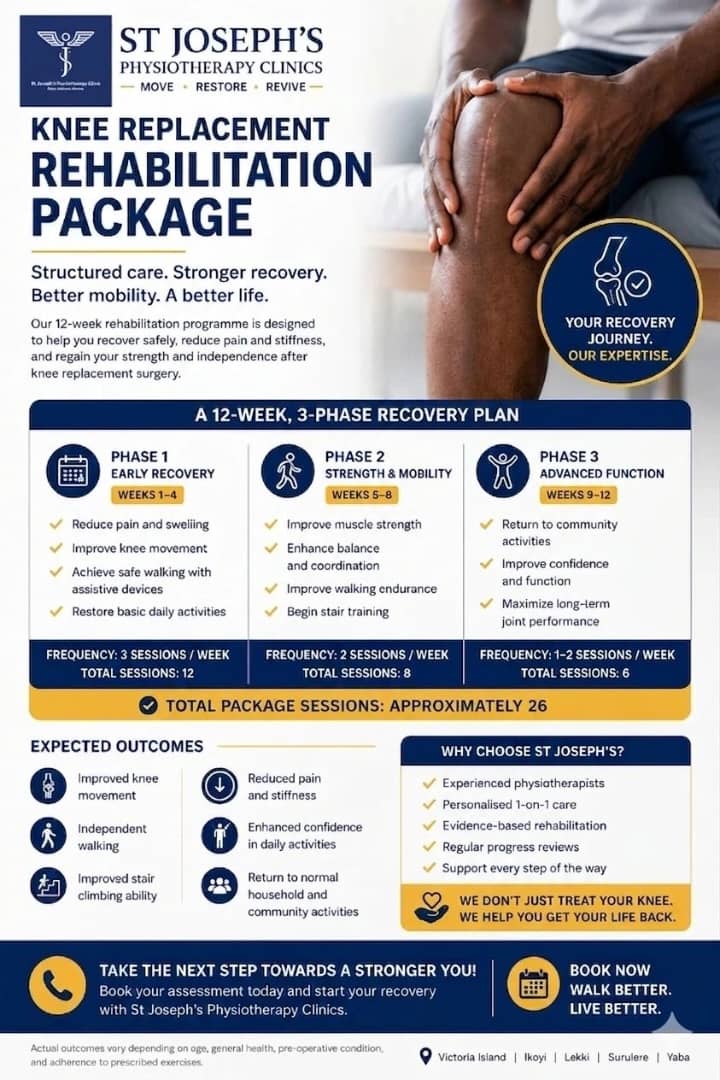
Complete Knee Replacement Rehabilitation Package in Lagos
Knee replacement surgery is a major step toward pain relief and improved mo…

NAMDA threatens strike over unpaid medical lecturers’ allowances
The Nigerian Association of Medical and Dental Academics (NAMDA) has warned…

Resident Doctors Signal End to Strike Threat After High-Level Talks with Gbajabiamila
The threat of a nationwide indefinite strike by the Nigerian Association of…
AMLSN Issues Strong Rejoinder to NAMDA on Public Service Establishment Matters
The Association of Medical Laboratory Scientists of Nigeria (AMLSN) has rel…