Prompt, adequate and affordable medical care taken for granted in Europe, America and even some parts of Africa, is still a luxury in Nigeria. Public health institutions in the country hardly boast uninterrupted services in two months. The situation is particularly worse in the teaching hospitals in Lagos State, the centre of excellence.
For instance, in March, pharmacists, nurses and other health workers at the Lagos State University Teaching Hospital, Ikeja, protested against the non-payment of their allowances and other issues relating to Consolidated Health Workers Salary Scale. The action lasted for two weeks.
Before the March protest, precisely between January and February, another workers’ industrial dispute had resulted in the abandonment of patients at the Accident and Emergency Units of the Lagos University Teaching Hospital, Idi-Araba and LASUTH. Again, the protest dragged on for two weeks.
At present, due to a warning strike embarked upon by physicians under the Association of Resident Doctors, there are no surgeries and other crucial accompanying services going on at LUTH.
On Monday and Tuesday when our correspondent visited LUTH and LASUTH, agony and disillusionment seemed to be their common characteristics written on their faces. It was therefore not surprising that they sought the intervention of the federal and state governments, especially the Health Minister, Prof. Chukwu Onyebuchi, in the crisis.
A parent, Mr. Anthony Acholonu, whose his five-year-old son has been on the waiting list for surgery at LUTH since last September, could not hide his distaste for the system.
According to the distraught parent, strike in the hospital has resulted in the postponement of the surgery on five occasions.
He noted that between late last year and this April, it has been one postponement or another via industrial disputes.
He said, “Last year, the week we were supposed to do the surgery, the strike by the nurses prevented me from donating blood for the exercise. The doctors too could not do anything because they claimed that the supporting workers, comprising nurses and attendants, were not at hand to assist them.
“As I speak, almost five months after, the surgery has not been carried out. This is frustrating, to say the least. My boy is finding it difficult to use the toilet. Anytime he wants to urinate, he would be writhing in pains. It is troubling for him and us, his parents.”
For Mrs. Ayomide Okanlawon, the experience in LUTH calls for an urgent government intervention. Asides from the epileptic services, Okanlawon said the cost of receiving medical attention in the hospital has become a cause for concern.
Okanlawon noted, “It is simply too expensive and unaffordable. LUTH offers one of the most expensive medical services in the country. But beyond this, one does not get value for this huge cost, especially as its workers are always on strike. For example, I have paid N150,000 part payment for a surgery and I have yet to undergo the operation due to strike.
“I am therefore calling on the Federal Government to check cost, as well as to address the underlying issues that cause the labour disputes in the hospital. I also urge the Federal Government to fund its tertiary hospitals so we do not have to pay so much for so little or no service at all.”
Meanwhile, findings by our correspondent show that the cost of most surgeries at LUTH has increased almost by 100 per cent. For instance, surgeries that hitherto cost N30,000 now goes for N60,000.
Caesarian Sections, which now go for N105,000, used to be N80,000.
One of the resident doctors at the hospital, who craved anonymity for the fear of victimisation, told our correspondent that the cost of medical services was not only affecting patients, but also the doctors in training.
He said, “Because many of the patients cannot afford to pay for surgeries, they usually leave for other hospitals. Instead of a resident doctor that is in training to watch, at least, five surgeries in his/her department in a week, you only get to participate in two. How do we learn?
“We are not exposed to as much surgeries as we should just because the cost has made many patients who need it to flee.”
Doctors in LUTH, who are still on strike, also complained about some clauses attached to their appointment in the hospital.
According to them, the hospital management has reduced their six-year residency training to three years.
One of the affected doctors, said this clause would further compound the problems facing their training.
He said, “This is a ploy to victimise doctors again in this hospital. In spite of overworking us, we still struggle for everything ranging from surgeries to admission. We are also calling on the authorities to remove this clause.”
The LUTH Chief Medical Director, Prof. Akin Oshibogun, could not be reached as he was said to have travelled out of the country.
However, the institution’s Chief Medical Advisory Committee, Prof. Chris Bode, who spoke to our correspondent, said the management had met with the resident doctors and Head of Departments in the past one week on two occasions to address some of the outstanding issues.
He added that the letter of appointment at the heart of the dispute will be reviewed to maintain the status quo ante.
BUKOLA ADEBAYO
Punch
ABUJA: Training Schedule for Basic Life Support BLS, Pediatric Advanced Life Support (PALS), Advanced Cardiovascular Life Support ACLS, First Aid, CPR, AED
PORTHARCOURT: Training Schedule for Basic Life Support BLS, Pediatric Advanced Life Support (PALS), Advanced Cardiovascular Life Support ACLS, First Aid, CPR, AED
LAGOS: Training Schedule for Basic Life Support BLS, Pediatric Advanced Life Support (PALS), Advanced Cardiovascular Life Support ACLS, First Aid, CPR, AED
STOP paying for airtime and electricity, Let your phone pay its bills with ScreenT
You may also like

FG Supports Robotic Surgery Expansion to Reduce Medical Tourism
Nigeria is taking another step toward strengthening specialised healthcare …
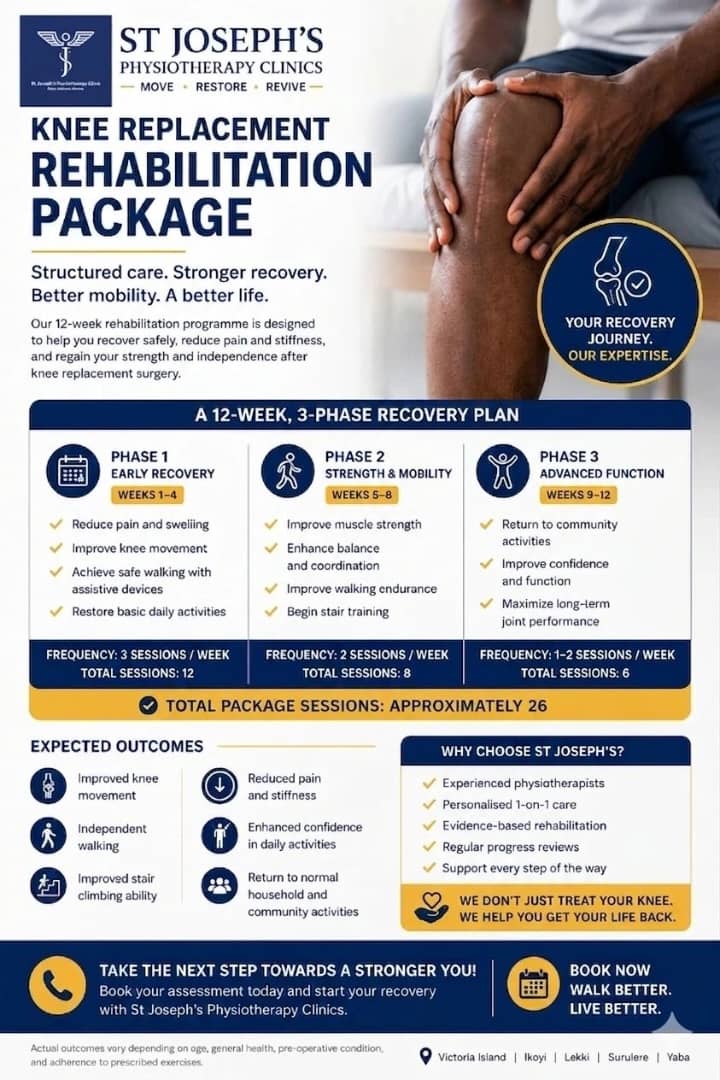
Complete Knee Replacement Rehabilitation Package in Lagos
Knee replacement surgery is a major step toward pain relief and improved mo…

NAMDA threatens strike over unpaid medical lecturers’ allowances
The Nigerian Association of Medical and Dental Academics (NAMDA) has warned…

Resident Doctors Signal End to Strike Threat After High-Level Talks with Gbajabiamila
The threat of a nationwide indefinite strike by the Nigerian Association of…
AMLSN Issues Strong Rejoinder to NAMDA on Public Service Establishment Matters
The Association of Medical Laboratory Scientists of Nigeria (AMLSN) has rel…