Researchers have long known that people of South Asian origin have a higher risk of developing metabolic problems, such as type 2 diabetes. Now, a new study published in The Lancet Diabetes and Endocrinology suggests that lack of brown fat may explain why.
According to researchers from the Netherlands, not only do individuals of a South Asian descent have an increased risk of type 2 diabetes and complications related to the condition, they also develop type 1 diabetes at a much younger age and at a much lower body mass index (BMI), compared with Caucasians.
However, it has previously been unclear as to why there are such differences.
The researchers looked to the effects of brown fat, also known as brown adipose tissue (BAT), for their study.
Monitoring the effects of brown fat
Pre-clinical studies have shown that brown fat has beneficial effects on glucose tolerance, lipid metabolism and body weight, and that brown fat activity is reduced in adults who are obese.
Instead of storing the body's excess energy as fat - as white fat cells do - brown fat cells in brown adipose tissue convert some of this energy into heat when the body is cold. This burns excess energy as opposed to storing it.
Previous research has estimated that fully functional brown adipose tissue accounts for up to 20% of a person's total energy usage.
The researchers analyzed 12 healthy South Asian men and 12 healthy Caucasian men of a normal weight who were approximately 25-years-old.
All of the men were exposed to cold temperatures using 18F-fluorodeoxyglucose positron emission tomography and computed tomography (18F-FDG-PET-CT) scans.
The men's resting energy expenditure was monitored, alongside the effect of cold exposure on their non-shivering thermogenesis - increased heat production caused by normal metabolic processes - and plasma lipid levels.
Lower BAT and resting energy exposure in South Asians
It was found that resting energy exposure in the South Asian participants was 32% lower, compared with the Caucasian participants, while the volume of metabolically active brown adipose tissue was 34% lower.
The researchers also found that the South Asian participants had a higher shiver temperature upon cold exposure - at 10.9°C - compared with Caucasian participants - at 8.9°C, even though the South Asian participants had a higher total fat mass.
Furthermore, it was found that the South Asian participants had a lower cold-induced non-shivering thermogenesis, compared with Caucasian participants.
The study authors note that their findings show that producing more brown adipose tissue or increasing its activity could have "therapeutic potential" in South Asians.
It could help them increase the clearance of glucose and fatty acids and help convert excess white fat into heat, they say, reducing their risk of diabetes.
They add:
"We recently showed that BAT can be recruited in humans following 10 days of cold intervention. Future studies should be directed towards the efficacy of this strategy, as well as other options, such as medication, to increase BAT volume or activity.
These strategies might ultimately be useful for improving the metabolic phenotype in South Asians with type 2 diabetes or at high risk of developing the disease."
In a comment piece linked to the study, Michael Symonds, of the University of Nottingham in the UK, says that South Asians are now the "ideal target for therapeutical interventions that might offer proof-of-principle that enhanced BAT volume or function can have long-term health benefits against metabolic disease."
Medical News Today recently reported on a study detailing an implantable sensor that could monitor cancer and diabetes.
Written by Honor Whiteman
Medical News Today
ABUJA: Training Schedule for Basic Life Support BLS, Pediatric Advanced Life Support (PALS), Advanced Cardiovascular Life Support ACLS, First Aid, CPR, AED
PORTHARCOURT: Training Schedule for Basic Life Support BLS, Pediatric Advanced Life Support (PALS), Advanced Cardiovascular Life Support ACLS, First Aid, CPR, AED
LAGOS: Training Schedule for Basic Life Support BLS, Pediatric Advanced Life Support (PALS), Advanced Cardiovascular Life Support ACLS, First Aid, CPR, AED
STOP paying for airtime and electricity, Let your phone pay its bills with ScreenT
You may also like

FG Supports Robotic Surgery Expansion to Reduce Medical Tourism
Nigeria is taking another step toward strengthening specialised healthcare …
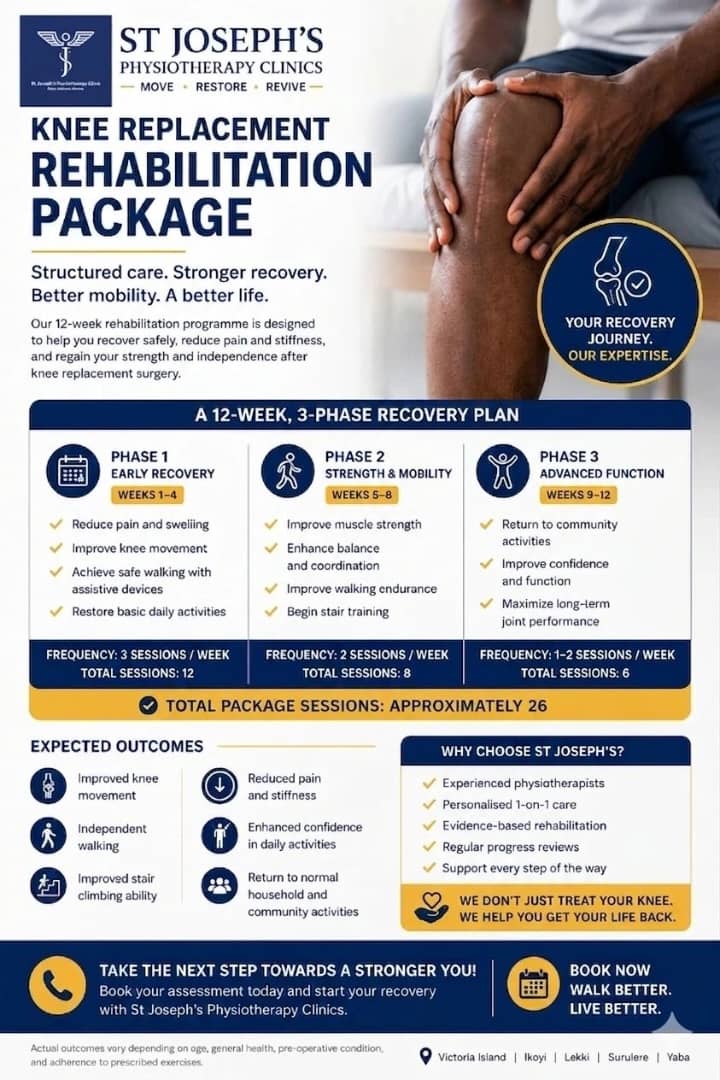
Complete Knee Replacement Rehabilitation Package in Lagos
Knee replacement surgery is a major step toward pain relief and improved mo…

NAMDA threatens strike over unpaid medical lecturers’ allowances
The Nigerian Association of Medical and Dental Academics (NAMDA) has warned…

Resident Doctors Signal End to Strike Threat After High-Level Talks with Gbajabiamila
The threat of a nationwide indefinite strike by the Nigerian Association of…
AMLSN Issues Strong Rejoinder to NAMDA on Public Service Establishment Matters
The Association of Medical Laboratory Scientists of Nigeria (AMLSN) has rel…