Olumide Akintayo is the National President of Pharmaceutical Society of Nigeria (PSN), executive member of the Joint Health Sector Unions (JOHESU) and Assembly of All Healthcare Professionals in Nigeria (AHPN). Akintayo was among the health professionals who recently made presentation to the Yayale Ahmed Presidential Committee of experts on harmony in the health sector. He relieved his experience and contents of his presentation to journalists which focused on the critical role of pharmacists towards proper health delivery in the country. CHIOMA UMEHA provides the details.
Evolution of pharmacy
At the launch of the ‘Prescription Legend’ in the United States of America (USA) in 1962, President John F. Kennedy described the Pharmacist in the following kind words: “The Pharmacists is an indispensable link in the chain of National Health Protection and Promotion, if we do not have the Pharmacist, it would have been necessary to invent him”.
Dr. Hiroshima Nakajima, former World Health Organization (WHO) Director General reaffirmed President Kennedy’s indispensability concept when he said in 1989, “Without Drugs, a health service has no substance and no credibility”.
From prehistoric times, pharmacy and medicine has been a part of human evolution up to the middle ages. The same practitioner is seen as the physician, pharmacist and the spiritual healer of the community.
In Europe, pharmacy-like shops began to appear during the 12th Century and in 1240, Emperor Frederic II of Netherland issued a royal decree by which the physicians and the apothecary’s (pharmacy) profession were separated.
Pharmacists are trained health professionals who are charged with the management of the distribution of medicines to consumers. They also ensure their safe and efficacious use. Besides, there is also increasing recognition by all health authorities that providing consumers with medicines alone is not sufficient to achieve the treatment goals.
To address medical-related needs, pharmacists are accepting greater responsibility for the outcomes of medicines use and evolving their practices to provide patients with enhanced medicine – use services.
As healthcare professionals they play an important role in improving access to healthcare and closing the gap between potential benefits of medicines and actual value realized and should be part of any comprehensive health system.
Over the past four decades, there has been a trend for pharmacy practice to move away from its traditional focus on medicine supply towards a more inclusive focus on patient care. The role of the pharmacist has evolved from that of a compounder and supplier of pharmaceutical products towards that of a provider of services and information and ultimately that of a provider of patient care. Increasingly the pharmacists task is to ensure that a patients drug therapy is appropriately indicated – the most effective available, the safest possible and convenient for the patient by taking direct responsibility for individual patients medicine-related needs. Pharmacists are making a unique contribution to the outcome of drug therapy and to the patients’ quality of life1.
A report of a World Health Organization (WHO) Consultative Group on the role of the pharmacist concluded that, significant changes in National Healthcare Systems worldwide are fueling the critical examination of how health professionals are educated and trained, what they learn and how they learn it and ultimately their expanding role in healthcare.
Recent interest in pharmacy as a focal point for a Global Health Policy Framework stems from several WHO Consultative Group meeting in New Delhi (1988) and Tokyo meeting (1993) and in Vancouver Canada in 1994.
The importance which World Health Organization(WHO) attach to the role of the pharmacist in healthcare gave birth to the famous resolution of the 47th World Health Assembly (WHA 47.12) held on May 10, 1994 and titled: “Role of the Pharmacist in Support of the WHO – Revised Drug Strategy”.
Resolution 47.12 recalled older resolutions of the World Health Assembly, WHA 37.33, WHA 39.27 and WHA 41.16 on rational use of drugs and the expanded role of pharmacists.
The resolution further recognized that pharmacists are indispensable and can play a key role in public health and particularly in the field of medicines.
The revised drug strategy urged member states including Nigeria: to define the role of the pharmacist in the promotion and implementation of the National Policy within this Framework of Health for all strategy.
Member countries were also urged to make full use of the expertise of the pharmacist at all levels of the healthcare system and particularly in the development of National Drug Policies.
The resolution expressed deep concern about the continued poor state of development of pharmaceutical services in many countries as emphasized in the World Health Organization (WHO) meetings on the role of Pharmacists held earlier in New Delhi (1988) and Tokyo (1993).
Value of the pharmacist in healthcare
Given the evolving role of the Pharmacist in Healthcare, the WHO Consultancy agreed that contemporary and future pharmacists must possess specific knowledge, attitudes, skills and behaviour in support of their roles.The WHO Consultancy summarised these roles in the “Seven Star Pharmacist.”
Care giver
The first role is that of a care giver: The pharmacist must provide caring services, whether these services are clinical, analytical, technological or regulatory, the pharmacist must be comfortable interacting with individuals well population, the pharmacist must view his or her practice as integrated and continuous with those of the healthcare system. Decision maker – As a decision maker he decides the appropriate, efficacious and cost effective use of resources.
Communicator
The pharmacist is in an ideal position between the physician and patient. As such he has to be confident while interacting with other health professionals and the public.
Leader
Whether the pharmacist finds himself in multidisciplinary caring situations or in areas where other healthcare providers are in short supply, he is obligated to assume leadership position in the overall welfare of the community. The pharmacist must effectively manage resources.
The pharmacist must learn how to learn as a lifelong learner.
The pharmacist has a responsibility to assist with the education and training of future generation of pharmacists as a teacher.
This is exactly excerpts of the resolution of the World Health Organization (WHO), World Health Assembly (WHA) in which Nigerian Health Authorities took active part to counter the views held by a vocal leadership of the Nigerian Medical Association (NMA) which repeatedly seeks to give an impression that the Health System is about physician and medical doctors.
In a ground breaking statement, the prestigious Institute of Medicine (IOM) revealed recently that healthcare and health systems all over the world are so complex and dynamic that no single health profession can effectively provide the solution to assure positive outcomes, suggesting the team concept to healthcare as the only viable option.
WHO and healthcare delivery
The World Health Organization (WHO) is the directing and coordinating body for health in the United Nations system, it is responsible for providing leadership in global health matters, shaping the health research agenda, setting norms and standards, articulating evidence based, based policy options, providing technical support to countries and monitoring and assessing health trends.
In the 21st Century, health is a shared responsibility involving a web of cooperating health professionals and a growing list of allied professional with a focus on the overall interest of the patient and society.
We therefore urge the Presidential committee to request from the world body and the authority in healthcare (WHO) their stand and the perspectives of the progressive world on the role reserved for each identified stakeholder in health care delivery
New paradigm for pharmacy practice
Over the past 40 years the Pharmacists role has changed from that of compounder and dispenser to that of “drug therapy manager”. This involves responsibilities to ensure that wherever drugs are provided and used, quality products are selected, procured and stored distributed, dispensed and administered so that they contribute to the health of patients and not to their harm. The scope of pharmacy practice now includes patient centered care with all the cognitive functions of counseling, providing drug information and monitoring drug therapy.
It is in the additional role of managing drug therapy that pharmacists can now make a vital contribution to patient care.
New dimensions in pharmacy practice
Pharmaceutical care is a ground breaking concept in the practice of pharmacy which emerged in the mid- 1970s. It stipulates that practitioners should assume responsibility for the outcomes of drug therapy; it encompasses a variety of services and functions.
The concept also includes emotional commitment of pharmacists to the welfare of patients as individuals who require and deserve pharmacist’s compassion, concern and trust.
Pharmaceutical care does not exist in isolation from other healthcare services, it must be provided in collaboration with patients, physicians, nurses and other healthcare providers.
As experts in medicines, pharmacists have always been known as an accessible and trusted source of advice and treatment.
Today their contributions to healthcare are developing in new ways to support patients in their use of medicines and as part of clinical decision making across a range of specialism.
Main cause of disharmony in the health sector
The greatest challenge and threat to the development of a harmonious health team in this country is the attitude of a vocal leadership of the Nigerian Medical Association (NMA) who have gone into self-denial in accepting the reality of the existence of other health professionals who they prefer to refer to as allied health practitioners.
The contempt is such that if it was possible to ‘wish away’ the existence of other healthcare providers the doctors would have been glad to do so. Their hatred is so rabid that they prefer to hold that each profession reverts back to primordial and prehistoric roles in a vastly expanding and dynamic healthcare environment, they spew all kind of lies and half-truth to justify their hegemonic tendencies against the prescriptions of international best practices which is awash with models of collaboration and cooperation in the best interest of the patient we have all sworn to serve.
They claim permanent leadership of the team while forgetting that leadership is earned, it involves compassion and empathy as well as the ability to make decisions, communicate and manage effectively.
They forget that their training and experience is devoid of any training for leadership thus explaining why doctors are bad manager for all seasons.
They claim they are the only ones that have skills and knowledge to serve as Health Ministers, yet the leader of the free world – the United States of America (USA), recently changed its Secretary for Health – Katheline Sebelius – who is not a Medical Doctor.
President Obama in nominating her replacement did not field a healthcare professional as experience has shown that you don’t need a medical degree to run the ministerial functions effectively. The argument of our friends the medical doctors shows that indeed truth has fallen and that falsehood has become the established doctrine in defending territories.
When the doctors talk about traditional roles they should remember that traditionally 98 per cent of women are supposed to be housewives, but today women are breadwinners, Ministers and Chief Executive Officers, in an ever changing world.
Position of World Medical Association (WMA)
This discourse will not be complete without a peep at the attitudes and perspectives of the international body of medical doctors – the World Medical Association and the Page 89 of the WMA Medical ethics manual states as follows: “The weakening of medical paternalism has been accompanied by disappearance of the belief that physicians “own” their patients the traditional right of patients to ask for a second opinion has been expanded to include access to other healthcare providers who may be better able to meets their needs. According to the World Health Assembly (WHA) declaration of the Rights of Patients, “The physician has an obligation to cooperate in the coordination of medically indicated care with other healthcare providers treating the patient”. It went further to admonish that all healthcare providers are not equal in terms of their education and training but they do share a basic human equality as well as a similar concern for the well being of patients,
What do pharmacists want?
Pharmacists recognise the importance of human resources in healthcare; we acknowledge and applaud the roles and contributions of all healthcare providers – doctors, nurses, pharmacists, medical laboratory scientists, physiotherapists and other allied healthcare providers.
Our goal is to work with others to make healthcare great. We do not ask to take anything from other professions; all we seek is the health of the people.
What we want is a window of opportunity to serve Society. We shall work hard to continue to improve our skills and expertise.
Pharmacists also associate itself with the well- rehearsed submission of the Justice Gusau Presidential Committee on ‘Harmonious Work Relationship among Health Workers and among Professional Groups in the Health Sector’.
We also look forward to equity and justice in the distribution of health resources so that this Nation can effectively use the combined effort of all health professional to change the gloomy image of our health sector.
ABUJA: Training Schedule for Basic Life Support BLS, Pediatric Advanced Life Support (PALS), Advanced Cardiovascular Life Support ACLS, First Aid, CPR, AED
PORTHARCOURT: Training Schedule for Basic Life Support BLS, Pediatric Advanced Life Support (PALS), Advanced Cardiovascular Life Support ACLS, First Aid, CPR, AED
LAGOS: Training Schedule for Basic Life Support BLS, Pediatric Advanced Life Support (PALS), Advanced Cardiovascular Life Support ACLS, First Aid, CPR, AED
STOP paying for airtime and electricity, Let your phone pay its bills with ScreenT
You may also like

FG Supports Robotic Surgery Expansion to Reduce Medical Tourism
Nigeria is taking another step toward strengthening specialised healthcare …
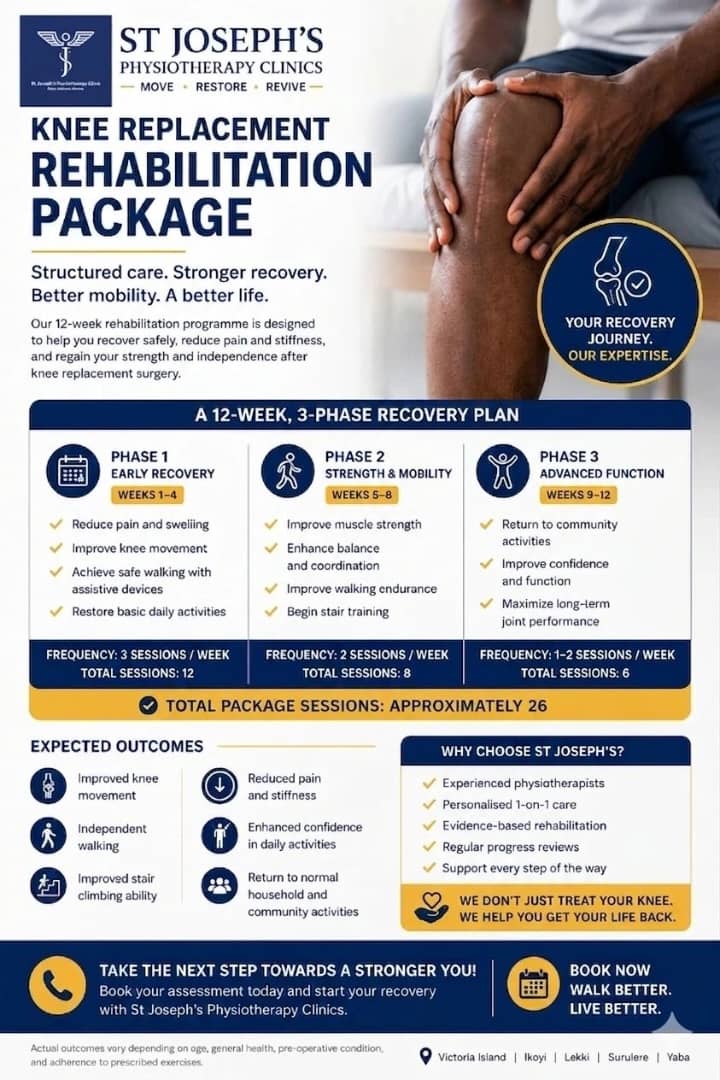
Complete Knee Replacement Rehabilitation Package in Lagos
Knee replacement surgery is a major step toward pain relief and improved mo…

NAMDA threatens strike over unpaid medical lecturers’ allowances
The Nigerian Association of Medical and Dental Academics (NAMDA) has warned…

Resident Doctors Signal End to Strike Threat After High-Level Talks with Gbajabiamila
The threat of a nationwide indefinite strike by the Nigerian Association of…
AMLSN Issues Strong Rejoinder to NAMDA on Public Service Establishment Matters
The Association of Medical Laboratory Scientists of Nigeria (AMLSN) has rel…