Clocking age 50 is no easy task, never mind that you don’t have to do anything for the calendar to run its course. Time simply crawls by and before you know what, the birthday song comes up and you wake up to the reality of living your fifth decade!
Not to worry though, focusing on how you can stay healthy much after the fifth decade, with little or no alarm, matters a great deal at this level. So, read on.
Beware of joint pains
Many men in their 50s begin to have joint trouble. The main culprits: overuse injuries and osteoarthritis.
The fix: Ride a bike. Researchers at Arcadia University studied 39 people suffering from osteoarthritis of the knees and found that cycling just 25 minutes a day, three times a week, significantly improved pain relief and performance in walking tests. So, saddle up.
Prevent bone loss
Bone minerals are lost and replaced throughout life — it’s a natural process — but after age 35, the loss begins to outpace the replacement. At 50, this imbalance can hurt you.
The fix: More stress. Stressing your bones strengthens them. Walking beats swimming, running beats walking, and strength training is the best bone builder of all, says Dr. Wojtek Chodzko-Zajko, head of kinesiology at the University of Illinois.
Have a cow. The average 50-year-old needs about 1,200mg of calcium per day for healthy bones. Get that from one 300mg glass of milk, 300mg of yoghurt, a handful of almonds (150 mg), and 540mg of Swiss cheese (540 mg).
Tackle back ache
Inactivity can tighten your spine and pelvic muscles, forcing your knees and lower back to compensate. That’s why they ache, explains Mark Verstegen, author of Core Performance.
The fix: Roll your foam. Exercising with a foam roll can loosen the muscles around your pelvis and torso. Buy one at the athlete’s store. Lie on top of the roll with your arms crossed over your chest. Keep your abdomen tight and your feet on the ground. Glide on the roll from your shoulders to the base of your spine several times until you feel the muscles release.
Take a Pilates class. Strengthening your stomach muscles can ease back pain. “Pilates includes a lot of balance activities on one hand and one knee that are aimed at stabilising and strengthening the core,” says Chodzko-Zajko.
Water shortage
Between ages 57 and 86, your body literally dries up. It will likely consist of just 54 per cent water, as opposed to the 61 percent found in younger men. You’ll also sweat less because your sweat glands disappear. You may have less body odour, but overheating and heatstroke become an issue.
The fix: Be a camel. “Drinking fluids is more important as you grow older,” says Chodzko-Zajko. “One of the problems with ageing is that thirst decreases with age, so people tend to drink less.”
Mass defections
You’ve been trying to lose flab for two decades, but now your body is doing it on its own. Unfortunately, between age 50 and 80, you may also lose 35 per cent of your muscle mass.
The fix: Play with heavy metal. Don’t shy away from heavy weights because you think you’re susceptible to injury. As long as you use proper form, which you should master now if you haven’t already, heavy weights will keep your bones strong and your muscles large.
Get necessary screenings
Screenings are tests that look for diseases before you have symptoms. Blood pressure checks and tests for high cholesterol are examples of screenings. You can get some screenings, such as blood pressure readings, in your doctor’s office. Others, such as a colonoscopy, a test for colorectal cancer, need special equipment, so you may need to go to a different office.
After a screening test, ask when you will see the results and who you should talk to about them.
Abdominal aortic aneurysm
If you are between the ages of 65 and 75 and have ever been a smoker (smoked 100 or more cigarettes in your lifetime), talk to your health care team about being screened for abdominal aortic aneurysm. AAA is a bulging in your abdominal aorta, the largest artery in your body. An AAA may burst, which can cause dangerous bleeding and death.
An ultrasound, a painless procedure in which you lie on a table while a technician slides a wand-like medical device over your abdomen, will show whether an aneurysm is present.
Colorectal cancer
Have a screening test for colorectal cancer. Several different tests — for example, a stool blood test and colonoscopy — can detect this cancer. Your health care team can help you decide which is best for you.
Depression
Your emotional health is as important as your physical health. Talk to your health care team about being screened for depression, especially if during the last two weeks:
- You have felt down, sad, or hopeless.
-You have felt little interest or pleasure in doing things.
Diabetes
Get screened for diabetes if your blood pressure is higher than 135/80 or if you take medication for high blood pressure. Diabetes (high blood sugar) can cause problems with your heart, brain, eyes, feet, kidneys, nerves, and other body parts.
High blood pressure
Have your blood pressure checked at least every two years. High blood pressure is 140/90 or higher. High blood pressure can cause strokes, heart attacks, kidney and eye problems, and heart failure.
High cholesterol
High cholesterol increases your chance of heart disease, stroke, and poor circulation. Have your cholesterol checked regularly.
ABUJA: Training Schedule for Basic Life Support BLS, Pediatric Advanced Life Support (PALS), Advanced Cardiovascular Life Support ACLS, First Aid, CPR, AED
PORTHARCOURT: Training Schedule for Basic Life Support BLS, Pediatric Advanced Life Support (PALS), Advanced Cardiovascular Life Support ACLS, First Aid, CPR, AED
LAGOS: Training Schedule for Basic Life Support BLS, Pediatric Advanced Life Support (PALS), Advanced Cardiovascular Life Support ACLS, First Aid, CPR, AED
STOP paying for airtime and electricity, Let your phone pay its bills with ScreenT
You may also like

FG Supports Robotic Surgery Expansion to Reduce Medical Tourism
Nigeria is taking another step toward strengthening specialised healthcare …
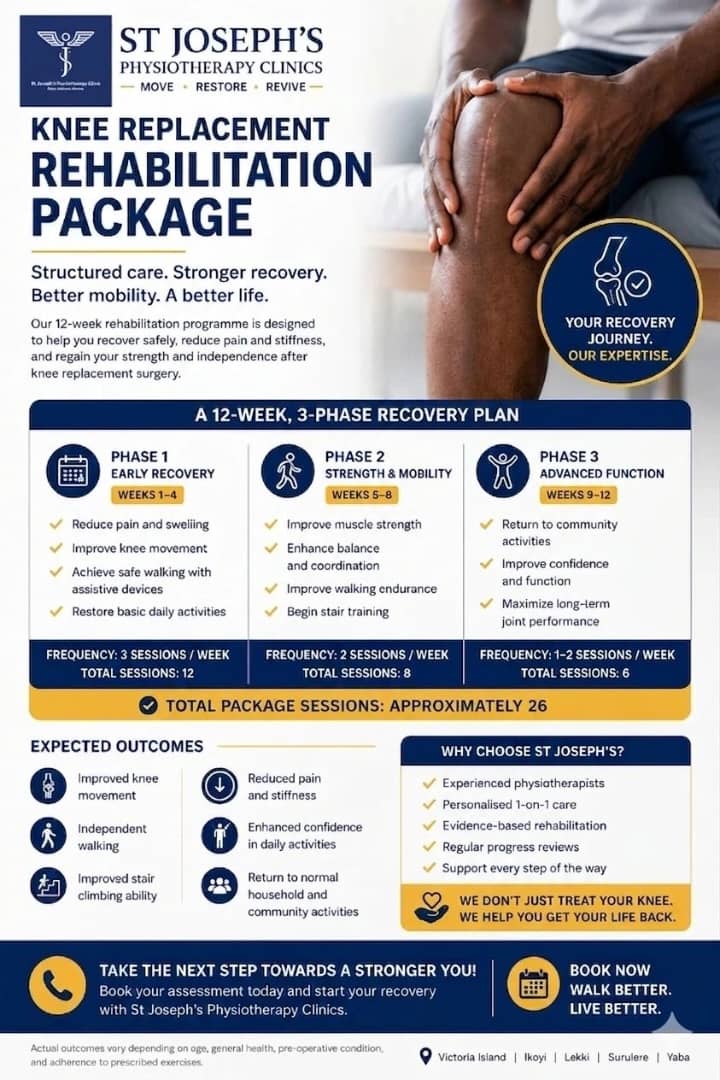
Complete Knee Replacement Rehabilitation Package in Lagos
Knee replacement surgery is a major step toward pain relief and improved mo…
NAMDA threatens strike over unpaid medical lecturers’ allowances
The Nigerian Association of Medical and Dental Academics (NAMDA) has warned…
Resident Doctors Signal End to Strike Threat After High-Level Talks with Gbajabiamila
The threat of a nationwide indefinite strike by the Nigerian Association of…
AMLSN Issues Strong Rejoinder to NAMDA on Public Service Establishment Matters
The Association of Medical Laboratory Scientists of Nigeria (AMLSN) has rel…