Last week we started the countdown from 25 to 11 Today we review the top 10 commonest "errors seen in healthcare settings, based on US statistics, and the work of Elizabeth Cohen:
10. Getting burned
There are 650 surgical fires, explosions or burn injuries in the USA every year. Lasers, cables and many equipment generate heat and electricity, including static, in operating theatres. Add flammable anaesthetic gases and, in Nigeria, other light sources, and the risk increases.
9. Look alike tubes
Central line and feeding tubes look alike. 16 per cent of doctors and nurses say tube mixups has happened. at their hospital.
8. Biopsy blunder
One out of 1,000 lab specimens is mislabeled.
If your surgeon, radiologist, and pathologists don't all agree on
your biopsy results, ask if you should repeat the test or get another opinion.
7. Having the wrong baby
If you are having fertility treatment, remember, embryos can be wrongly labelled. Imaqine carrying the wrong baby for nine months and then having to give it up to the real parents!
6. Operating on the wrong body part
Seven patients daily suffer body parts mixups! Surgeons are supposed to mark the correct part or side to be operated on, BEFORE surgery. In 2009, the WHO published " Time Out" Guidelines to be checked off on a list by surgeon, nurse and anaesthetist before incision, closure and discharge from theatres. Is EVERY theatre following this in Nigeria?
5. Radical radiation
If the cr scanner in your hospital has been incorrectly programmed or calibrated, a dangerously high dose of radiation can occur. This may result in hair loss and other complications. Ultrasound and MRI use no radiation.
4.Infections and infestations
Hospitals kill 100,000 people a year with nosocomial (hospital acquired) infections. Everyone, especially ALL staff should wash or sterilize their hands before, between and after contact with everyone.
3. Flying metal
The MRI is a very powerful magnet. Anything metallic in the suite can be a missile or projectile!
2. Casualty waiting
It isn't always obvious who should come first in an emergency room, or who should wait. The average wait in the USA is 4hrs. 7mins. Ask your doctor to call ahead.
Drum roll please......the MOST common mistake in a hospital setting is .
1.WAKING UP DURING SURGERY
One in 1000 people are aware (with no pain) under anaesthesial Being an anesthesioloqist, this is of concern to me, and it requires some further explanation. Reports of awareness under anaesthesia are often heard by the NEXT anesthesiologist. In serious cases, where pain has been associated (and this is very very rare), the report and the psychological trauma to the patient will be evident from the immediate post operative period.
A lot of research has been done in this field in the last two decades, some of which was at my old institution in Atlanta, Emory University Hospital. Emory was one of the earliest users of a device known as a BIS Monitor. This consisted of a couple of electrodes applied on the patient's forehead and plugged to a small TV screen. The electrodes (likeECG strickies) were designed to capture brain waves during sleep (anaesthesia), carry the information to a computer which then analyzed and displayed the waves today, to cut down the dreadful problem of awareness, the BIS monitor is now a mandatory monitoring device for all general anaesthetics in the USA.
While it has its drawbacks and palse positives/negatives, it remains a useful tool in preventing awareness during anaesthesia.
So please remembers the words of Coroner (last week's article):Whenever we enter a hospital and/or submit ourselves to the vagaries of the Health service, it is an adventures can go wrong....."Knowledge empowers. Protect yourself and be safe out there this new year.
Dr Femi Ogunyemi
MBBS (Ibadan) FRCA FWACS DAAPM
is an Anesthesiologist and
Pain Management Specialist
with active licenses in Nigeria,
UK and USA.
ABUJA: Training Schedule for Basic Life Support BLS, Pediatric Advanced Life Support (PALS), Advanced Cardiovascular Life Support ACLS, First Aid, CPR, AED
PORTHARCOURT: Training Schedule for Basic Life Support BLS, Pediatric Advanced Life Support (PALS), Advanced Cardiovascular Life Support ACLS, First Aid, CPR, AED
LAGOS: Training Schedule for Basic Life Support BLS, Pediatric Advanced Life Support (PALS), Advanced Cardiovascular Life Support ACLS, First Aid, CPR, AED
STOP paying for airtime and electricity, Let your phone pay its bills with ScreenT
You may also like

FG Supports Robotic Surgery Expansion to Reduce Medical Tourism
Nigeria is taking another step toward strengthening specialised healthcare …
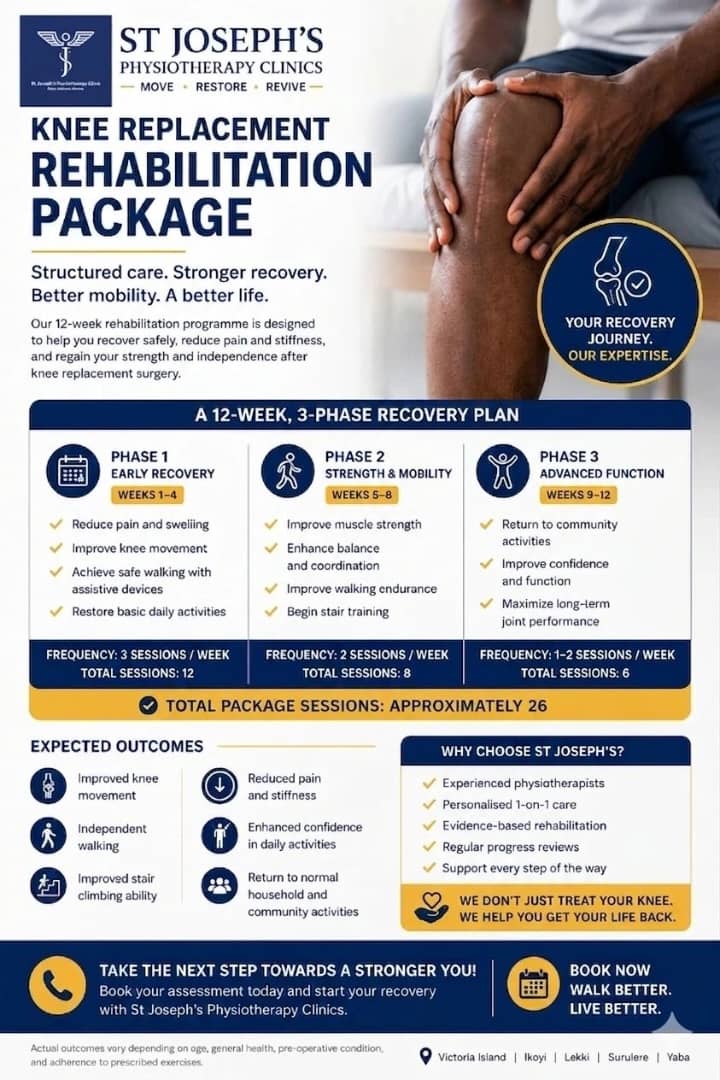
Complete Knee Replacement Rehabilitation Package in Lagos
Knee replacement surgery is a major step toward pain relief and improved mo…
NAMDA threatens strike over unpaid medical lecturers’ allowances
The Nigerian Association of Medical and Dental Academics (NAMDA) has warned…
Resident Doctors Signal End to Strike Threat After High-Level Talks with Gbajabiamila
The threat of a nationwide indefinite strike by the Nigerian Association of…
AMLSN Issues Strong Rejoinder to NAMDA on Public Service Establishment Matters
The Association of Medical Laboratory Scientists of Nigeria (AMLSN) has rel…