Olumide Akintayo is the National President of Pharmaceutical Society of Nigeria (PSN). Akintayo who is an executive member of the Joint Health Sector Unions (JOHESU) and Assembly of All Healthcare Professionals in Nigeria (AHPN) last weekend, reacted to the recent lobby on the current National Conference delegates to create the office of Surgeon General and a National Health Commission among other issues. CHIOMA UMEHA (HEALTH EDITOR) has the details. EXCERPTS:
The clamour for the creation of the Office of Surgeon General and establishment of a proposed National Health Commission has continued to intensify despite demands from the Pharmaceutical Society of Nigeria (PSN) to government against taking such steps. It has also been learnt that the on-going National Conference delegates are being lobbied to create the Office of Surgeon General and a National Health Commission. Is PSN aware of this?
Information at our disposal has confirmed that there are papers flying around on sensitive issues like creating the office of Surgeon General and a National Health Commission.
In response to this, the Pharmaceutical Society of Nigeria wishes to admonish members at the on-going National Conference to tread cautiously and not fall into booby traps set by the Minister of health, Prof. C. O. Chukwu acting in concert with the leadership of the Nigerian Medical Association.
It is ridiculous the above mentioned players want to use the instrument of the National Conference to privatise pharmacy and medical laboratory science practice in public health facilities.
PSN cannot take for granted the conspiracy to privatise these professions by persons who insist on vindictive action against perceived arrowheads of genuine reforms in healthcare.
How is PSN tackling this? Has your body made any proposal to members of the on-going National Conference to alter this development?
We want members of the National Conference to know why creation an office of a Surgeon General is not desirable. The reasons are many.
We disagree with those who making claims in contemporary publications that a Surgeon-General is needed to coordinate public health. The justification for the position of a Surgeon-General in contemporary publications and reflections is based on the need for such a public officer to be saddled with the responsibility of coordinating public health. This assertion is ridiculous and incredible because the basic tenet of medical training enables any registered medical practitioner in to undertake the responsibility of driving processes on public health.
The reasons for a Surgeon-General are not compelling factors to waste scarce public funds in an ego trip.
Does the office and role of Surgeon-General have any parallel in other parts of the world?
The precedence of a Surgeon-General draws its parallel from only the U.S.A. It is not the norm in any other part of the world. The best in terms of ranking ever achieved by a Surgeon-General was as an Assistant Secretary of Health. Today the incumbent Surgeon-General reports to an Assistant Secretary of Health in the United States which promotes the concept. The Surgeon General’s office in the U.S.A. works with commissioned corps officers which includes more than 6700 uniformed health officers from different professions who serve in locations around the world.
It is instructive to note that the office of the Assistant Secretary of Health to which the Surgeon General reports in the U.S.A. is junior to the Minister of State for Health in Nigeria.
On July 19, 2013, Pharmacist and Rear Admiral Scott Giberson, was named Deputy Surgeon General. In addition Rear Admiral Bovis D. Lushimak, was named acting U.S. Surgeon General to succeed Regina Benjamin who stepped down on July 16, 2013.
This information puts paid to the mischief of clever users of untruth who give the impression that the Office of Surgeon-General is a professional cadre for doctors in the U.S.A. It is actually a post assumed by care-providers who have military background on special assignments often times akin to Peace Corps.
How will the roles of the Minister of Health, Minister of State for Health and their Directors, Deputy Directors among others differ from that of Surgeon-General?
The Office of the Surgeon-General in whatever nomenclature will mean an unnecessary duplication of offices and functions of the Minister of Health and the Minister of State for Health with an array of Directors, Deputy Directors and Assistant Directors. The Federal Ministry of Health and State Ministries of Health created offices for the Director of Hospital Services, Director of Public Health which is today the exclusive preserve of doctors who also dominate the Top Management Committee (TMC) of the Federal Ministry of Health/State Ministries of Health as over 80 per cent of the directors are doctors.
Some stakeholders in health probably see Nigeria as a ‘Health outpost’ that deserves a chief medical officer. The fact is that healthcare is increasingly a team concept and multidisciplinary where each stakeholder contributes to a pooled effort to achieve desired outcomes.
So what is the way forward?
The Health Sector has suffered from avoidable entropy because of ill-conceived policies and statutes over time. We as genuine stakeholders act in tandem with over 95 per cent of the health workforce in Nigeria are worried that another strange and unlawful concept is about to be imposed on our sector.
It will be recalled that a bill for an act to establish the Office of a Surgeon-General was sponsored in the 6th National Assembly and was rejected and thrown out because it was found out that it would exacerbate the acrimonious and chaotic situation in the health sector. An attempt to formalize it by Justice Abdullahi Gusau Committee on Harmony in the Health Sector also failed and was rejected.
Our nation needs appointments that can truly impact by ameliorating the burdens of our depressed citizenry and not those that intensify conflict potentials in a perennially tension-soaked sector at the detriment of overwhelming public interest.
It has become imperative to declare on this unique occasion that healthcare-providers and most especially pharmacists in Nigeria will not surrender their inalienable right to liberty, fairness, equity and justice under whatever circumstance. No one will be allowed to ride on us roughshod in the health sector, be they elected or appointed representatives of Nigerians or any component of the health sector which we subscribe to will be allowed the luxury of misadventure to perpetuate tyranny and unwholesome dominion in our sector anymore.
There are moves to privatise some professions in health, mainly, pharmacy and medical laboratory science.
Yes, there are attempt to privatize some professions in health, notably pharmacy and medical laboratory science. This is a violation of the rights of practitioners of these professions as Section 42 (1) a and b of the 1999 constitution protects citizens of Nigeria from discrimination that deprives them of legitimate rights as citizens. If government must privatize any profession in the health sector, it must go across board to all professions in the health sector to ensure fair justice and equity to all concerned. But, most importantly, it should be noted that a Public Private Partnership policy in pharmacy practice must be in tandem with existing laws and well structured. For the records, the role of pharmacists in public hospital includes: Administrative services; education and training; in-patient services; out-patient services; drug information services; department services; purchasing and Inventory
The rest are: pharmaceutical research; quality control; drug production and packaging among others.
Good Pharmacy and health Practice
It is imperative to inform all hospital pharmacies of the need to be inspected and registered by the PCN to ensure that minimum standards conducive to Good Pharmacy Practice exist and are strictly adhered to.
The PCN’s power to regulate and control practices in all its aspects and ramifications in Nigeria was affirmed by the Federal High Court ruling in October 2007. All hospital pharmacies proprietors in both the public and private sector and promoters of PPP/concession agreements are advised to seek registration as they may otherwise be potentially vulnerable to a violation of salient provisions of the Pharmacy and Poison Act Cap 535 LFN 1990 and Section II (a) of the PCN Code of Ethics for Pharmacists in Nigeria.
The spirit of the law is that all hospital pharmacies must be in direct and personal control of the superintendent pharmacist, who carries a burden under the law if they shirk in their responsibilities.
Finally, we commend attempts by the National Conference to promote universal health coverage for Nigerians. But, PSN believe that it is critical to achieve balanced distribution of skilled health workers between rural and urban centres. There is also need to establish strong health system, good financing of health services and ensure access to basic drugs and technology as well as sufficient capacity of well trained and motivated health work force.
ABUJA: Training Schedule for Basic Life Support BLS, Pediatric Advanced Life Support (PALS), Advanced Cardiovascular Life Support ACLS, First Aid, CPR, AED
PORTHARCOURT: Training Schedule for Basic Life Support BLS, Pediatric Advanced Life Support (PALS), Advanced Cardiovascular Life Support ACLS, First Aid, CPR, AED
LAGOS: Training Schedule for Basic Life Support BLS, Pediatric Advanced Life Support (PALS), Advanced Cardiovascular Life Support ACLS, First Aid, CPR, AED
STOP paying for airtime and electricity, Let your phone pay its bills with ScreenT
You may also like

FG Supports Robotic Surgery Expansion to Reduce Medical Tourism
Nigeria is taking another step toward strengthening specialised healthcare …
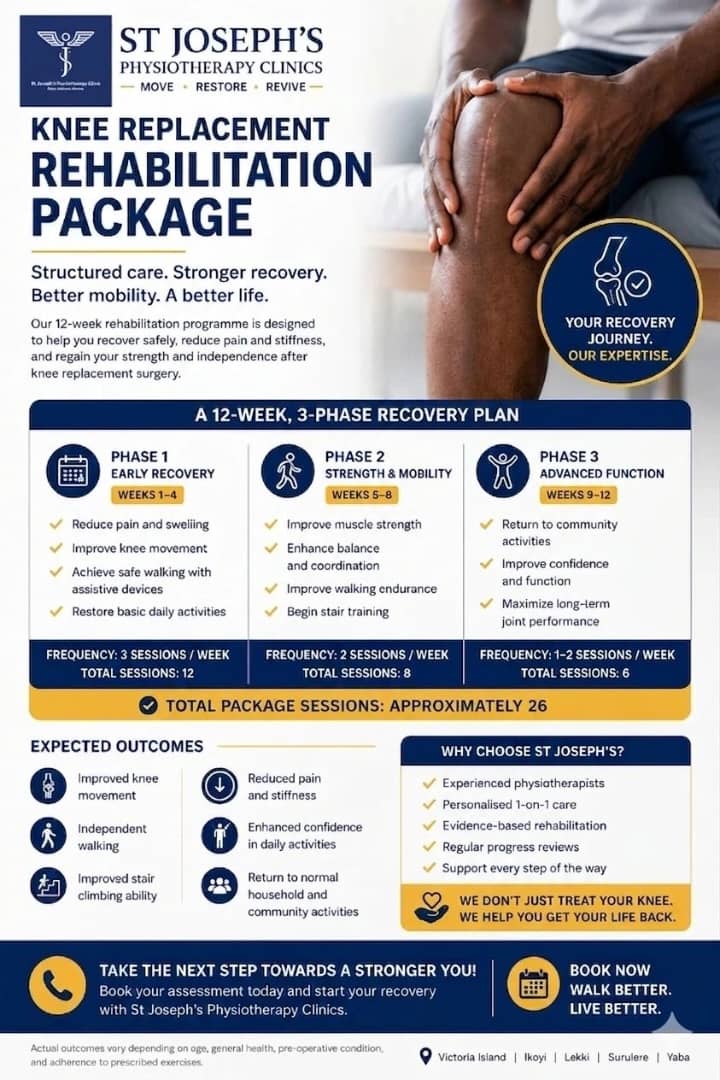
Complete Knee Replacement Rehabilitation Package in Lagos
Knee replacement surgery is a major step toward pain relief and improved mo…

NAMDA threatens strike over unpaid medical lecturers’ allowances
The Nigerian Association of Medical and Dental Academics (NAMDA) has warned…

Resident Doctors Signal End to Strike Threat After High-Level Talks with Gbajabiamila
The threat of a nationwide indefinite strike by the Nigerian Association of…
AMLSN Issues Strong Rejoinder to NAMDA on Public Service Establishment Matters
The Association of Medical Laboratory Scientists of Nigeria (AMLSN) has rel…