President of the Nigerian Medical Association yesterday said that the passage of the National Health Bill, NHB, would help to substantially reduce frequent and sometimes unnecessary foreign medical trips and also make Nigeria a destination for medical tourism.
Enabulele, who expressed satisfaction on the passage of the Health Bill by the Senate of the Federal Republic of Nigeria last Wednesday said the passage would undoubtedly re-energise Nigeria’s Primary health care system.
According to him, provisions in the Bill boldly attempt to tackle the vexatious issue of medical tourism and its current negative impact on Nigeria, as well as the gross abuse of tax payers’ money on account of the incessant foreign medical trips by political and public office holders in search of foreign medical attention for medical conditions that can effectively be treated in Nigeria.
“Currently, lots of Nigerians, including top political office holders travel frequently to other countries in search of medical care even for medical conditions that can be managed in Nigeria.
“Available evidence shows that over 5,000 Nigerians visit India and other countries every month for medical tourism with lots of these Nigerians faced with various risks and challenges including misdiagnosis, legal and ethical issues, exposure to infectious diseases, as well as other complications, particularly post-surgical complications. On the average, over $800million dollars is lost annually by Nigeria on account of foreign medical trips,” he observed.
The NMA President however, noted that the NHB provides for stricter regulation of all medical referrals abroad and emphasises greater collaboration between public and private health care facilities in Nigeria.
Lamenting deaths of women and children in the country, he said: “The NHB will also provide a minimum package of basic healthcare services, (including the provision of free medical care for children under 5 years of age, pregnant mothers, the elderly and people with disabilities.
BY CHIOMA OBINNA & GABRIEL OLAWALE
Vanguard
ABUJA: Training Schedule for Basic Life Support BLS, Pediatric Advanced Life Support (PALS), Advanced Cardiovascular Life Support ACLS, First Aid, CPR, AED
PORTHARCOURT: Training Schedule for Basic Life Support BLS, Pediatric Advanced Life Support (PALS), Advanced Cardiovascular Life Support ACLS, First Aid, CPR, AED
LAGOS: Training Schedule for Basic Life Support BLS, Pediatric Advanced Life Support (PALS), Advanced Cardiovascular Life Support ACLS, First Aid, CPR, AED
STOP paying for airtime and electricity, Let your phone pay its bills with ScreenT
You may also like

FG Supports Robotic Surgery Expansion to Reduce Medical Tourism
Nigeria is taking another step toward strengthening specialised healthcare …
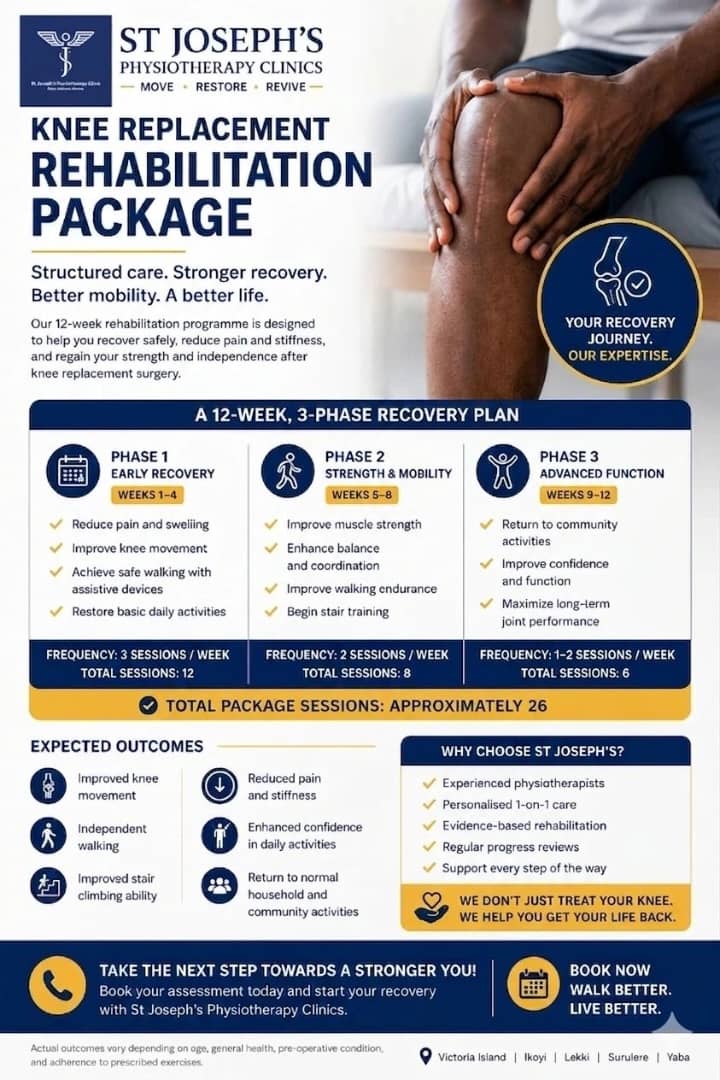
Complete Knee Replacement Rehabilitation Package in Lagos
Knee replacement surgery is a major step toward pain relief and improved mo…

NAMDA threatens strike over unpaid medical lecturers’ allowances
The Nigerian Association of Medical and Dental Academics (NAMDA) has warned…

Resident Doctors Signal End to Strike Threat After High-Level Talks with Gbajabiamila
The threat of a nationwide indefinite strike by the Nigerian Association of…
AMLSN Issues Strong Rejoinder to NAMDA on Public Service Establishment Matters
The Association of Medical Laboratory Scientists of Nigeria (AMLSN) has rel…