Over 20 years ago, the University College Hospital, Ibadan, invited some of us Nigerians to come and look at the dilapidated conditions of their hospital wards and then do something.
“I walked into the children’s wards and while I was waiting, a drip stand was being passed from one bed to the other and before the drip stand could get to one of the beds, the child who was to receive the drip died
“Tears rolled down my eyes and from that day, I said I would devote substantial part of all my endowments towards child care and survival.
“So, I decided to adopt, endow and refurbish the children’s emergency ward in UCH, which has now been named after me as the Otunba Tunwase Children’s Emergency Ward and I am happy it is about the best maintained ward in UCH.”
This was a narration by Otunba Michael Olasubomi Balogun, Chairman, First City Group who clocks 80 this month. My piece this week is on neonatal tetanus and will be dedicated to the octogenarian.
Otunba also financed the construction of a 40-bed children hospital, known as the Iye Subomi Child Care Centre (named after his late mother) at his home town of Ijebu-Ode and donated to the Ogun State government.
Recently, he donated a multi-billion naira Otunba Tunwase National Paediatric Centre at Ijebu-Ode in Ogun State to University of Ibadan and later renamed the Otunba Tunwase National Paediatric Centre of the University of Ibadan.
His name will be written in gold anytime child care is mentioned in Ijebuland, in Ogun State and southwest in general.
As a youth corps member doctor working at the General Hospital in the Middle Belt some years back, I recall that we lost over 10 neonates within a year due to neonatal tetanus. All the time, I kept wondering how the mortality rate could be reduced.
At the clinical meeting, we realised that the survival rate could be improved if we had basic and resuscitative medical gadgets such as oxygen, suctioning machines, pulse oximeters and above all, the expertise such as paediatricians, paediatric nurses, intensive care physicians and nurses.
Because all these were lacking, patients with tetanus were referred to the nearest teaching hospital in the state capital — a journey of between two and three-hour drive.
At the Otunba Tunwase National Paediatric Centre, we managed over 10 neonates within a year, with about 70 per cent surviving, kudos to Otunba Balogun who made everything possible. The basic and resuscitative medical gadgets as well as the necessary expertise were very adequate.
Neonatal tetanus (tetanus neonatorum) is a major cause of infant mortality in Nigeria, yet it is highly preventable.
Causes: Tetanus infection results from unvaccinated mother, home delivery, and unhygienic cutting of the umbilical cord. Tetanus could also infect when infectious substances (such as animal dung, mud, or local herbs) are applied to the umbilical stump.
Symptoms: At the end of the first week of life, infected infants become irritable, feed poorly, and develop rigidity with spasms.
Treatment: The newborn with tetanus requires intensive care and should be taken immediately to the secondary/tertiary hospital.
Prevention: Prevention is the ultimate management strategy for tetanus. Vaccination of pregnant women with at least two doses of tetanus toxoid vaccine before delivery is very important. The importance of childhood immunisations and boosters must be stressed.
Promotion of safe child delivery practices is another preventive measure. Midwives and traditional birth attendants should be given training in aseptic delivery procedures.
The basics of wound care and first aid should be widely taught. Early recognition of symptoms and signs of localised tetanus and timely access to medical care are essential.
On behalf of all the tetanus survivors at OTNPC, their parents and all the medical and nursing staff of the OTNPC before it was donated, I wish Otunba Michael Olasubomi Balogun happy 80th birthday.
ABUJA: Training Schedule for Basic Life Support BLS, Pediatric Advanced Life Support (PALS), Advanced Cardiovascular Life Support ACLS, First Aid, CPR, AED
PORTHARCOURT: Training Schedule for Basic Life Support BLS, Pediatric Advanced Life Support (PALS), Advanced Cardiovascular Life Support ACLS, First Aid, CPR, AED
LAGOS: Training Schedule for Basic Life Support BLS, Pediatric Advanced Life Support (PALS), Advanced Cardiovascular Life Support ACLS, First Aid, CPR, AED
STOP paying for airtime and electricity, Let your phone pay its bills with ScreenT
You may also like

FG Supports Robotic Surgery Expansion to Reduce Medical Tourism
Nigeria is taking another step toward strengthening specialised healthcare …
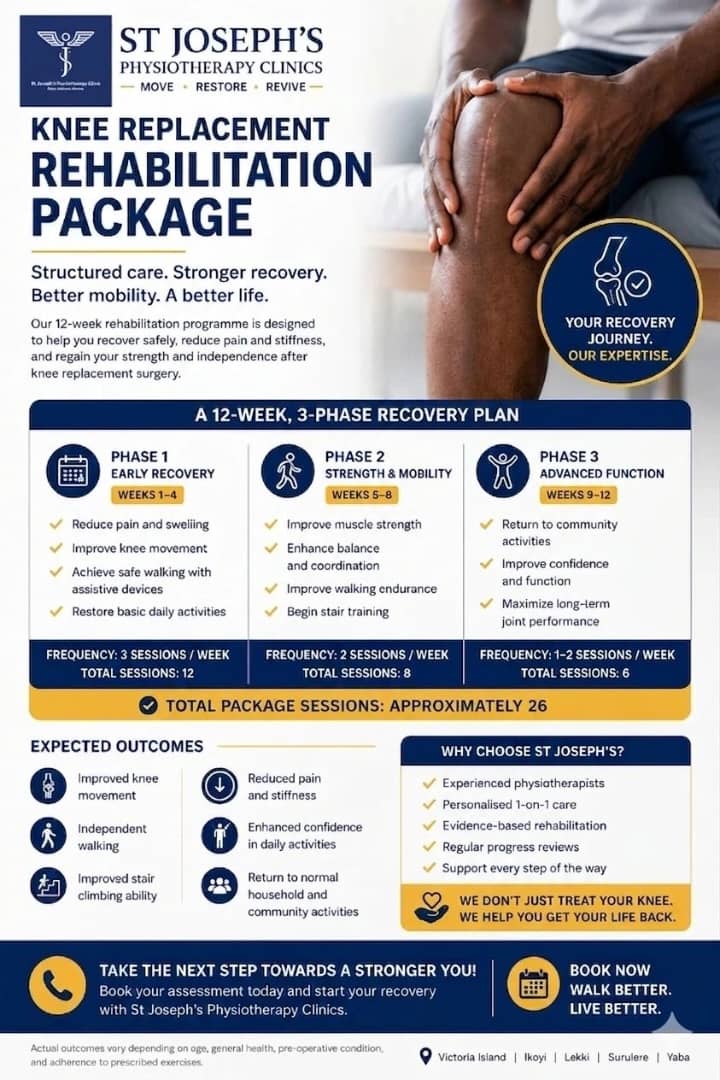
Complete Knee Replacement Rehabilitation Package in Lagos
Knee replacement surgery is a major step toward pain relief and improved mo…

NAMDA threatens strike over unpaid medical lecturers’ allowances
The Nigerian Association of Medical and Dental Academics (NAMDA) has warned…

Resident Doctors Signal End to Strike Threat After High-Level Talks with Gbajabiamila
The threat of a nationwide indefinite strike by the Nigerian Association of…
AMLSN Issues Strong Rejoinder to NAMDA on Public Service Establishment Matters
The Association of Medical Laboratory Scientists of Nigeria (AMLSN) has rel…