A NEW genetic centre, which will be officially commissioned today at the Lagos University Teaching Hospital (LUTH), promises to reduce the more than 100,000 lives lost yearly in the country to sickle cell anaemia and much more to breast cancer.
The centre, which is a collaborative effort between Chevron/Nigerian National Petroleum Corporation (NNPC) Joint Venture and LUTH, with technical support from Department of Molecular Genetics, Antwerp University, Belgium, also promises to stop brain drain and foreign exchange the country loses in sending samples abroad, especially to United Kingdom (UK) and South Africa, for paternity test and identifying plane crash victims.
Associate professor of Molecular Genetics at the University of Antwerp and Chief Consultant to the LUTH/Chevron-NNPC Joint Venture Genetic Testing Centre, Dr. Joy Irobi-Devolder, told journalists yesterday at a seminar in LUTH on Unlocking DNA Biotechnology in Nigeria: “There are indeed several applications. It thinks this is really a wonderful opportunity because we are now in the era of human genomic sequencing and there are so many genetic diseases.
“Let us take for instance a simple one, the sickle cell disease, when we know as for now 100,000 infants are dying in Nigeria every year largely because of misdiagnosis. The old technique of using haemoglobin blood count is actually not properly diagnosing the disease very well and this is why it has become important that this centre is now going to develop a genetic assay that is going to correctly diagnose every sickle cell patient.
“Why it is really important is that all those people that are carrier can now actually come to the centre where they can do prenatal or even newborn screening so that immediately they know if their child is sickle cell carrier or a real sickle cell disease and then they can start from early onset to treat the patient and not wait till when the disease is already expanded and then it becomes a rescue, and this is how you lose a lot of them. This centre is actually giving a new diagnostic estimate in the form of genetic analysis that is going to help reduce the high mortality rate of sickle cell disease in Nigeria. That is number one.
“Number two is that we now see a lot of Nigerian women that are dying of breast cancer and ovarian cancer. Why is this? It is because some of them do not have the opportunity or have enough finance to go abroad for genetic testing. Now, we have it in-house, in-country so that when there is a patient that knows that there is someone in the family, an auntie or the mother, who has breast cancer, you can come to the centre and ask for genetic test because this actually increases the chance of personalized medicine.”
According to the expert, it has been shown that specific mutations in BRCA gene (breast cancer gene) actually determines the type of treatment that you will be given. “So it is not just the diagnosis, this is also therapy. So, it becomes very important that it is within the country, which means it is affordable for everyone, for every Nigerian.”
Irobi-Devolder said the centre will also be able to solve all disputes on paternity and maternity of an offspring. She explained: “Paternity testing is a very common assay and what it now shows is that most of the hospitals within Nigeria send the sample outside either to United Kingdom or South Africa. It is no longer required because now this centre has the capacity to do in-house parenting testing by looking at more than 26 genetic markers. What is important now is that they start sampling; they start collecting the samples.”
According to the professor, “another important issue of this centre is that it is not just sending the blood sample, I am going to help them to start training all the other scientists within several of all these big hospitals so that they are able to have their own DNA Data Banking. This will make it easy to just send DNA sample to the centre for screening. So it is not all about doing paternity test, which is now in-house, you don’t have to pay so much money for taking it outside, it can be done within the country. But also, they will get sort of training on how they can isolate DNA from each sample, from blood sample, and start having your own individual hospital-based DNA storage data bank. I think it is a novel technology because paternity is something that is so common and we can now do it so comfortably in-house at this new genome centre in LUTH.”
ABUJA: Training Schedule for Basic Life Support BLS, Pediatric Advanced Life Support (PALS), Advanced Cardiovascular Life Support ACLS, First Aid, CPR, AED
PORTHARCOURT: Training Schedule for Basic Life Support BLS, Pediatric Advanced Life Support (PALS), Advanced Cardiovascular Life Support ACLS, First Aid, CPR, AED
LAGOS: Training Schedule for Basic Life Support BLS, Pediatric Advanced Life Support (PALS), Advanced Cardiovascular Life Support ACLS, First Aid, CPR, AED
STOP paying for airtime and electricity, Let your phone pay its bills with ScreenT
You may also like

FG Supports Robotic Surgery Expansion to Reduce Medical Tourism
Nigeria is taking another step toward strengthening specialised healthcare …
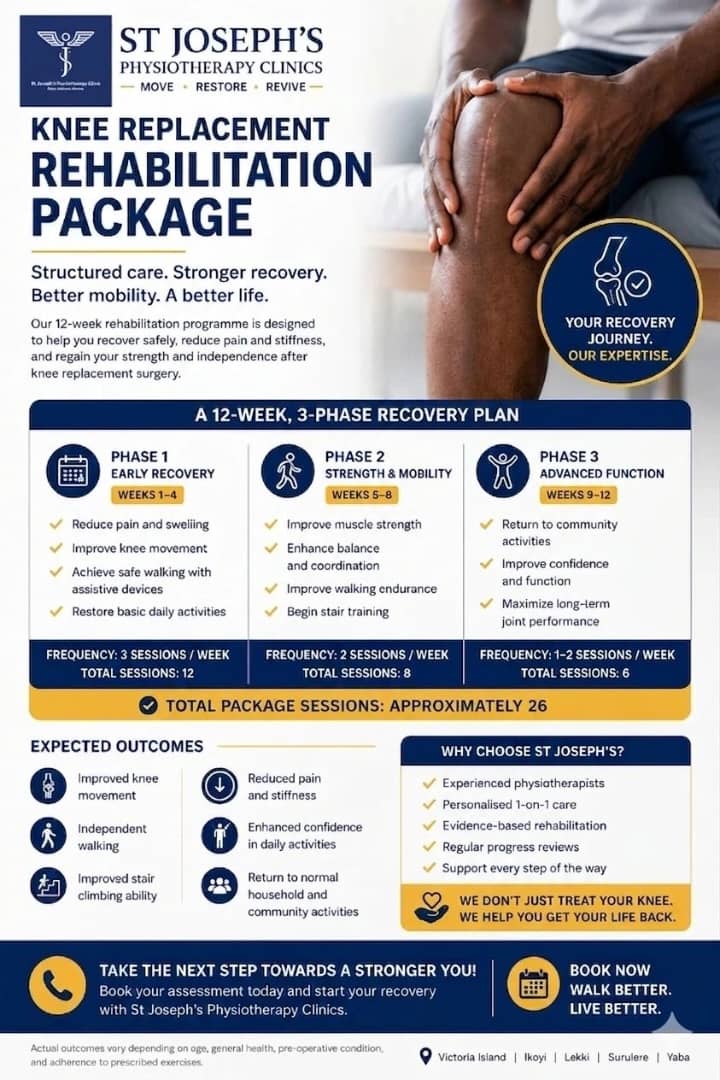
Complete Knee Replacement Rehabilitation Package in Lagos
Knee replacement surgery is a major step toward pain relief and improved mo…
NAMDA threatens strike over unpaid medical lecturers’ allowances
The Nigerian Association of Medical and Dental Academics (NAMDA) has warned…
Resident Doctors Signal End to Strike Threat After High-Level Talks with Gbajabiamila
The threat of a nationwide indefinite strike by the Nigerian Association of…
AMLSN Issues Strong Rejoinder to NAMDA on Public Service Establishment Matters
The Association of Medical Laboratory Scientists of Nigeria (AMLSN) has rel…
