Barely a year to the magical 2015, less than five per cent of Nigerians are currently enrolled in any form of health insurance. By implication, this means that the majority of Nigerians can hardly afford basic health services. Those who can, pay out-of-pocket, while others patronise unregistered medical outfits and traditional healers for health care services.
Indeed, on June 6, 2005, when the then President Olusegun Obasanjo inaugurated the National Health Insurance Scheme for the formal sector, the overall goal was to attain universal coverage by 2015. Sad to say, as at 2012, only the Federal Government employees and a small proportion of private sector workers have been covered.
According to the Chief Medical Director of Christus Specialist Hospital Nigeria Limited, Dr. Kayode Obembe, in a paper he delivered on community health insurance scheme, the total enrolment across the nation was slightly above five million enrollees out of an estimated population of 168 million,
In an earlier interview with The PUNCH, a health insurance expert and a former committee member of the National Health Insurance Scheme, Dr. Abiodun Osiyemi, said health insurance in Nigeria was first introduced in 1962 by the late Dr. Moses Majekodumi, but it became very active sometime in 1999 and 2000 when companies started selling the health insurance scheme as it is now known.
However, he noted, in 2005, there was the formal inauguration of the NHIS for the formal sector; while the first Community Health Insurance Scheme was inaugurated in 2009 by then Minister of Health, Prof. Eyitayo Lambo. In a nutshell, the idea of the NHIS is for universal coverage in order to improve the health status of Nigerians.
Experts lament that the virtual absence of realistic universal coverage has affected the nation’s health indices, as Nigeria’s life expectancy currently stands at 51.86 years — according to the 2011 World Bank statistics — trailing behind Kenya’s 57.08 years and almost at par with Mali’s 51.37 years.
This is something to worry about, especially when placed side by side Algeria (73.08 years), Ghana (64.22 years) and Ethiopia (59.24 years). In Europe, the average life expectancy is 80 years and above, with Switzerland and Hong Kong having the highest average of 83 years.
Consequently, private organisations have been collaborating with the government — sometimes as part of their community social responsibility — to bring health care closer to indigent Nigerians who, otherwise, cannot afford to pay their medical bills out of pocket.
One of such public-private partnerships was by Shell Petroleum Development Company, in collaboration with the Industrial Area Cluster Communities Development Foundation based in Obio-Akpor Local Government Area of Rivers State, and ably supported by the state government.
The Industrial Area Cluster Communities include Rumuobiakani, Rumuomasi, Rumueziolu, and Oginigba.
According to the medical officer in charge of the Obio Cottage Hospital, Dr. Chidozie Umejiego, under the scheme, indigenes pay N3,600 per annum, while non indigenes pay N7,200 for registration into a model Community Health Insurance Scheme being offered by the hospital.
The scheme also enables patients to access an array of secondary health care services such as antenatal, delivery and postnatal care, obstetric and gynaecological services, Caesarean Section, and Prevention of Mother to Child Transmission of HIV/AIDS.
Enrollees also have the privilege of accessing HIV counselling and screening, minor surgeries, breast examination and cancer screening programme, treatment for minor illnesses such as malaria, typhoid, diabetes and hypertension.
Other services offered by the scheme include family planning, immunisation and growth monitoring, health education, nutrition education and food demonstrations, as well as baby- friendly care services, among others.
Expressing satisfaction at the performance of the scheme since its reintroduction in 2011, the Manager, Regional Community Health, Human Resources and Corporate Community Health for Shell Nigeria, Dr. Babatunde Fakunle, noted that the huge participation of residents was an indication that with the right support, Nigerians would readily subscribe to schemes that will improve their overall wellbeing.
Umejiego revealed that so far, hospital attendance had increased from none to 55,151; outpatient from 1,794 to 23,200; and new CHIS enrollees from none in 2009 and 2010 to 9,804 in 2013.
He also said antenatal visits rose from 2,197 in 2009 to 18,581 in 2013; and statistics rose from nil hospital admission in 2009 to 3,989 in 2013, among others.
“What this translates into is that if residents maintain the tempo, mortality rate is going to fall across board, while health indices will also appreciate positively,” Umejiego said.
Public Health Adviser, Industrial Hygiene Lead (Nigeria/Gabon) Shell Health-UI Sub-Saharan Africa Community Health, Dr. Akinwunmi Fajola, also disclosed that the community provided the land, while the SPDC built and equipped the facility; and the state government pays the staff emoluments.
The Chief Nursing Officer, Rivers State Primary Health Care Board in charge of Obio Cottage Hospital, Mrs. Dorothy Aleruchi-Odujobi, said, “We started as a primary health care centre. Then, when pregnant women came, we only selected those mothers that had delivered at least two babies before. We were not taking women with high risk and those women that were pregnant for the first time. That was because most of the time, we did not even have a doctor. Then the deliveries were about five in a month. The highest we recorded had been 18 deliveries during a particular year and it was even because we had a midwife, Ms. Joy Ohonka.
“Also, before now, adult male and female were not coming here for medical treatment, it was only babies who were brought for immunisation; while mothers who attended antenatal were few. We were using one room and we had just a bed. Today, we deliver up to 230 babies in a month. The staff number has also increased, as we now have doctors and professors, assisted by about 42 nurses.”
Meanwhile, the Minister of Health, Prof. Onyebuchi Chukwu, has expressed regrets that years after the National Health Insurance Scheme was inaugurated, only employees of three states and the Federal Government currently enjoy the benefits of the scheme.
He noted that Nigerians could only enjoy affordable health services if they embrace health insurance scheme; arguing that people at the grass roots would benefit more if they key-in to the scheme through the Community Health Social Insurance Scheme.
“This is the gap that we tried to fill by inaugurating the Obio Cottage Hospital,” Fakunle said.
ABUJA: Training Schedule for Basic Life Support BLS, Pediatric Advanced Life Support (PALS), Advanced Cardiovascular Life Support ACLS, First Aid, CPR, AED
PORTHARCOURT: Training Schedule for Basic Life Support BLS, Pediatric Advanced Life Support (PALS), Advanced Cardiovascular Life Support ACLS, First Aid, CPR, AED
LAGOS: Training Schedule for Basic Life Support BLS, Pediatric Advanced Life Support (PALS), Advanced Cardiovascular Life Support ACLS, First Aid, CPR, AED
STOP paying for airtime and electricity, Let your phone pay its bills with ScreenT
You may also like

FG Supports Robotic Surgery Expansion to Reduce Medical Tourism
Nigeria is taking another step toward strengthening specialised healthcare …
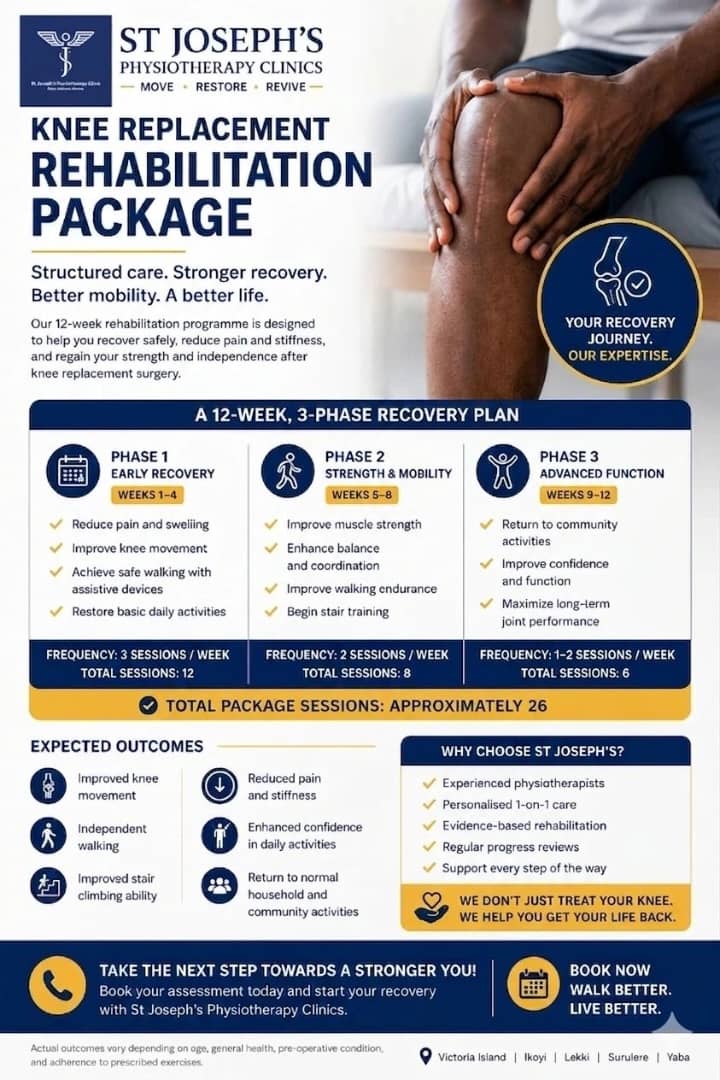
Complete Knee Replacement Rehabilitation Package in Lagos
Knee replacement surgery is a major step toward pain relief and improved mo…

NAMDA threatens strike over unpaid medical lecturers’ allowances
The Nigerian Association of Medical and Dental Academics (NAMDA) has warned…

Resident Doctors Signal End to Strike Threat After High-Level Talks with Gbajabiamila
The threat of a nationwide indefinite strike by the Nigerian Association of…
AMLSN Issues Strong Rejoinder to NAMDA on Public Service Establishment Matters
The Association of Medical Laboratory Scientists of Nigeria (AMLSN) has rel…