IT was set for Presidential assent in May 2011 but a disagreement among stakeholders over some sections of the National Health Bill (NHB) forced President Goodluck Jonathan to return it to the National Assembly for amendment.
Again, the Bill, which promises to ensure universal health coverage, has now been passed by the Senate and is awaiting passage by the House of Representatives.
While medical doctors, human right activists and international health organisations are hailing the Senate over the passage, other health workers, including nurses, pharmacists, laboratory scientists, constituting over 90 per cent of the human resource in the sector, are asking the lower house not to pass the Bill.
Medical doctors, under the aegis of the Nigerian Medical Association (NMA), the Health Sector Reform Coalition (HSRC), and the Health Reform Foundation of Nigeria (HERFON) are unanimous that when the NHB becomes a law it will ensure access to affordable and specialized health care, and stop medical tourism and brain drain.
But other health workers under the aegis of the Joint Health Sector Union (JOHESU) and the Assembly of Healthcare Professional Association (AHPA) have called on the National Assembly to reject the proposed NHB. They said it is an attempt by medical stakeholders to undermine the professional autonomy of other health professions.
Indeed, there are fears that if stakeholders do not get their acts together, Nigeria may miss it again aHistory The NHB was first presented to the National Assembly in 2006, made its way through various bureaucratic bottlenecks, and was passed by the Senate in 2008, but not by House of Representatives.
In May 2011, it was passed by the House of Representatives and the Senate but was not assented to by the President, due to unhealthy disagreements and diverse interests of health professionals, religious groups' coloration and political groups.
The Senate resuscitated deliberations on the Bill in 2011 and held a public hearing in February 2013, and passed it on February 19,2013. The bill is awaiting concurrence by the Federal House of Representatives before onward transmission to
the President.
The copy passed by the Senate and obtained by The Guardian is entitled the National Health Bill,2014. Promises
In plain language, the NHB seeks to provide a framework for the- development and management of a health system within Nigeria.
Among other things, it stipulates that the federal government would contribute one percent from the consolidated revenue fund towards the development of primary health care in the country, while the state and local governments will provide counterpart fund to support primary health care services. President, Nigerian Medical Association (NMA), Dr. Osahon Enabulele, said if the bill is signed into law, it will provide a package of basic healthcare services, including the provision of free medical care for children under five years, pregnant mothers, elderly people with disabilities, and improved funding through the setting up of a National Primary Healthcare Development Fund ..
Enabulele explained: "The National Health Bill captures the legitimate aspirations of Nigerians for improved access to quality healthcare services, aside from engendering an equitable healthcare system. The Bill, when
it becomes law, will ensure that deaths amongst Nigerians, particularly the rural poor, as a result of their inability to pay for healthcare services including medical care for emergencies, will be drastically reduced.
"The bill's provisions will boldly tackle the vexatious issue of medical tourism and its current negative impact on Nigeria, as well as the gross abuse of tax payers' money on account of the incessant foreign medical trips by political and public office holders in search of foreign medical attention for conditions that can ef- fectively be treated in Nigeria." The NMA President said the Bill also provides for stricter regulation of all medical referrals abroad and emphasises greater collaboration between public and private health care facilities in Nigeria.
He said: "It is no longer a news that lots of Nigerians, including top political office holders travel frequently to other countries in search of medical care, even for medical conditions that can be satisfactorily managed in Nigeria.
"Available evidence shows that over 5,000 Nigerians visit India and other countries every month for medical tourism with lots of these Nigerians faced with various risks and challenges including misdiagnosis, legal and ethical issues, exposure to infectious diseases, as well as other complications, particularly post-surgical complications.
"On the average, over $800 million dollars is lost annually by Nigeria on account of foreign medical trips. The passage of the National Health Bill will help to substantially reverse the trend of frequent and sometimes unnecessary foreign medical trips, and make Nigeria a destination for medical tourism."
He added: "The provisions seek to enthrone quality health care facilities and services throughout Nigeria, through requirements for a Certificate of Needs and Standards before setting up public and private health facilities; provide for the regulation, standardization, due diligence, accountability, monitoring and evaluation of the health system and its performance.
It will guarantee the sustained performance and improvement of Nigeria's health system, and substantially reduce acts of quackery in the health sector.
Executive Secretary of the Health Reform Foundation of Nigeria (HERFON), Dr. Muhammed Lecky, who spoke on behalf of the Coalition, stressed that the bill would end the persistent disagreement among professionals in the sector as, according to him, it provides for responsibilities, roles, definitions and limitations of each professional body and also creates opportunity for all the health practitioners to make inputs into the yearly budgets of the health sector.
Lecky said: "The health bill is the first to provide legislative framework and dedicated funding sources to primary health care and this includes the provision for a national primary health care, which will significantly increase
government financing for primary care. The bill targets universal health coverage that provides for basic health services. The bill provides for standardization and regulation of health care practice promoting professionalism and eliminating quackery." . A report on 'Ending Preventable Newborn Deaths in Nigeria' launched in Abuja urged
the federal government to sign the bill into law this year and ensure that it is fully funded and implemented in all states to guarantee a free healthcare package for every child. Country Director of Save The Children, Susan Grant told The Guardian that the bill would be a major step in helping it revamp Nigeria's healthcare system, "with huge impacts on ma-ternal and newborn survival. She said: "The bill makes provision for two per cent of the federal government's consolidated revenue to be allocated to primary health care. If effectively implemented, this could potentially help with much needed re- sources for states that are lagging behind in improving healthcare delivery. This, however, must be complemented by increased expen- diture on health by all states to help balance out inequalities between them."
The Human Rights Writers Association of Nigeria (HURIWA) saluted the National Assembly for what he described as the 'magnanimity' it has shown in passing the long-standing National Health Bill. National
Coordinator of the Association, Emmanuel Onwubiko, however, urged Senate Committee on Health to sensitize Nigerians on the provisions of the Bill.
He told The Guardian: "Health is wealth and the issue of the public health of Nigerians should be of strategic concern of all and sundry. Nigerians must be told in their native languages what the provisions of the bill will bring to them if they are implemented. It is a fact that the standard and quality of public health care across Nigeria has being in sharp decline since the 1980s, making it possible for millions of our rural and urban poor, who can not access quality healthcare to die from
avoidable and preventable diseases like malaria, cholera and other water borne diseases.
"Nigerians expect that the Federal House under the Speaker Mr. Aminu Waziri Tambuwal will concur to the Bill already passed by the Senate so that President Jonathan can sign and deliver it to Nigerians as another evidence of the administration's commitmentto bringing about transformation of all the moribund but vital national assets.
Discordant tunes But other health workers under the aegis of the Joint Health Sector Union (JOHESU) and the Assembly of Healthcare Professional Association (AHPA), which represent all the professionals and other cadre of workers in the nation's health sector with the exception of medical doctors, disagree.
The JOHESU/AHPA called on the National Assembly to reject the proposed National Health Bill as it has become obvious that section 1(1) ofthe bill ascurrentlypackaged, "is an attempt by medical stakeholders to undermine the professional autonomy of other health professions as witnessed recently in Ghana, where the parliament repealed laws which backed the autonomy of all the health professions after passing a Health Act."
Chairman of JOHESU, Dr. Ayuba Wabba, in a statement said: "It is important to declare that contrary to the impression created by the Chairman, Senate Committee on Health, Senator Ifeanyi Okowa who is a medical doctor that the health industry in Nigeria is largely unregulated, without norms and standard, the truth is that there are existing legal frameworks for regulating and controlling pharmacists through the Pharmacists Council of Nigeria (PCN) Act, doctors through Medical and Dental Council of Nigeria (MDCN) Act, nurses through Nursing and Midwifery Council of Nigeria
(NMCN) Act and Medical Laboratory Scientists through Association of Medical Laboratory Science of Nigeria (AMLSN) Act."Wabba lamented the discriminatory clauses which amount to legislating against privileges a citizen of Nigeria could enjoywhen positions are reserved for one profession to the detriment of others as in section 9(2) a of the health bill, which proposes that the Director of Hospital Services, a slot reserved for doctors, will be the Chairman of the National Tertiary Health Institutions Standard Committee albeit permanently.
He further explained: "Specifically; Section 42 (1) b of the 1999 Constitution declares intenalia,
"A citizen of Nigeria of a particular community; ethnic group, place of origin, sex, religion or political opinion shall not, by reason only that he is such a person, be accorded either expressly by; or in the practical application of, any law in
force in Nigeria or any such executive or ad- ministrative action, any privilege or advantage that is not accorded to citizens of Nigeria of other communities, ethnic groups, places of origin, sex, religious or political opinions".
"There is therefore no alternative to creating a level around for the most competent health personnel to emerge as chairman or head of any platform in healthcare. We had asked distinguished senators at the public hearing on the health bill that if the bill was about reforms, how come there is no departure from the status quo because the director of hospital services is a staff under a Health Ministry at the Federal Ministry of Health, which is presently in charge of health services. In apocalyptic terms, what has or would change under this "We have had propagandist postulations that the Health Bill will check infant and maternal mortality and put healthcare on the right path, but we say this is a ruse. The only way to get healthcare marching again is to inject new thinking and fresh attitude in the way our laws and policies evolve. When we match this with good implementation plans we might be on the way to solving our problems." President, Pharmaceutical Society of Nigeria (PSN), Olumide Akintayo, described as embarrassing the recent adoption of the Health Bill in its original version by the Senate of the Federal Republic of Nigeria.
Akintayo said: "It was most unconscionable and outrightly insensitive that the Senate, which was sensitised up to the apex level, allowed itself to be hoodwinked by Senator Ifeanyi Okowa and his.fellow travellers on the Senate Committee on Health. For the sake of clarification, the grand agenda, albeit clandestinely to force the flawed Health Bill on Nigerians, was sealed in January 2013 at the maiden Doctor's Summit in Asaba, which was graced by the Senate President, Senator David
Mark as Chairman of the Occasion.
"Indeed, Senator Ifeanyi Okowa arrogantly boasted at the senate public hearing that irrespective of deep concerns and reservations of JOHESU /AHPA, the senate would pass the Health bill as originally structued, a threat that has now come to pass.
"The decision of the senate probably confirms apprehensions that our senators have the mindset of emperors and traditionally have never been true representatives of the people. There is no better way to rationalise developments at the senate, which chose to ignore the strong opinions of over 95 per cent of stake-holders in health care, who requested an amendment of sections 1(1) and 9 (2) (a) of the National Health Bill."
JOHESU/AHPA, in a joint statement, threatened to go to Court if the Bill, as it is, is given legal teeth. Ayuba and Akintayo wrote: "We will shift attentionfor now to the Federal House of representatives which wil be extected to conduct its own version of a public hearing soon. We do hope the Federal House of Representatives will dispense justice when this bill is considered.
"We however sound it loud and clear that if the present Health Bill is eventually given legal teeth as presently structured as Act of Parliament, it will be dead on arrival as it shall be subjected to a judicial discourse in our bid to assert our right."
National President, Association of Medical laboratory Scientists of Nigeria (AMSLN) and Chairman, AHPA, Dr. Godswill G: Okara, accused the NMA and HERFON of pushing for a quick passage of the bill without the amendments being sort by others. "This is an open invitation to crisis of the worst dimension in the health sector," he said. Okara explained: "It was observed that the presentations by HERFON and NMA were tele- vised live during the Senate Public Hearing on the bill, while the presentations by other pro- fessional Associations and Unions were blacked out to prevent the observing public from hearing first hand, the argument and reasons for the principled objections to the bill. This is most unfortunate and misleading to put it mildly.
"The practice of bandying and manipulating statistics to paint a doomsday picture will never solve the problem of the health sector in Nigeria. Putting a halt to the gross mismanagement of the sector by some medical practitioners will save the health sector. Removing avoidable conflict and contradictory clauses from the bill will save the sector; otherwise the bill will be dead on arrival. " Okara further explained: "Universal health coverage all over the world is provided through health insurance mechanism, but the proponents of the bill claim that Nigeria exists as an island in the moon and should therefore allocate two per cent of the Federation's Consolidated Fund for health care services in Local Government Areas. When the National Assembly should be making laws to Strengten fisca federalim, we are beingdragged back to the days of military unitary command structure in the health sector.
"The National Health bill may as well go the way of the Urban Development law passed by the National Assembly, which the Lagos State Government challenged at the Supreme Court for being in conflict with constitutional federalism. It was nullified and thrown to the trash bin by the Supreme Court. The Comrade Governor, Adams Oshiomole had recently told a gathering in Asaba presided over by the Senate President, Dr. David Mark, that there was no need for the National Health bill. Money statutorily allocated to local Governments, which should be used for provision of health and other infrastructure are being misapplied and misused. The National Assembly can easily make laws to free these funds, some fellows prefer to propose laws that will further compound the situation." Okara said the clamour by some medical practitioners to have the National Health Bill passed into law is a concealed calculated attempt by them to legitimize their impunity and lord over their views on other professions in the health sector. "If this is allowed under whatever guise, the Nigerian health sector will be going into perdition. We strongly believe that men and women of good conscience in the National Assembly of the Federal Republic of Nigeria will not allow this to happen," he said. He said that fighting for the passage of an omnibus umbrella law to make medical practitioners the regulator of all professions in the health sector would never stand. Okara said: "There is no need whatsoever for the National Health bill. It is an unnecessary duplication of laws and bureaucracy, a constitutional aberration in a federal system to legislate for local and state governments on matters on the concurrent legislative list." Going forward President of Association for Reproductive and Family Health, Prof. Oladapo Ladipo, thinks that the experience of the past should give the indication that people should not start celebrating yet. He cautioned against the ongoing excitement in some quarters over the passage of the NHB by the Senate, noting that the action of the House of Representatives and the absent of President Goodluck Jonathan were still needed to make it law.
He said: "Let's not rejoice yet over the National Health Bill yet. It is the prerogative of the President to sign. Let's not rejoice until he Signs. He promised to sign the other time the bill was passed, but he didn't. We will rejoice when he signs. But let's sustain the advocacy and hope for the best."
ABUJA: Training Schedule for Basic Life Support BLS, Pediatric Advanced Life Support (PALS), Advanced Cardiovascular Life Support ACLS, First Aid, CPR, AED
PORTHARCOURT: Training Schedule for Basic Life Support BLS, Pediatric Advanced Life Support (PALS), Advanced Cardiovascular Life Support ACLS, First Aid, CPR, AED
LAGOS: Training Schedule for Basic Life Support BLS, Pediatric Advanced Life Support (PALS), Advanced Cardiovascular Life Support ACLS, First Aid, CPR, AED
STOP paying for airtime and electricity, Let your phone pay its bills with ScreenT
You may also like

FG Supports Robotic Surgery Expansion to Reduce Medical Tourism
Nigeria is taking another step toward strengthening specialised healthcare …
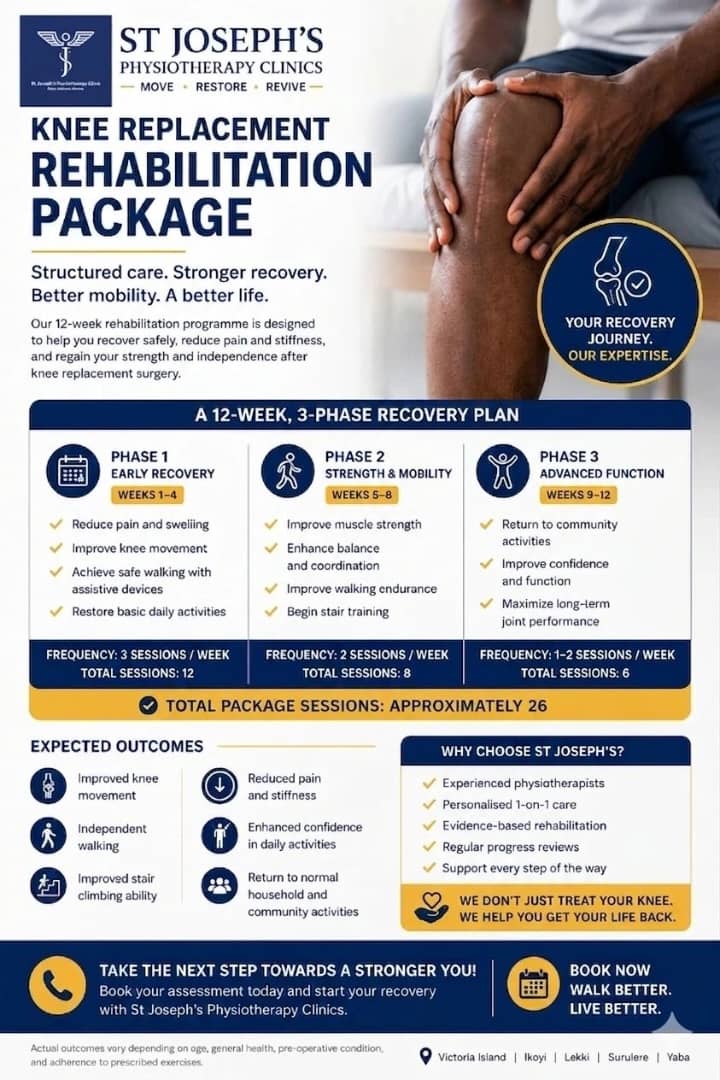
Complete Knee Replacement Rehabilitation Package in Lagos
Knee replacement surgery is a major step toward pain relief and improved mo…

NAMDA threatens strike over unpaid medical lecturers’ allowances
The Nigerian Association of Medical and Dental Academics (NAMDA) has warned…

Resident Doctors Signal End to Strike Threat After High-Level Talks with Gbajabiamila
The threat of a nationwide indefinite strike by the Nigerian Association of…
AMLSN Issues Strong Rejoinder to NAMDA on Public Service Establishment Matters
The Association of Medical Laboratory Scientists of Nigeria (AMLSN) has rel…