THE dearth of public and private partnership in radiologic practices has been identified to be the major bane of profession growth in the country.
Radiologists, who met last week at the 2013 Radiology Day of the Faculty of Radiology, National Postgraduate Medical College of Nigeria, said it is high time different stakeholders, both from the public and private sectors came together to improve radiologic practices in Nigeria.
The event which was tagged: ‘Public/Private partnership in Radiologic Practice in Nigeria: the Journey So Far,’ also had a sub-theme of `Cancer: Time for Collaborative Efforts and Financing Radiologic Practices.’
While declaring the event opened, Prof. Donald Nzeh, the Chairman, Faculty of Radiology, National Postgraduate Medical College of Nigeria, Lagos, listed various challenges facing radiologists.
According to the professor, “at the moment, there are number of issues that we face on a regular basis, including lack of electricity supply, inadequate protective wears, insufficient radiation monitoring of personnel and equipment; unstructured training and retraining of staff on newly acquired machines and the need to upgrade equipment in line with modern standards,” Nzeh said.
He noted that it is not enough to bank totally on the government, adding that radiologists also play a vital role in the cure of cancerous diseases in the health sector, hence, the need for partnerships cannot be over emphasized.
The guest lecturer, Prof. Kingsley Ketiku, who linked the need for cancer awareness and public/private partnership in radiologic practice said while the federal government had done a lot with the proliferation of cancer care centres across the country, there is still far in-between compared with the population and huge percentage that need cancer palliative therapy.
According to him, “about 200 radiotherapy centres are needed to cope with the cancer burden. But currently, there are about 10 radiotherapy centres (with various degrees of functionality) in the country, that is, a ratio of one machine to 30 million people, while some advances countries have a ratio of 3.4 to 100, 000 people.”
He added that while the need for more hands could not also be over-emphasised in the profession, he appealed for improved morale and financial support from the government for the profession to render competitive services.
He said further that the dearth of facilities had been a major problem in the sector. “Some of the equipment cost between $1 million to $5 million for acquisition, excluding installation and maintenance.”
Meanwhile, the Director-General Standards Organisation of Nigeria SON, Dr. Joseph Odumodu, said it would partner with radiologists in order to attain the highest level of service delivery.
Odumodu, who was represented by Cynthia Ifeagwu, a Deputy Director, SON, said that the collaboration was to ensure quality and safety of the equipment being used, adding that such partnership was necessary to enhance radiology service delivery.
“SON has been at the forefront of partnership with different organisations from training, system certification, calibration of tools to other technical areas,” he said.
The director-general said: “SON is implementing a programme that requires a pretest and certification before shipping of medical equipment to Nigeria.’’
He said that locally-produced and imported devices should be registered through SON’s e-registration programme to resolve quality issues and ensure consumer protection.
Odumodu assured that the organisation would continue to ensure that medical materials, procedures and services were used for their intended purposes.
“This is to assist in ensuring that radiology equipment is calibrated at specific intervals to ensure accuracy of results. In addition, SON has the capacity to assist radiologists and other stakeholders within the sector with required training and certification so that they can remain current. As a body dealing with human lives, I will encourage more focus on the quality of radiology equipment. This is by participating in standards evaluation and ensuring that only equipment tested and which conform to approve standards are used by your members,” Odumodu said.
ABUJA: Training Schedule for Basic Life Support BLS, Pediatric Advanced Life Support (PALS), Advanced Cardiovascular Life Support ACLS, First Aid, CPR, AED
PORTHARCOURT: Training Schedule for Basic Life Support BLS, Pediatric Advanced Life Support (PALS), Advanced Cardiovascular Life Support ACLS, First Aid, CPR, AED
LAGOS: Training Schedule for Basic Life Support BLS, Pediatric Advanced Life Support (PALS), Advanced Cardiovascular Life Support ACLS, First Aid, CPR, AED
STOP paying for airtime and electricity, Let your phone pay its bills with ScreenT
You may also like

FG Supports Robotic Surgery Expansion to Reduce Medical Tourism
Nigeria is taking another step toward strengthening specialised healthcare …
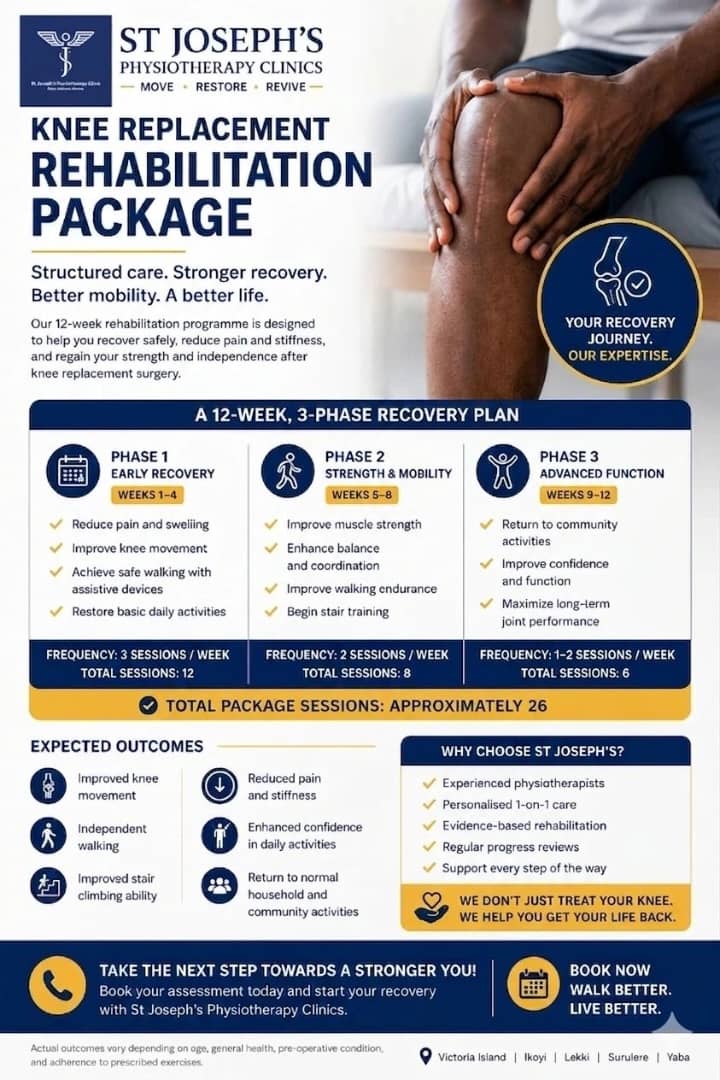
Complete Knee Replacement Rehabilitation Package in Lagos
Knee replacement surgery is a major step toward pain relief and improved mo…

NAMDA threatens strike over unpaid medical lecturers’ allowances
The Nigerian Association of Medical and Dental Academics (NAMDA) has warned…

Resident Doctors Signal End to Strike Threat After High-Level Talks with Gbajabiamila
The threat of a nationwide indefinite strike by the Nigerian Association of…
AMLSN Issues Strong Rejoinder to NAMDA on Public Service Establishment Matters
The Association of Medical Laboratory Scientists of Nigeria (AMLSN) has rel…