Researchers from The University of Manchester have discovered a new mechanism that governs how body clocks react to changes in the environment.
And the discovery, which is being published in Current Biology, could provide a solution for alleviating the detrimental effects of chronic shift work and jet-lag.
The team’s findings reveal that the enzyme casein kinase 1epsilon (CK1epsilon) controls how easily the body’s clockwork can be adjusted or reset by environmental cues such as light and temperature.
Internal biological timers (circadian clocks) are found in almost every species on the planet. In mammals including humans, circadian clocks are found in most cells and tissues of the body, and orchestrate daily rhythms in our physiology, including our sleep/wake patterns and metabolism.
Dr. David Bechtold, who led The University of Manchester’s research team, said: “At the heart of these clocks are a complex set of molecules whose interaction provides robust and precise 24 hour timing. Importantly, our clocks are kept in synchrony with the environment by being responsive to light and dark information.”
This work, funded by the Biotechnology and Biological Sciences Research Council, was undertaken by a team from The University of Manchester in collaboration with scientists from Pfizer led by Dr. Travis Wager.
The research identifies a new mechanism through which our clocks respond to these light inputs. During the study, mice lacking CK1epsilon, a component of the clock, were able to shift to a new light-dark environment (much like the experience in shift work or long-haul air travel) much faster than normal.
The research team went on to show that drugs that inhibit CK1epsilon were able to speed up shift responses of normal mice, and critically, that faster adaption to the new environment minimised metabolic disturbances caused by the time shift.
Potential lung cancer vaccine shows renewed promise
Researchers at UC Davis have found that the investigational cancer vaccine tecemotide, when administered with the chemotherapeutic cisplatin, boosted immune response and reduced the number of tumors in mice with lung cancer. The study also found that radiation treatments did not significantly impair the immune response. The paper was published on March 10 in the journal Cancer Immunology Research, an American Association for Cancer Research publication.
Though tecemotide, also known as Stimuvax, has shown great potential at times, the recent Phase III trial found no overall survival benefit for patients with non-small cell lung cancer. However, further analysis showed one group of patients, who received concurrent chemotherapy and radiation followed by tecemotide, did benefit from the vaccine. As a result, tecemotide’s manufacturer, Merck KGaA, is sponsoring additional post-clinical animal and human studies, so far with good results.
“There aren’t any good options for patients with inoperable stage III lung cancer following mainline chemotherapies,” said UC Davis Professor of Medicine and lead author Michael DeGregorio. “We are looking at tecemotide as a potential maintenance therapy to prolong survival and improve quality of life.”
Tecemotide activates an immune response by targeting the protein MUC1, which is often overexpressed in lung, breast, prostate and other cancers. The vaccine stimulates production of interferon gamma and MUC1-targeted killer T-lymphocytes, which seek out and destroy MUC1 cancer cells.
Source: sciencedaily
ABUJA: Training Schedule for Basic Life Support BLS, Pediatric Advanced Life Support (PALS), Advanced Cardiovascular Life Support ACLS, First Aid, CPR, AED
PORTHARCOURT: Training Schedule for Basic Life Support BLS, Pediatric Advanced Life Support (PALS), Advanced Cardiovascular Life Support ACLS, First Aid, CPR, AED
LAGOS: Training Schedule for Basic Life Support BLS, Pediatric Advanced Life Support (PALS), Advanced Cardiovascular Life Support ACLS, First Aid, CPR, AED
STOP paying for airtime and electricity, Let your phone pay its bills with ScreenT
You may also like

FG Supports Robotic Surgery Expansion to Reduce Medical Tourism
Nigeria is taking another step toward strengthening specialised healthcare …
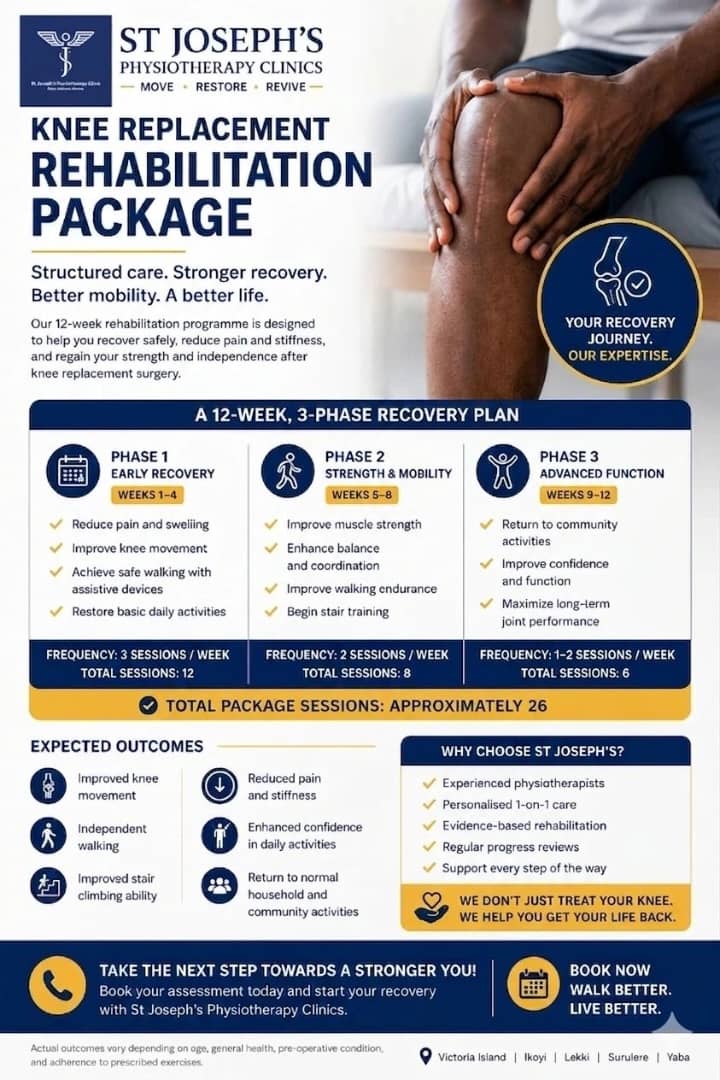
Complete Knee Replacement Rehabilitation Package in Lagos
Knee replacement surgery is a major step toward pain relief and improved mo…

NAMDA threatens strike over unpaid medical lecturers’ allowances
The Nigerian Association of Medical and Dental Academics (NAMDA) has warned…

Resident Doctors Signal End to Strike Threat After High-Level Talks with Gbajabiamila
The threat of a nationwide indefinite strike by the Nigerian Association of…
AMLSN Issues Strong Rejoinder to NAMDA on Public Service Establishment Matters
The Association of Medical Laboratory Scientists of Nigeria (AMLSN) has rel…
