Severe Menstrual Pan, infertility linked to endometriosis
One in 10 Nigerian women at risk
A GYNAECOLOGICAL disease called endometriosis has been linked to severe menstrual pains often experienced by some women and the "strange ailment" now accounts for about 30 per cent of all infertility cases among female folks. That was the submission of Obstetrics and Gynaecology specialists at the weekend, as they expressed concern on poor awareness of the condition among patients as well as medical practitioners.
Medical Director, Nordica Fertility Centre, Dr Abayomi Ajayi explained that endometriosis is a medical condition in which the mucous membrane endometrium - that normally lines only the womb - is present and functioning in the ovaries or elsewhere in the body, causing severe pains.
According to him: "These tissues form lesions which are most found on the ovaries and other organs within a woman's pelvis and causes bleeding in their respective locations outside the womb. These causes inflammation and the formation of scar tissues, leading to severe pain or even infertility," he said. The condition is as difficult to diagnose, as it is to treat.
Speaking at a fund raising event for endometriosis' commemorative awarepess walk tagged: 'million women·
march for endometriosis support', Ajayi noted that while it could take up to 10 years to have the condition diagnosed
in a patients in advanced countries, it is often undetected in underdeveloped countries like Nigeria. Estimate shows that one in every 10 women around the world has endometriosis, and a total of 200 million girls of puberty age and women experience its crisis, especially during menstruation. Ajayi, who is also the Endomarch Country Affiliate Partner, said: "Many don't
understand the condition or pains that sufferers feel. The symptoms though vary depending, on where the : growth is. It varies from having pains when urinating or defecating or when having intercourse. Everything around it is usually pain and
tends to be worse during menstruation.
"The agony is more when nothing is found to be wrong with the person, or she is said to be exaggerating normal menstrual pains. Patients are even referred to see the psychiatrists.But the sting is beyond words can describe. When your menstrual pains starts disrupting your normal life activities, then you need to be investigated whether you have endometriosis," he said. Depending on the diagnosis, which is only by laparoscopy, palliative treatment could be by removing the implants through surgery and use of drugs to alleviate the pains or stop the implants from growing.
One of the sufferers, who spoke with The Guardian on condition of anonymity, noted that her experience with endometriosis started when she was 13 and has lived with it for over two decades.
She said: "Among my female siblings, I was entirely different. Every menstrual period was a crisis of atrocious pains that no one could understand. They thought I was exaggerating. I became drug addict, taking just anything and in large doses just
to relieve the pain when it comes.
"Even when I got married, I started going from one hospital to another, treating all manner of conditions, but there was no end to the pains neither could I conceive. That went on until 2006, when I was diagnosed of endometriosis. Since then, my team of specialists has suported me.
I have thought of having the uterus and everything else removed from my body just to avoid menstruation and pain that comes with it. This is a challenge many women has, but suffering in silence. I'm talking today because I've been privileged
to take myself to specialist hospitals. There are a whole lot of people out there that could only settle for quacks and have their destiny truncated in the process. That is why we need to support people living with this condition," she said.
Endomarch Team Nigeria Programme. Coordinator, Adebowale Sangosanya said the 'million women march for endometriosis support'
coming up in March 13, 2014, was part of their efforts to raise awareness on the condition and provide support services for people living with the condition.
By Wole Oyebade
ABUJA: Training Schedule for Basic Life Support BLS, Pediatric Advanced Life Support (PALS), Advanced Cardiovascular Life Support ACLS, First Aid, CPR, AED
PORTHARCOURT: Training Schedule for Basic Life Support BLS, Pediatric Advanced Life Support (PALS), Advanced Cardiovascular Life Support ACLS, First Aid, CPR, AED
LAGOS: Training Schedule for Basic Life Support BLS, Pediatric Advanced Life Support (PALS), Advanced Cardiovascular Life Support ACLS, First Aid, CPR, AED
STOP paying for airtime and electricity, Let your phone pay its bills with ScreenT
You may also like

FG Supports Robotic Surgery Expansion to Reduce Medical Tourism
Nigeria is taking another step toward strengthening specialised healthcare …
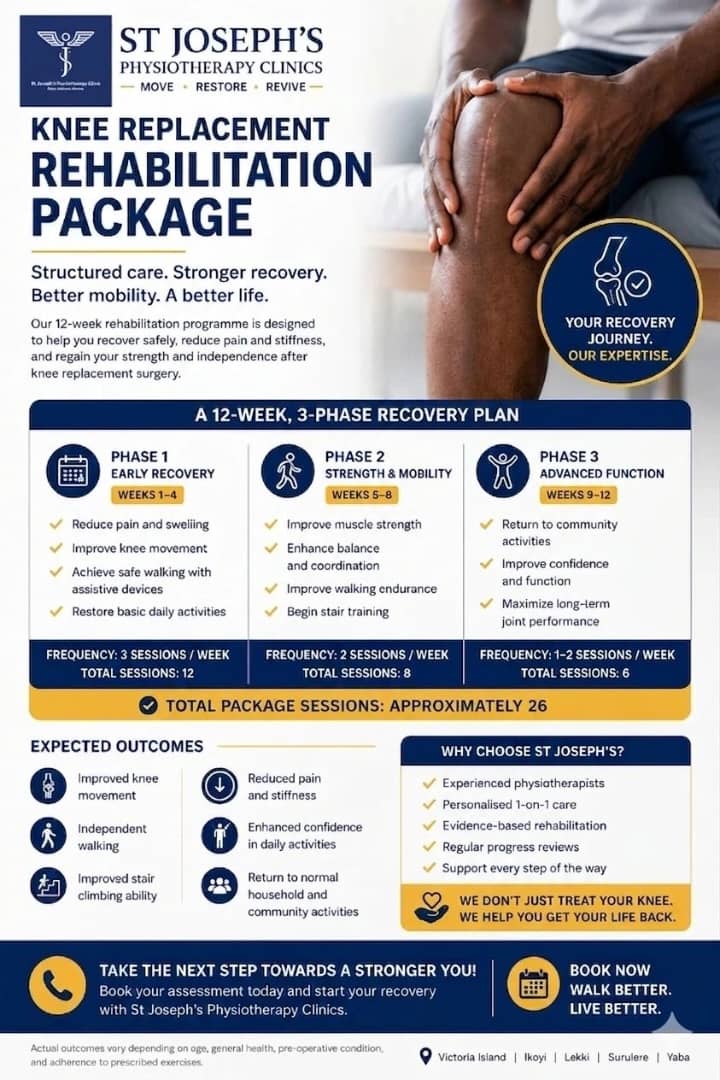
Complete Knee Replacement Rehabilitation Package in Lagos
Knee replacement surgery is a major step toward pain relief and improved mo…
NAMDA threatens strike over unpaid medical lecturers’ allowances
The Nigerian Association of Medical and Dental Academics (NAMDA) has warned…
Resident Doctors Signal End to Strike Threat After High-Level Talks with Gbajabiamila
The threat of a nationwide indefinite strike by the Nigerian Association of…
AMLSN Issues Strong Rejoinder to NAMDA on Public Service Establishment Matters
The Association of Medical Laboratory Scientists of Nigeria (AMLSN) has rel…