Doctors in some tertiary hospitals in the country decry poor funding of their residency programme, SIMON UTEBOR and Bukola Adebayo report
Striking resident doctors have asked the Federal Government to either fund properly their residency programme or scrap the initiative.
They note that though the Federal Government has been offering training to doctors in its teaching hospitals in the last four decades, it has yet to legatimise the exercise through a national policy.
This omission, they say, is frustrating the funding of the residency programme.
The residency programme prepares intern doctors from medical schools to become specialists in different spheres of medicine.
In Nigeria, resident doctors constitute more than 70 per cent of the medical workforce in the tertiary hospitals.
However, some of the striking doctors, who spoke to our correspondent, frowned on the bastardisation of the programme occasioned by poor funding by the Federal Government.

The aggrieved doctors, who are presently on a three-day warning strike, say if their demands which border on improved budgetary allocation are not met by July I, 2014, they would embark on a full industrial action.
According to the President, Lagos State University Teaching Hospital, Association of Resident Doctors, Dr. Maroof Abdulsalamin, the present funding structure, which should expose them to both international and local training is faulty and can affect the quality of their training.
He said, “There is no national policy guiding or regulating residency training in Nigeria. At present, there is no provision for funds for the training of resident doctors in the 2014 health budget due to lack of a framework.
“Usually, it is the heads of the hospitals that use their digressions to determine what funds they will dedicate to residency programme when they get their allocations. The number of years you are supposed to spend as a resident in a hospital is not even stipulated yet whether it is three, four or six years.”
Another resident doctor at LUTH, who craved anonymity, told our correspondent that it was impossible for him to get the required training and exposure with what is on the ground in the country.
“As a resident, we are supposed to undergo one year internship in a foreign hospital, especially those in advanced countries with up-to-date facilities and research. This is to expose us to new procedures and surgeries. That is no longer happening in most teaching hospitals due to lack of funding. There is no clear allocation from the health budget for this purpose.
“Hospitals alone cannot fund it. We are just passing through the process without having the appropriate training. It is either they fund residency training or they scrap it.”
But another resident doctor at the Federal Medical Centre , Yenagoa, Bayelsa State, looks at the crisis from a different perspective, saying the patients were at the receiving end.
According to him, with the ongoing crisis in the sector, only patients with the wherewithal that can travel overseas to get specialist treatment.
She said, “With the present attitude of government to our training, it may get to a point where there will be dearth of specialists, such as oncologists, and neurosurgeons to treat cancers and some non- communicable diseases, which are on the increase in the country.”
Already, patients at the FMC in Yenagoa, who spoke to our correspondent on Tuesday, have started lamenting the impact of the strike at the centre.
A patient, Julius Toubra said the strike was having adverse effects on patients as many of them were compelled to patronise quacks in the sector.
He said, “It is really absurd that we are the ones at the receiving end of this strike. Some of us cannot afford to pay the exorbitant bills at the private hospitals.
“It makes no sense to ask us to come back anytime from Thursday. Most of the specialist clinic days are weekly. Can we ask the sickness to wait? It will only deteriorate and complicate issues.”
Another patient, Douglas Oku, told our correspondent that he took a boat ride from Brass to attend the clinic.
He said he would rather stay around till the strike ended rather than return to Brass which is far from Yenagoa.
Oku said, “The transport fare by boat is N4,000 for a one-way trip; so it makes more sense to find a place and stay till Thursday. If I decide to go and come back, I will spend around N12,000.
“If they had publicised the strike, I would have stayed back till they call it off.”
A woman, Elizabeth Sunday, who came with her eighth month old baby, said was confused on next step to take with the ongoing strike.
“My baby is having fever and I cannot wait till they call off the strike; they should remember that life is involved and so resolve their differences quickly. The only option is to see the possibility of going to a private clinic” she said.
When our correspondent visited the office of the FMC Chief Medical Director to seek his reaction to the strike, he was said to be unavailable for comments.
ABUJA: Training Schedule for Basic Life Support BLS, Pediatric Advanced Life Support (PALS), Advanced Cardiovascular Life Support ACLS, First Aid, CPR, AED
PORTHARCOURT: Training Schedule for Basic Life Support BLS, Pediatric Advanced Life Support (PALS), Advanced Cardiovascular Life Support ACLS, First Aid, CPR, AED
LAGOS: Training Schedule for Basic Life Support BLS, Pediatric Advanced Life Support (PALS), Advanced Cardiovascular Life Support ACLS, First Aid, CPR, AED
STOP paying for airtime and electricity, Let your phone pay its bills with ScreenT
You may also like

FG Supports Robotic Surgery Expansion to Reduce Medical Tourism
Nigeria is taking another step toward strengthening specialised healthcare …
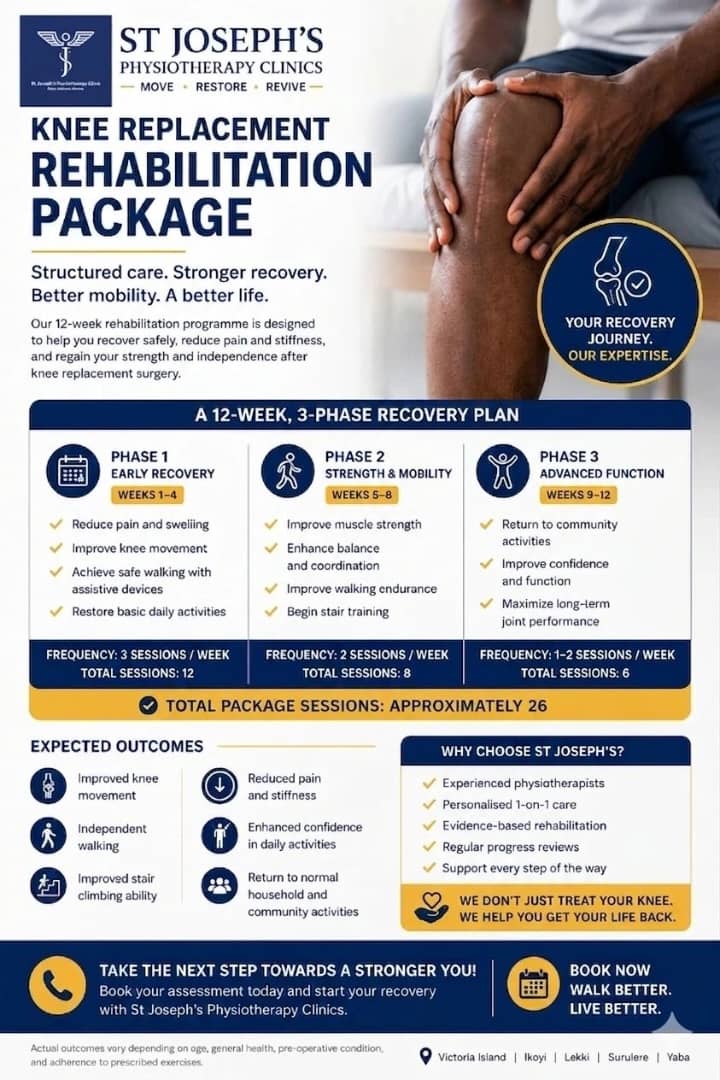
Complete Knee Replacement Rehabilitation Package in Lagos
Knee replacement surgery is a major step toward pain relief and improved mo…

NAMDA threatens strike over unpaid medical lecturers’ allowances
The Nigerian Association of Medical and Dental Academics (NAMDA) has warned…

Resident Doctors Signal End to Strike Threat After High-Level Talks with Gbajabiamila
The threat of a nationwide indefinite strike by the Nigerian Association of…
AMLSN Issues Strong Rejoinder to NAMDA on Public Service Establishment Matters
The Association of Medical Laboratory Scientists of Nigeria (AMLSN) has rel…