The insufficiency of yellow fever and measles vaccines in the country may result in disease outbreak, BUKOLA ADEBAYO writes
That many children under the age of five die in Nigeria is no longer news. That Nigeria and India record the highest infant deaths in the world is also not in contest. What, however, is giving many Nigerians, especially medical experts, goose pimples, is the fresh news making the rounds that Nigeria has run out of vaccines for the four child killer diseases. The vaccines are for measles, yellow fever, Bacillus Calmette-Guerin and Hepatitis B.
Indeed, experts have raised the alarm that with stock-out, the country may experience more disease outbreaks this year.
According to 2012 statistics quoted by the President of the Nigerian Academy of Science, Prof. Oyewale Tomori, Nigeria lost 126 of the 11,061 children to measles. Outbreaks of the disease also hit such states as Niger, Kebbi, Kogi, and Katsina in 2013.
Tomori notes, “In 2012, 126 of the 11,012 children that suffered measles died. Last year, 348 of the 57, 892 children that had the disease also died. This represents more than 500 per cent increase in the number of measles cases from 2012 to 2013. Indeed, the reported number of measles cases in 2013 was the highest in the last six years.”
The professor of virology and infectious diseases states that investigations revealed that 88 per cent of the children that contracted the disease did not receive a single dose of measles vaccine.
He recalls also that there were stock-out of the BCG, Hepatitis B and yellow fever vaccines at various times in the country in 2013.
Besides Tomori’s disclosure, information from the National Primary Health Care Development Agency — the government agency monitoring the administration and procurement of vaccines — shows that in the 2013 immunisation schedule, the nation ran out of the DTP and measles vaccines. As of January, statistics also show that the country is already low on the tetanus, polio and Hepatitis vaccines.
Tomori says, “We have exhausted our stock of yellow fever vaccine since December 2013; while some frantic efforts are being made to procure more vaccines, the current stock level of vaccines will be completely depleted by March/April 2014.
“With the 2014 budget yet to be approved by the National Assembly, the Federal Government may not be able to release funds on time to procure vaccines needed for the rest of the year.”
Findings show that many mothers are already feeling the pinch of the paucity of vaccines. Speaking to our correspondent at the Bolade-Oshodi Primary Health Care Centre in Lagos, some of them complained that their babies have yet to receive any dose of the yellow fever, measles, BCG vaccines.
According to Mrs. Tayo Ogunsanya, her nine-month-old baby, Oluwaseun, has become a victim of the no-drug syndrome.
Ogunsanya says, “I have been going from one health centre to the other trying to get my baby immunised. They keep asking us to come back from time to time. She is supposed to have taken four vaccines by now, but she has only taken it one.
“Every time I take her to the private hospital we attend, they keep blaming me for not getting her immunised as if it is my fault.”
The frustrated mother also urges the government to come to their aid as well as to address the vaccine shortage urgently.
She notes, “This is not the first time this will happen. My first baby almost died from measles in 2009 because I could not complete her immunisation. She only took one dose. Then, I went to several hospitals but they claimed they had also run out of stock. It is the same story every year.”
But even as the likes of Ogunsanyas lodge these complaints, Tomori says the government’s dependence on funds from donor agencies, lack of data and inadequate investment are other reasons for recurrent vaccine scarcity.
According to him, international agencies such as the Bill and Melinda Gates Foundation and the World Health Organisation commit more money and resources in trying to vaccinate Nigerian children than the government.
The virologist adds that even when the government provides funds for such an exercise, it is usually inadequate to achieve any meaningful impact.
Tomori says, “I do not think it is the Bill Gates, WHO or UNICEF that should teach us how to eradicate polio or take care of our children because they were not there when we were having them. Why should we wait for the likes of the Gates or Rotary Club to bring money or rate our vaccine coverage before we do something?
“Many states experienced measles outbreaks in 2013 and we should expect more this year because the shortage started since last year. The government has now politicised the funding of vaccines among its agencies.”
Describing a vaccine as a biological preparation that improves immunity to a particular disease, a family physician, Dr. Anthony Omolola, notes that recurrent vaccine stock-out increases the likelihood of infant mortality and morbidity.
He adds that the shortage of vaccines could make babies vulnerable to infectious and other killer disease, which they would have been able to resist if they had proper vaccination.
Omolola stresses, “It is a disaster for any nation to run out of vaccines. It should not happen at all. It means that right now, the babies have no defence against any disease. Their immunity is low. If a baby catches an infection, it will spread like wild fire to the other children in that environment. It may kill them in great numbers, depending on the number of children exposed to the outbreaks.
“It can spread from a city to the village, from states to states. It may worsen Nigeria’s infant mortality rate, a situation we are still battling with.”
He also identifies lack of data, poor logistics and planning as other accompanying reasons for the vaccines stock out.
Urging the government to live up to its responsibility, he concludes, “The government should know the number of children that are born every year. This will enable it to make proper budgetary provisions for vaccination.
“Shortage occurs when the number of vaccines procured is not enough to go round the children. To tackle this stock-out syndrome finally, the government must have birth statistics and make appropriate budgetary allocation.”
ABUJA: Training Schedule for Basic Life Support BLS, Pediatric Advanced Life Support (PALS), Advanced Cardiovascular Life Support ACLS, First Aid, CPR, AED
PORTHARCOURT: Training Schedule for Basic Life Support BLS, Pediatric Advanced Life Support (PALS), Advanced Cardiovascular Life Support ACLS, First Aid, CPR, AED
LAGOS: Training Schedule for Basic Life Support BLS, Pediatric Advanced Life Support (PALS), Advanced Cardiovascular Life Support ACLS, First Aid, CPR, AED
STOP paying for airtime and electricity, Let your phone pay its bills with ScreenT
You may also like

FG Supports Robotic Surgery Expansion to Reduce Medical Tourism
Nigeria is taking another step toward strengthening specialised healthcare …
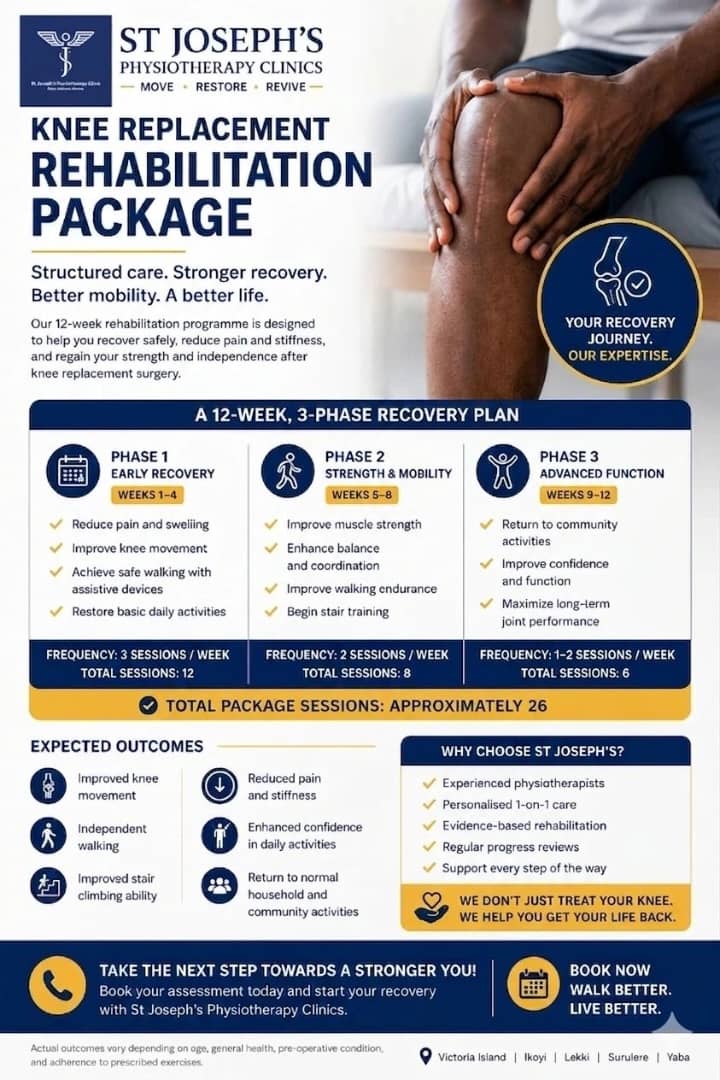
Complete Knee Replacement Rehabilitation Package in Lagos
Knee replacement surgery is a major step toward pain relief and improved mo…

NAMDA threatens strike over unpaid medical lecturers’ allowances
The Nigerian Association of Medical and Dental Academics (NAMDA) has warned…

Resident Doctors Signal End to Strike Threat After High-Level Talks with Gbajabiamila
The threat of a nationwide indefinite strike by the Nigerian Association of…
AMLSN Issues Strong Rejoinder to NAMDA on Public Service Establishment Matters
The Association of Medical Laboratory Scientists of Nigeria (AMLSN) has rel…