Dr Abdulmumini Ibrahim is the registrar of the Medical and Dental Council of Nigeria (MDCN). In this interview with Ruby Leo, he speaks on the strategies in place to sanitize the medical profession against quackery.
How many doctors do we have practising in the country?
We have 72,060—the number that entered the master register—including all doctors that trained in Nigeria, or trained abroad and came to Nigeria, and expatriates that came to Nigeria to practice. It is not that at any given time you have 72,000. Anyone who comes to have anything associated with the council, we open a file and give that number. A lot of this number has left, even those who have trained and those who died long ago and expatriates that left, including our doctors who went out for greener pasture.
So if you look carefully, less than half this number is in this country.
Then there is the active register of practitioners—of those current with their professional bodies: they pay their annual dues and licence themselves. Currently we have 16,867 from January till date. Nevertheless, double this number—up to 20,000 to 25,000—are practising but not paying licence fees. To us they are quacks.
The number of doctors working outside this country is quite enormous but not as much as that. At any given time the number practising within the country—both active and non-active—is just 40-50% of that number.
I heard that Nigerian doctors are second to Indian doctors in population. Even in America, we have much more than that number. In Canada, we have quite a number of Nigerian doctors but unfortunately because of their stringent registration procedure, some of them did not meet up with the registration criteria of Canada, so some of them do not hold full registration with Canadian regulatory body so they work as physician assistant. They choose to work that way.
So what is the implication for Nigeria?
Nigeria is not harvesting what it has sown. We are training manpower for other countries. This is related to the lackadaisical attitude of government, right from entry into university to graduation. The government is not helping Nigerians to continue with education and graduate and place them appropriately.
For close to four months, university lecturers are still on strike. The government is not doing anything about it. It is exactly the same thing with the student level. The government doesn’t have the statistics of the number of students that go into university let alone the numbers that pass through and graduate. At the end of the day, they don’t know the numbers that even get employed or not.
In 2011 when we suspended about 11 medical schools because they were not complying with standards given by the council, the council wanted to know how many students going into the medical schools and how many graduate.
We gave them admission the quota but so many of them violated it, and admitted quite a large number that the system cannot handle. We have numbers of those entering and those that graduate, but after that we don’t have statistics again. Because once they finish the mandatory one-year houseman ship, go into youth corps and register, some of them leave this country, even trek to neighbouring countries just to get employed because there is better regulation in terms of who you are and what work you are doing, at least compared to here.
What is WHO recommendation for doctor to patient ratio?
WHO requirement is one doctor to 500 people. But if you come to our own level, we have 55,000 doctors to a population of 160 million, you find one doctor looking after 40,000, and this is far below WHO recommendation.
How is the council handling these matters?
Government brings up policies. We enforce those policies. The highest body in health is the National Council of Health. If they formulate policies that government should put an embargo or anyone leaving or that any doctor leaving must have put in a number of years in the country that would be good. But before you do that, government hospitals have to put certain things in place. Everything is about government not just the regulating body alone.
Our reference is a singular most important factor in employing doctors outside this country. So we are ready to carry out government policies once the government is serious enough to bring up this policy.
Recently persons thought to be fake doctors were arrested. That’s one area the council is supposed to be looking at, is that not?
Quackery is associated with illegal members of a profession. Or they may even be legal members but not up to date with the present realities or not updating themselves by way of paying prescribed fees. There are facultative and obligatory quacks—those who want to force themselves into the profession. They get hold of documents of members of the profession and start posing as if they are the ones. MDCN is being invited as principal witness or witness to the prosecuting lawyers where those posing as doctors are being prosecuted.
Currently we have 22 cases of quacks—those posing as doctors or dentists. It cuts across all states—three in the FCT, one in Akwa Ibom, two in Cross River, one in Delta, three in Edo, one in Imo, Ondo, Ogun and Kaduna, six in Lagos. These 22 cases are purely non medical people. But within us we know those that have specialist qualification but they refuse to come and update their records to register as specialists. So to us they are practising that specialist field as quacks.
Apart from advice, aren’t there measures to stop them?
The council is looking at its anatomy, with 61 members. But we have state monitoring committees, each with minimum of five members—chairman of the NMA, a senior medical and dental practitioner in the private sector. They carry out the function of the council in those states and what they can’t treat, they pass them here. Nevertheless we have instances where people report directly to us and we take action immediately.
We have a new inspectorate and monitoring department to monitor compliance to the council directives and chase issues of quackery and report to relevant law enforcement agencies.
But what’s responsible for the increase in quackery cases identified?
Before fresh doctors can practise, they get probational registration, then they take the Hippocratic Oath. There’s a place in it that says, “the health of my patient is my first consideration.” If you expand this: don’t think of financial gain. First of all, make the patient well. Whatever will follow will follow. Medicine is not a profession in which you become rich overnight. But those that did not train well and did not even take this oath and do not have the privilege of being inducted think that medicine is a very lucrative profession, and that anything that goes in health is money. That’s why you have increased number of quackery. Again, people want to pose. Go to any health facility, especially government ones—even at primary health facilities, everyone working there wants to be called a doctor.
ABUJA: Training Schedule for Basic Life Support BLS, Pediatric Advanced Life Support (PALS), Advanced Cardiovascular Life Support ACLS, First Aid, CPR, AED
PORTHARCOURT: Training Schedule for Basic Life Support BLS, Pediatric Advanced Life Support (PALS), Advanced Cardiovascular Life Support ACLS, First Aid, CPR, AED
LAGOS: Training Schedule for Basic Life Support BLS, Pediatric Advanced Life Support (PALS), Advanced Cardiovascular Life Support ACLS, First Aid, CPR, AED
STOP paying for airtime and electricity, Let your phone pay its bills with ScreenT
You may also like

FG Supports Robotic Surgery Expansion to Reduce Medical Tourism
Nigeria is taking another step toward strengthening specialised healthcare …
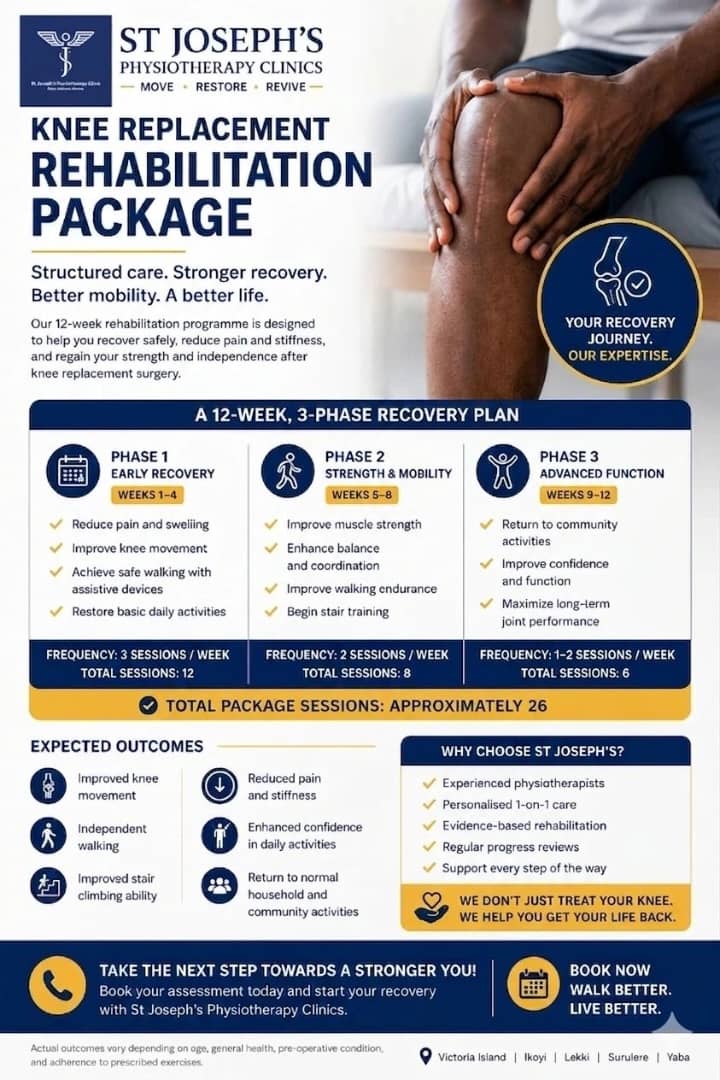
Complete Knee Replacement Rehabilitation Package in Lagos
Knee replacement surgery is a major step toward pain relief and improved mo…

NAMDA threatens strike over unpaid medical lecturers’ allowances
The Nigerian Association of Medical and Dental Academics (NAMDA) has warned…

Resident Doctors Signal End to Strike Threat After High-Level Talks with Gbajabiamila
The threat of a nationwide indefinite strike by the Nigerian Association of…
AMLSN Issues Strong Rejoinder to NAMDA on Public Service Establishment Matters
The Association of Medical Laboratory Scientists of Nigeria (AMLSN) has rel…