• Govt urges Nigerians to get tested, as world marks Day
• Budgets N262.7 billion to fight disease in two years
THE Federal Government has initiated a fresh campaign to get Nigerians to get tested voluntarily for Human Immuno-deficiency Virus (HIV)/Acquired Immune Deficiency Syndrome (AIDS), as a deliberate effort to stop the spread of the endemic and also enable the relevant agencies put those living with the virus on drug.
Director General, National Agency for the Control of Aids (NACA), Prof. John Idoko, who lamented that HIV/AIDS had defiled technology, stressed that prevention is currently the best treatment for the virus.
He spoke in Abuja on Monday as part of activities to mark World AIDS Day. He, therefore, urged all Nigerians to get tested and know HIV status.
World AIDS Day is held on December 1 each year and is an opportunity for people worldwide to unite in the fight against HIV, show their support for people living with HIV and to commemorate people, who have died. World AIDS Day was the first ever-global health day and the first one was in 1988.
He said much was ongoing on to end the epidemic, but warned that the disease won’t end if people don’t know their status.
“This is the first time in the history of the world that an epidemic has defiled all sorts of technology,” the NACA boss said during a Pre-World AIDS Day 2013 press briefing and meeting with partners in Abuja.
The NACA director general said 3.5 million Nigerians are presently living with HIV, out of which 1.5 million are in need of treatment. He pointed out that there has been progress in the last one year through various initiatives and programmes,
Idoko, however, explained that there are many challenges facing the country in the area prevention, treatment, testing, driving the HIV response by available evidence, using the new scientific evidences to strengthen the Nigerian HIV response such as new prevention technologies, stigma and discrimination as well as mobilising local resources and innovative financing.
Representative of United States of America Government, Antonia Aina said the government of America is committed to support the government of Nigeria, and stressed the need to put heads together to end the scourge.
She said Nigeria bears the second largest burden of HIV in the world after South Africa, hence, the need for synergy by all to stem the tide.
Her words, “we are committed to the course to ensure that the virus is mitigated through partnership. We are on ground to ensure that every Nigerian accesses the testing and attain grand zero.
She called on all Nigerians to take advantage of the opportunity provided to go for HIV/AIDS test, adding that the U.S. will continue to support NACA to scale up HIV test in Nigeria.
Meanwhile, the federal and states governments recently met in Bayelsa to draw up strategies for raising N262.7 billion, estimated for managing HIV/AIDS in the country within the next two years.
The meeting, an Agenda for Sensitisation Meeting with States on the President’s Comprehensive Response Plan (PCRP) for HIV/AIDS in Nigeria, is organised to locally raise funds for the management of the scourge, thereby bridging the gap between locally-sourced funds and foreign-donor funds for the disease, which currently stand at 25 and 75 per cent respectively.
Federal Government suggested N461.2 billion for full national coverage against the disease at the meeting, while it said N262.7billion should be initially sourced for managing it in the next two years. States are therefore required to contribute N105.3 billion while N20.5 billion is expected from the private sector.
Idoko, represented by Director, Partnership Co-ordination at the agency, Hajia Maimuna Mohammed, said the initiative was in pursuance of the realisation of President Jonathan’s decision to put a check on the spread of the disease in the country.
Mohammed, “how are we going to tackle the issue of HIV/AIDS in this country? As we roll out the intervention day in day out, we are facing challenges of funding. Most of our funding comes from partners and this is not sustainable for a country where we have people that are living with the virus that are going to be on drugs for the rest of their lives. If you don’t have a plan in place, there will be a situation where these partners will decide to pull out of this country, it will be a disaster for us.
“So, the president deemed it right to call all stakeholders where he suggested we develop a plan that is owned by us which we can resource at national, state and local government levels. We came out with this plan; it is supposed to be for two years. Now, we have invited states that we should all look at the plan. It is not a plan that is going to be implemented by NACA and it is not going to be implemented at the national level alone, it s going to be implemented at the state and local government levels where people live.
She added, “the plan is all about taking charge, it is about owing it, it is all about us. It is all about partners. We are looking at this plan with an eagle eye to say this is Nigeria. That is why all over the world, they appreciate our effort, the President’s effort to say ‘this is a home-grown programme.’
“Anybody coming into this country, we already have a plan. What you need to tell us is that if we say we are going to reach people with the virus, how many can you take? You are not coming with your own plan to say we are going to do this or that. We already have our own plan reach one million people. How many can you take out of one million? If you say a 100000, we give you a 100000. So, you are not coming with you own agenda to tell us what to do. We have that goal; work with the plan or you don’t come in.”
Director, Policy and Strategy Department, NACA, Mr. Alex Ogundipe said 80 per cent of current 3.4 million people living with the disease were being targeted for treatment with the fund.
He listed the objectives of the new plan to include among others, “only 18 per cent of HIV positive pregnant women receive prophylaxis against mother and child transmission, we target 80 per cent, to avail 80 million men and women aged 15 and older knowledge of their HIV status, to enroll an additional 600,000 eligible adults and children on Anti Retroviral Therapy (ART).”
ABUJA: Training Schedule for Basic Life Support BLS, Pediatric Advanced Life Support (PALS), Advanced Cardiovascular Life Support ACLS, First Aid, CPR, AED
PORTHARCOURT: Training Schedule for Basic Life Support BLS, Pediatric Advanced Life Support (PALS), Advanced Cardiovascular Life Support ACLS, First Aid, CPR, AED
LAGOS: Training Schedule for Basic Life Support BLS, Pediatric Advanced Life Support (PALS), Advanced Cardiovascular Life Support ACLS, First Aid, CPR, AED
STOP paying for airtime and electricity, Let your phone pay its bills with ScreenT
You may also like

FG Supports Robotic Surgery Expansion to Reduce Medical Tourism
Nigeria is taking another step toward strengthening specialised healthcare …
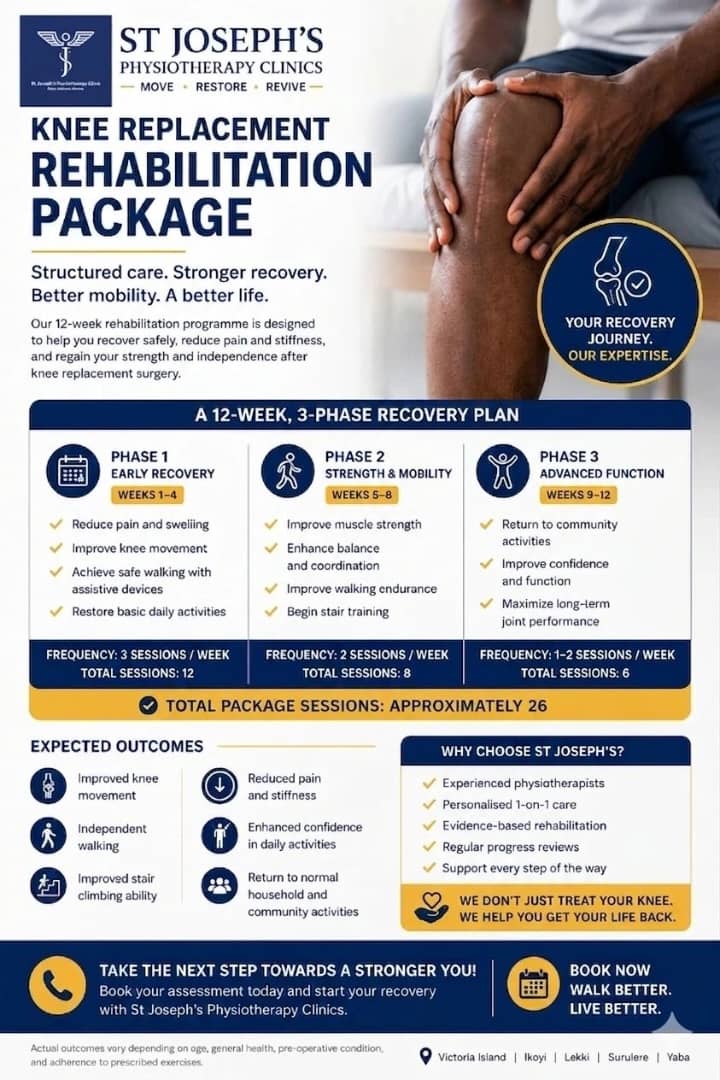
Complete Knee Replacement Rehabilitation Package in Lagos
Knee replacement surgery is a major step toward pain relief and improved mo…

NAMDA threatens strike over unpaid medical lecturers’ allowances
The Nigerian Association of Medical and Dental Academics (NAMDA) has warned…

Resident Doctors Signal End to Strike Threat After High-Level Talks with Gbajabiamila
The threat of a nationwide indefinite strike by the Nigerian Association of…
AMLSN Issues Strong Rejoinder to NAMDA on Public Service Establishment Matters
The Association of Medical Laboratory Scientists of Nigeria (AMLSN) has rel…