BRAINS research trainee award proposes to support the development of junior faculty research through provision of funds for a two year mentored research program. This mechanism is aimed toward junior faculty members with basic science, clinical and/or epidemiological research interest and who have an innovative research idea, are attempting to initiate a new research project, or aim to gather some preliminary data that will be used for applications to future grant opportunities. The award supports a 2-year period of supervised research experience that may integrate laboratory with clinical or epidemiologic based research; engineering junior faculty will develop innovative solutions for disease diagnosis or treatment. The proposed research should have both research importance and be a suitable method for learning the skills necessary for an independent research career. Research topics are on HIV and Infectious Diseases, neuroscience, genomics & bioinformatics, community medicine or biomedical engineering research and innovation. Applicants of this award may indicate a mentor who will commit to guiding the applicant through the project. Because of the focus on progression to independence, the prospective candidate should propose a project that is consistent with this goal and his or her previous work and/or clinical experience.
Term: 2 years
Award amount: N1, 300,000
Eligibility:
Junior faculty members at University of Lagos; Assistant Lecturer, Lecturer 2, Lecturer 1 or Senior Lecturer. Candidates must be CITI registered. (Information can be obtained at the CMUL RMO[email protected] )
Types of Application:
The main goal is to provide support for junior faculty investigators to carry out mentored research that will provide the background for an application to another funding agency in the future.
BRAINS research themes:
HIV and Infectious Disease Research:Globally, infectious diseases account for more than 17 million deaths each year, with a significant proportion occurring in sub-Saharan Africa.Nigeria still has a high burden of infectious diseases including HIV. The unprecedented success of the international mobilization for HIV care and treatment during the last decade has made a major impact on the course of the global HIV epidemic. Despite these efforts, Nigeria still bears one of the largest burdens of HIV infection worldwide. The University of Lagos has played a major role in developing and implementing these HIV programs. As Nigeria continues its efforts to scale up HIV prevention, care, and treatment services, it is critical to consistently evaluate the outcome and impact of the programs that have already been initiated. Epidemiologic, clinical and laboratory - based proposals are encouraged including patients with HIV or relevant co-infections.
Neuroscience
 Our HIV population offers an opportunity to explore the role of vascular endothelial dysfunction, which has been implicated in initiation and progression of vascular disease that ultimately contributes to atherosclerosis and results in thrombosis. Gene expression studies have also explored potential biomarkers to improve diagnostics for stroke. In addition there is ongoing research on movement disorders, this would include the genetics of Parkinson’s disease and other movement disorders particularly the dystonias, essential tremors and apparently sporadic cerebellar ataxias. Junior faculties are encouraged to key into these areas.
Genomics & Bioinformatics: This broad-based research theme will strategically allow the support of mentored research for this important skill set applicable to many areas of research including genetic characterization of infectious disease organisms, gene expression studies for diagnostic biomarkers, and human genomic analyses for various disease entities. For example in infectious diseases, though modern medicine and technology have diminished the threat of many infectious disease pathogens in high income countries, the ever present threats of emerging and re-emerging infections and pathogen genetic variability are some of the reasons for the dynamic threat of this broad category of risks to human health. Genetic changes of microorganisms through adaptive evolution, continues to challenge the development of effective public health responses such as vaccines and drug therapies. While sub-Saharan Africa bears the largest burden of most major infectious disease pathogens, their ultimate prevention and control requires prioritization on the global research agenda. Cancer genetics is another major area that needs to be explored. Colonic, breast, lung, orofacial and haematological malignancies are now known to be associated with mutations that are aetiologically related to these conditions. The products of the mutant genes are also being explored for targeted therapies. Non-communicable diseases including thrombosis, diabetes, hypertension and haemorrhagic disorders including haemophilia as well as dental and craniofacial diseases/anomalies are diseases with underlining mutations that need to be further profiled. Sickle cell is of epidemiological relevance in Nigeria. Although its genetic basis is well understood, other genetic inheritance that modifies it’s phenotype are now been explored. The need has arisen to investigate for genetic predisposition to different sickle cell complications such as acute chest syndromes, stroke, bone necrosis, priapism and sickle cell hepatopathy. Juniour faculty in all specialties are encouraged to apply
Community Medicine
Nigeria is a major contributor to the global maternal and under-five mortality rates. It has been reported that every day Nigeria loses ~2,300 under-five year old and 147 women in child bearing age. Studies show that 60% of women in the lower income bracket and rural areas deliver with traditional birth attendants. In addition, HIV and other preventable diseases account for 700,000 under five deaths. Junior faculty in all specialties are encouraged to develop interventional and outcomes research that will impact these problems.
Biomedical Engineering Research and Innovation
The NIH funded Frameworks grant on “Developing Innovative Interdisciplinary Biomedical Engineering Programs in Africaâ€Â provides the foundation for this research theme. This program involves identification of health care needs in product design, delivery, clinical evaluation, scalability and product launch. They have worked towards innovations, such as easy to use point-of-care diagnostic devices and technologies in healthcare, can prevent, diagnose, and treat disease. Participating junior faculty are encouraged to propose novel innovative research projects for further research in any area pertaining to healthcare. Candidates with backgrounds in engineering, medicine and business are encouraged to apply.
Instructions:
1. Applicants must meet the eligibility criteria, application instruction and proposal deadline.
2. Applications must be completed, signed and include the following documents:
a. Abstract describing the research (500 words or less)
b. NIH-form biosketch for the Principal Investigator, collaborators, and co-investigators. The biosketch must include other support information. See grants.nih.gov/grants/funding/phs398/biosketchsample.doc for more details.
c. Budget (1/2 page): The budget must cover the activities for the - 2 year time period. The budget may not include salary support, travel, workshop/conference attendance fees, IRB fees, or indirect costs (facilities and administrative costs).
d. Budget justification: The justification must include a detailed explanation for the expenses noted in the budget. Describe the role of each person listed under Personnel.
e. Project Narrative: 2-3 sentences explaining how the awarding of these funds will enhance opportunities for conducting future research or acquiring other funding.
f. Research Plan (1-2 pages)
i. Specific aims (1/4 page)
ii. Background and Significance (1/4 page)
iii. Preliminary Data (2-3 sentences) this section is not required if there are no preliminary data
iv. Experimental Design and Methods (1/2 page): Describe the data collection methods, analytical plan, and data management plan, as relevant.
g. References: list all references cited in the Research Plan
h. Plan for Protection of Human Subjects: Describe the risks/benefits to the study participants, your method of collecting informed consent (as relevant), and your plans to safeguard the patient's information.
i. Project Mentor: Applicants can propose a faculty mentor for the proposed research.
j. Pending IRB Approval: Projects that involve human subjects research must indicate the procedures that will be taken should the award be made.
Format:
1. Minimum margins are 1 inch on all sides. Use either Times New Roman or Arial font with a font size of at least 11 point.
2. Number pages consecutively at the bottom. Include the applicants name at the top right hand corner on all but the cover page.
Evaluation:
All applications will be evaluated by the BRAINS Research Review Committee, evaluations will be based on: investigator ability, scientific merit, relevance, and potential for generating subsequent funding and publications. All applications must address one of the BRAINS research themes.
Reviewers will provide a written evaluation of the application along with a numerical score (1-5, 1 being the best). The reviews and scores will be taken into consideration in the applications with a score below 3, all others will only receive a numerical score.
Reporting Requirements:
Investigators are required to notify the selection committee in writing of significant changes in the focus of the research, conduct of the research plan, or changes in budgeting plans during the course of the project.
An interim progress report is due at 6, 12 and 18 months, to both the review committee and the mentor. The interim progress reports must include a statement on the progress to date, copy of final approval letters (e.g. IRB approval), and additional collaborations.
Within 30 days of completing the project, the investigator must submit a final progress report stating preliminary scientific findings, a report of any possible research applications that are built out of the project, and any publications that resulted from the pilot project. The investigator will be required to give an oral presentation to the BRAINS research review committee on the details of their research work and their subsequent findings at the conclusion of the project. It is also anticipated that final presentations will also be delivered at the annual BRAINS faculty retreat.
Submission of Application
Two sets applications to be submitted online one in PDF and the other in WORD document.
Submit to [email protected]
Deadline: Midnight of Saturday 31st October 2015
You may also like

2027 NNPC/Renaissance JV Sabbatical and Postgraduate Research Internship Programme
2027 NNPC/Renaissance JV Sabbatical and Postgraduate Research Internship Pr…

2026 RIVERS STATE EMERGENCY BASIC & ADVANCED LIFE-SUPPORT TRAINING
WHEN THE NEXT EMERGENCY CALLS, WILL YOU BE READY?Port Harcourt | Medicalwo…

2026 LAGOS EMERGENCY BASIC & ADVANCED LIFE-SUPPORT TRAINING PROGRAMME
WHEN EVERY SECOND COUNTS, BE READY. In emergency care, there is no room fo…

2026 EMERGENCY BASIC & ADVANCED LIFE-SUPPORT TRAINING — ABUJA
WHEN EVERY SECOND COUNTS, ARE YOU READY?In emergency care, clinical decisio…
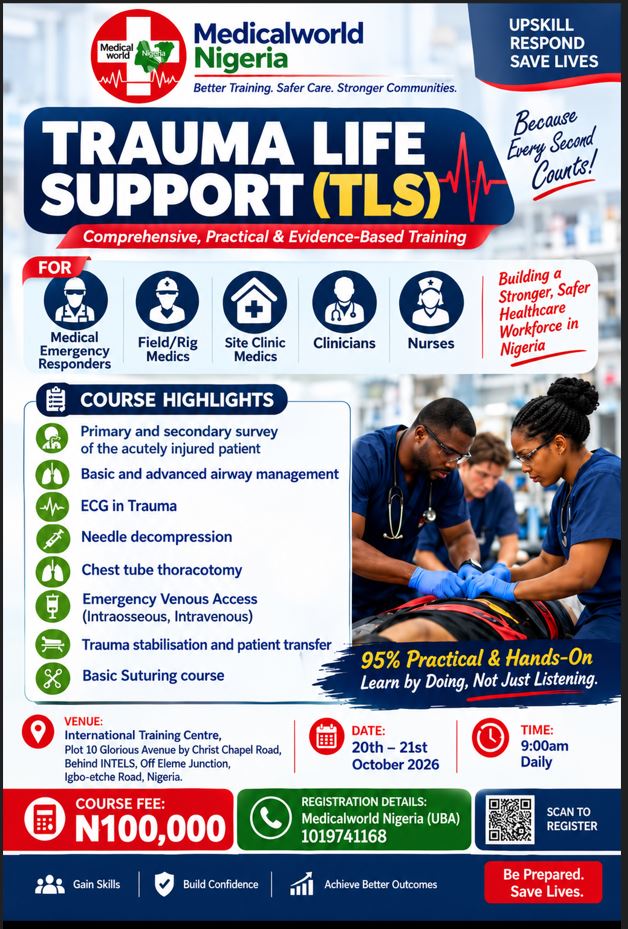
Trauma Life Support (TLS) For Medical Emergency Responders, Field/Rig Medics, Site Clinic Medics, Clinicians, Nurses
Trauma Life Support (TLS) For Medical Emergency Responders, Field and Rig …