The 73-year-old widow came to see Dr. David Goodman, an assistant professor in the psychiatry and behavioral sciences department at Johns Hopkins School of Medicine, after her daughter had urged her to "see somebody" for her increasing forgetfulness. She was often losing her pocketbook and keys and had
trouble following conversations, and 15 minutes later could not remember much of what was said.
"But he did not think she had early Alzheimer's disease. The woman's daughter and granddaughter had been given a diagnosis of ADHD a few years earlier, and Goodman, who is also the director of a private adult AD HD clinical and research center outside of Baltimore, asked about her school days as a teenager.
"She told me: '1 would doodle because I couldn't pay attention to the teacher, and 1 wouldn't know what was going on. The teacher would move me to the front of the class,'" Goodman said.
After interviewing her extensively, noting the presence of patterns of impairment that spanned The Decedes, Goodman diagnosed ADHD He prescribed Vyvanse, a short-acting stimulant of the central nervous system.
 A few weeks later, the difference was remarkable. "She said: 'I'm surprised, because I'm not misplacing my keys now, and I can remember things better. My
 mind isn't wandering off, and I can stay in a conversation. 1 can do something until 1 finish it,""Goodman said.
Once seen as a disorder affecting mainly children and young adults, attention deficit hyperactivity disorder is increasingly understood to last
throughout one's lifetime.
In 2012, in one of the only epidemiological studies done on ADHD in older adults,a large Dutch population study found .the condition in close to three per cent of people over 60. Yet we know little about how ADHD affects older people, or even who has it.
"We hardly have any literature," said Dr. Thomas Brown, associate director of the Yale Clinic for Attention and Related Disorders at the Yale School of Medicine. Almost none of the clinical trials and epidemiological studies on ADHD have included people over
so.
"But I see quite a few people turning up in my office with these complaints. It's reasonable to assume that a lot of elderly people
have ADHD."
Heightened awareness of ADHD is bringing increased referrals of older adults to specialty clinics.
"A child had been treated, then a parent, then everyone started looking at Grandpa, and saying, 'Oh my gosh,' and they would
bring him in," said Dr. Martin Wetzel, associate clinical professor of psychiatry at the University of Nebraska Medical Center.
Yet, m"ny general practitioners and mental health experts-mistake symptoms like impaired shortterm memory or an inability to stay focused on a task as
something else.
"We do a horrible job of training health care professionals about adult ADHD," Wetzel said.
Brown said, "Most doctors are not thinking of ADHD as a characteristic of somebody who is 60 or over." Hence, the condition may be overlooked in the So-year-old who has trouble staying engaged at the senior center, despite a lifelong history of Inattention.
Until about three years most geriatric cognitive ane memory studies did not include any people with ADHD, at leas not knowingly.
Deeply hidden in all the studies about mild cognitive impairment and early Alzheimer': are significant numbers of people with ADHD," Wetzel said.
"We have no idea who in thOSE studies had it or didn't have it because nobody was asking the question."
Screening for ADHD is no simple. No blood test or imaging :Study can make a definitive distinction; ADHD IS bastcaliy - clinical diagnosis.
Goodman said, "This is where it gets difficult in aging patients. One has to distinguish between the longitudinal ADHD symptoms and the overlap of age-related cognitive decline. You can have both simultaneously."
Dr. Lenard Adler, director of the Adult ADHD Program at the NYU Langone School of Medicine, and past president of the American Professional Society of ADHD and Related Disorders, said, "The key issue is to get the diagnosis correct, get the right medication into the individuals who need it and to be sure that
older adults have the appropriate medical clearance prior to treatment."
Older adults with ADHD are typically treated with the same drugs given to children, stimulants like Adderall or Ritalin, but these medications pose distinctive challenges for older patients.
Source: New York Times Service
ABUJA: Training Schedule for Basic Life Support BLS, Pediatric Advanced Life Support (PALS), Advanced Cardiovascular Life Support ACLS, First Aid, CPR, AED
PORTHARCOURT: Training Schedule for Basic Life Support BLS, Pediatric Advanced Life Support (PALS), Advanced Cardiovascular Life Support ACLS, First Aid, CPR, AED
LAGOS: Training Schedule for Basic Life Support BLS, Pediatric Advanced Life Support (PALS), Advanced Cardiovascular Life Support ACLS, First Aid, CPR, AED
STOP paying for airtime and electricity, Let your phone pay its bills with ScreenT
You may also like

Comrade Lemii Christian Emerges Chairman of NANNM Rivers State Branch in Historic Victory
PORT HARCOURT, NIGERIA Following the long awaited National Association of N…

FG Supports Robotic Surgery Expansion to Reduce Medical Tourism
Nigeria is taking another step toward strengthening specialised healthcare …
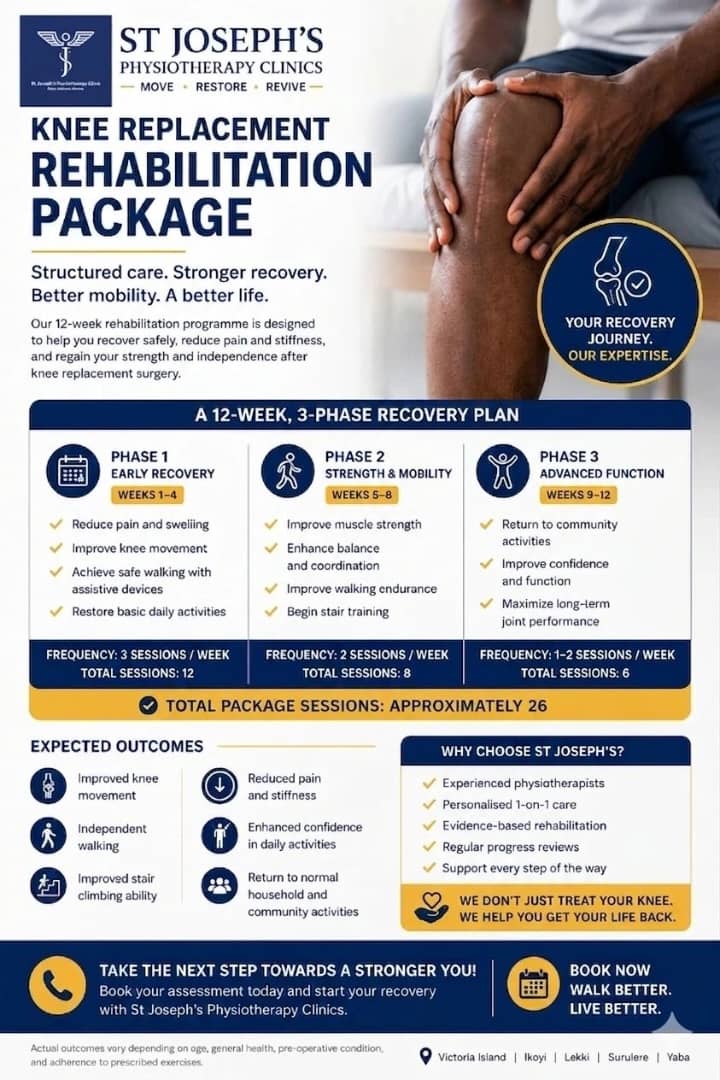
Complete Knee Replacement Rehabilitation Package in Lagos
Knee replacement surgery is a major step toward pain relief and improved mo…

NAMDA threatens strike over unpaid medical lecturers’ allowances
The Nigerian Association of Medical and Dental Academics (NAMDA) has warned…

Resident Doctors Signal End to Strike Threat After High-Level Talks with Gbajabiamila
The threat of a nationwide indefinite strike by the Nigerian Association of…